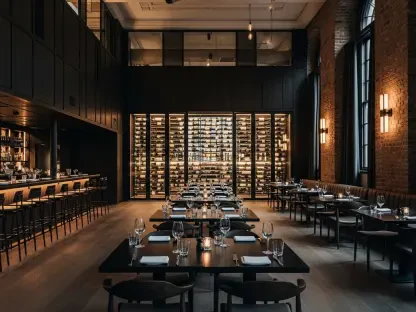

The sheer scale of California’s culinary landscape presents a formidable barrier to entry for most real estate firms, yet one organization has managed to facilitate over $1 billion in hospitality transactions through sheer specialization. While generalist commercial brokerages often struggle with the unique nuances of grease traps, liquor licenses, and volatile food costs, the Restaurant Realty Company has carved out a definitive niche since its founding in 1996. This journey from a localized San Francisco operation to a statewide powerhouse reflects a strategic commitment to a single industry vertical. By focusing exclusively on bars, restaurants, and nightclubs, the firm has navigated the complexities of 375 different cities and 45 counties, effectively standardizing the way hospitality businesses are bought and sold in the most populous state in the country. This dominance is not merely a product of longevity but of a deep-seated understanding of the operational DNA required to keep a kitchen running profitably while managing a transition of ownership.
The Foundations of Specialized Brokerage
Expertise Born of Operational Experience
The primary driver behind the firm’s market authority is a recruitment strategy that prioritizes practical industry experience over traditional real estate backgrounds. Most brokers within the organization have previously owned or managed their own hospitality venues, which grants them an immediate level of credibility when sitting across the table from a stressed restaurant owner. This first-hand knowledge allows them to look beyond the basic profit and loss statements to identify the underlying value in a brand’s reputation or the efficiency of its layout. When a broker understands the difference between a high-maintenance fine-dining kitchen and a streamlined quick-service operation, they can provide more accurate valuations that reflect the true labor and overhead costs involved. This level of granular insight ensures that sellers receive a fair market price while buyers are fully aware of the operational hurdles they will inherit once the keys change hands.
Furthermore, this practitioner-led approach allows the firm to handle the delicate psychological aspects of a sale, which are often as complex as the financial ones. Many restaurant owners view their establishments as lifelong achievements or community staples, making the prospect of a sale an emotional endeavor rather than a simple liquidation of assets. Because the brokers have stood in those same shoes, they can navigate these sensitivities with a level of empathy that a corporate generalist would lack. This trust-based model is essential for maintaining confidentiality in an industry where rumors of a pending sale can lead to immediate staff departures or a drop in customer foot traffic. By prioritizing the human element alongside the financial metrics, the firm creates a stable environment where legacy businesses can transition smoothly without losing the very essence that made them successful in the first place.
Scaling Geographic Reach Across the State
Transitioning from a boutique San Francisco entity to a statewide leader required a logistical framework capable of handling the vastly different regulatory environments of Northern and Southern California. The firm systematically expanded its footprint by establishing physical presences in key urban hubs while utilizing a centralized digital platform to manage listings and buyer inquiries. This dual-strategy allowed them to maintain the “local” feel necessary for neighborhood bistro sales while leveraging a massive database of over 125,000 unique annual visitors to find the right investors. Handling more than 1,700 hospitality-specific deals requires more than just a large contact list; it demands a deep understanding of local zoning laws and health department requirements that vary significantly between a beach town in San Diego and a historic district in Sacramento.
The ability to successfully manage over 8,000 valuations speaks to a rigorous, data-driven methodology that accounts for the regional economic fluctuations inherent in the California market. Whether dealing with a high-volume nightclub in Los Angeles or a quiet cafe in the Central Valley, the firm applies a consistent set of professional packaging standards that make the business attractive to institutional lenders and private equity groups. By leasing over 3.5 million square feet of space, they have also become a vital link between commercial landlords and the operators who fill their buildings. This specialized scale ensures that when a prime location becomes available, the firm already has a curated shortlist of qualified tenants ready to move, reducing vacancy times and stabilizing the commercial real estate ecosystem throughout the entire state.
Modern Advisory in a Shifting Industry
Navigating Contemporary Market Realities
As we move through 2026, the restaurant industry is grappling with a new set of challenges ranging from rising labor costs to the rapid integration of delivery-centric business models. The firm has responded by evolving from a traditional transaction broker into a high-level advisory partner that assists clients with sophisticated asset positioning. In an era where profit margins are increasingly thin, the brokerage emphasizes professional valuation support that looks at “add-backs” and discretionary earnings with extreme precision. This ensures that even in a high-interest-rate environment, sellers can demonstrate the long-term viability of their cash flow. The firm’s marketing distribution has also become more technological, utilizing targeted digital reach to find niche buyers who are specifically looking for “ghost kitchens” or hybrid models that didn’t exist in the previous decade.
This advisory shift also extends to the grueling process of lease negotiations, which have become more contentious as property taxes and insurance premiums climb. The brokerage acts as a buffer, using its massive transaction history as leverage to benchmark fair market rents and tenant improvement allowances. Because they have completed over 500 deals since 2020, they possess a real-time pulse on what landlords are willing to concede in the current economy. This data-backed negotiation style protects the buyer from overextending themselves in the first year of operation, which is statistically the most dangerous period for a new restaurant. By focusing on the sustainability of the business post-sale, the firm ensures that the hospitality market remains healthy and that new concepts have the financial runway needed to find their audience and thrive.
Preservation of Community Legacies
Perhaps the most significant impact of the firm’s work is seen in the preservation of iconic institutions that define the character of California’s cities. A notable example is the sale of Fishermen’s Grotto #9 at San Francisco’s Fisherman’s Wharf, a landmark that had been a part of the city’s fabric since 1935. In cases like these, the brokerage is not just selling a building or a menu; it is transferring a piece of local history. The firm’s specialized process ensures that these legacy brands find buyers who respect their heritage while possessing the capital to modernize them for 2026 and beyond. This prevents historical sites from being replaced by generic chains, maintaining the unique cultural diversity that makes California’s food scene a global destination. The firm’s ability to find the “right” buyer rather than just the “first” buyer is what separates it from generalist competitors.
To maintain this standard of excellence moving forward, owners and investors should prioritize early-stage valuation and professional packaging long before they intend to hit the market. Modern buyers are more risk-averse than ever, and having a clean, transparent financial history is the only way to secure a premium exit. For those looking to enter the market, the focus should be on acquiring distressed assets with strong fundamental locations or established brands that can be optimized through better technology and labor management. As the California market continues to consolidate, the role of a specialized intermediary becomes even more critical. Seeking out advisors who have actual skin in the game through previous ownership will remain the most effective way to navigate the treacherous but rewarding waters of the hospitality industry. The success of this firm serves as a blueprint for how specialization and empathy can create a dominant market position even in the most competitive of sectors.
The Restaurant Realty Company successfully demonstrated that deep industry specialization is the most effective defense against market volatility. By integrating real-world operational experience with a statewide infrastructure, the firm moved beyond simple transactions to become an essential guardian of California’s culinary infrastructure. The organization fostered a marketplace where legacy institutions were saved and new concepts were given the data-driven foundations necessary to survive. As the industry continues to transform under the pressures of new technology and shifting labor dynamics, the firm’s model of practitioner-led brokerage remained the gold standard. Their journey proved that in a field as personal as hospitality, the most valuable asset a broker can offer is the perspective of someone who has actually worked behind the line.