
The integrity of the local food supply chain relies heavily on the rigorous, unannounced oversight provided by state health officials who monitor every aspect of kitchen operations from storage to service. During the final week of March 2026, the Pennsylvania Department of Agriculture executed a series of detailed food safety inspections across Luzerne County, aimed at upholding the strict mandates of the state food code. These regulatory activities function as a vital “snapshot,” capturing the real-time operational standards of establishments ranging from high-volume fast-food chains and local taverns to educational dining facilities and community social clubs. By conducting these walkthroughs, inspectors seek to identify potential hazards before they escalate into public health crises, ensuring that the community can dine with confidence. The findings from this period highlight a landscape of varying compliance, where many businesses maintained impeccable standards while others struggled with fundamental safety requirements, revealing the ongoing challenges of managing commercial food environments in the modern era.
Primary Areas of Food Safety Violations
Temperature Management: The Critical Role of Thermal Control
The most frequent citations issued during the March 2026 inspection cycle involved failures to keep perishable items out of the hazardous “danger zone,” where bacteria multiply with alarming speed. At Thai Thai Restaurant, inspectors discovered pre-plated salads and dressings held at 65°F, which is significantly higher than the mandatory 41°F threshold required for cold storage safety. Similarly, My River Town Bar was cited for maintaining raw beef at 52°F and sliced lemons at 55°F, conditions that essentially invite the growth of foodborne pathogens. These temperature excursions are not merely technicalities; they represent a direct risk to consumer health, as improper cooling is a leading cause of illness. The problem was further compounded at a local Wendy’s location, where thermometers were missing from multiple cooling units, including the cookline reach-in and the walk-in cooler. Without these essential tools, kitchen staff are left unable to verify the efficacy of their equipment, creating a blind spot in the facility’s overall safety protocol.
Effective thermal management requires both functioning equipment and a culture of constant monitoring to ensure that food remains safe throughout the entire preparation process. When cooling units fail or are overstuffed, the internal temperature of food can rise quickly, especially in high-traffic kitchens where doors are frequently opened. The lack of calibrated thermometers at several inspected sites suggests a breakdown in basic operational oversight, as these devices are the primary defense against equipment malfunction. Beyond cold storage, the reports emphasized that hot-holding units must also be meticulously maintained; for instance, Cracker Barrel was noted for having loose rubber door gaskets on a hot-hold unit, which can lead to heat loss and inconsistent temperatures. These findings serve as a stark reminder that even minor mechanical issues, when combined with a lack of diligent monitoring, can compromise the safety of the entire menu. Consistency in temperature logs and equipment maintenance remains the cornerstone of a successful and safe commercial kitchen operation.
Sanitation Standards: Addressing Pests and Biofilms
Sanitation and pest management emerged as recurring challenges during this inspection period, highlighting the difficulty of maintaining deep-clean standards in high-use environments. A particularly concerning report came from Misericordia University’s Banks Student Center, where inspectors identified rodent droppings in the food storage area, a violation that indicates a breach in the facility’s pest exclusion perimeter. Furthermore, the absence of sneeze guards on self-service displays at the same location increased the risk of environmental contamination. Such findings underscore the necessity of rigorous, scheduled cleaning and the importance of a proactive pest control strategy that goes beyond simple reactive measures. In a communal dining setting, the stakes are elevated because a single contamination event can affect a large number of students and staff members simultaneously. Maintaining a pest-free environment requires constant vigilance and the immediate sealing of any structural gaps that might allow vermin to enter sensitive storage or preparation zones.
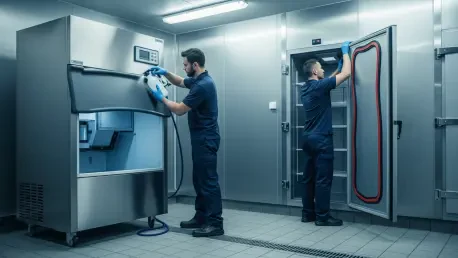
Biofilm accumulation and the presence of mold-like substances in ice machines and food processing equipment also posed significant concerns for local inspectors in late March 2026. At the Italian American Citizen Club, the interior of the ice machine was found to contain a black mold-like substance, while the deli slicer and potato fry cutter showed signs of old food residue. These “food-contact surfaces” are critical because they interact directly with ingredients that are often served without further cooking to kill pathogens. When equipment is not dismantled and sanitized according to a strict schedule, organic matter builds up, providing a breeding ground for bacteria such as Listeria or mold spores. The presence of these contaminants suggests that daily cleaning routines may be focusing on surface-level aesthetics rather than deep, structural sanitation. For operators, these citations serve as a call to action to prioritize the cleaning of specialized machinery, which often requires more time and training to handle correctly than standard countertops or floors.
Performance Outcomes Across the County
Human Factors: Hygiene and Cross-Contamination Hazards
The human element remains one of the most unpredictable variables in the food safety equation, as evidenced by numerous violations related to employee hygiene and improper food handling. At Thai Thai Restaurant, an inspector observed a staff member plating ready-to-eat salads using bare hands, a practice that is strictly prohibited due to the high risk of transmitting pathogens from skin to food. This type of violation often stems from a lack of adequate training or a fast-paced environment where workers prioritize speed over safety protocols. Furthermore, the “flow of food” was frequently interrupted by poor storage practices that invited cross-contamination. For example, raw burger meat was found stored alongside ready-to-eat snacks at the Italian American Citizen Club, while My River Town Bar was cited for placing raw ground beef above cooked empanada meat. These errors reflect a fundamental misunderstanding of storage hierarchy, which dictates that raw animal products must always be kept below and separate from items that require no further cooking.
Beyond direct food handling, administrative and facility-related shortcomings also contributed to the list of citations, demonstrating how infrastructure supports or hinders safety. A 7-Eleven store was found to be operating with a water heater that could not produce the 110°F water required for proper warewashing, rendering the sanitation of utensils and pans ineffective. Other locations, such as the Northmoreland Fire Company and Plains Fuel Citgo, faced citations for missing sanitary supplies in restrooms or failing to provide updated water quality reports for non-public systems. These administrative requirements are essential components of a holistic safety system, as they ensure that the basic building blocks of hygiene—clean water, soap, and heat—are consistently available. When a facility fails to maintain its basic utilities or documentation, it creates a cascading effect that undermines the efforts of even the most well-trained kitchen staff. Ensuring that every employee understands the “why” behind these regulations is just as important as the physical repairs themselves.
Compliance Landscapes: Success Stories and Persistent Failures
Despite the numerous citations issued during the week, a large percentage of Luzerne County establishments demonstrated an exceptional commitment to public health by achieving perfect inspection scores. This group of high-performing facilities included a diverse range of operations, such as the Salvation Army, Mizu Sushi Hibachi, and several elementary schools like Heights Murray and Dan Flood. The consistent success of educational institutions and certain national franchises, such as Chick-fil-A and Popeyes, suggests that centralized oversight and rigid internal auditing processes are highly effective. These organizations often employ dedicated safety officers and utilize standardized checklists that mirror the state’s requirements, allowing them to maintain a “culture of compliance” that persists regardless of who is on shift. The ability of these sites to pass unannounced inspections with zero violations serves as a benchmark for the rest of the industry, proving that high safety standards are achievable with the right management structure.
Conversely, the establishments listed as “out of compliance” serve as a cautionary tale of what happens when management oversight becomes fragmented or indifferent. The 7-Eleven on Carey Avenue and My River Town Bar both faced multiple critical violations that led to their negative status, including the sale of expired dairy products and the lack of basic handwashing signage. These failures often point to deeper systemic issues within a business, such as high staff turnover or a lack of investment in facility maintenance. While many minor violations were corrected while the inspector was still on-site—such as disposing of expired milk or posting required signs—the initial presence of these issues indicates a reactive rather than proactive approach to safety. For these businesses, the path back to compliance involves more than just a one-time fix; it requires a complete overhaul of their daily operating procedures and a renewed focus on staff accountability. These reports provide a necessary transparency for the public, highlighting which operators are truly prioritizing the health of their customers.
Forward-Looking Strategies: Building a Resilient Safety Culture
The inspection data from late March 2026 revealed a clear performance gap between institutional settings and smaller commercial retail environments, suggesting that specialized training could bridge this divide. Schools and university dining halls generally benefited from structured environments where safety is integrated into the daily routine, whereas smaller bars and convenience stores often struggled with the complexities of modern food codes. To address this, local operators should consider implementing digital temperature monitoring systems that provide real-time alerts if a cooler fails, removing the potential for human error or oversight. Furthermore, establishing a “food safety champion” within each shift could ensure that hygiene protocols, such as the prohibition of bare-hand contact with ready-to-eat foods, are consistently followed even during peak hours. These proactive steps moved beyond mere compliance and toward a model of continuous improvement that protected both the brand’s reputation and the health of the community.
Moving forward, the focus for Luzerne County food service operators shifted toward long-term sanitation and facility maintenance to prevent the recurrence of critical issues like mold and pests. It was recommended that businesses adopt more rigorous deep-cleaning schedules that included the disassembly of complex machinery, such as ice makers and deli slicers, which were frequent sites of biofilm accumulation. Managers were also encouraged to perform their own “mock inspections” weekly to identify structural issues like leaking gaskets or inadequate hot water before they were flagged by state officials. By treating food safety as a dynamic, daily responsibility rather than a periodic hurdle, establishments began to build a more resilient infrastructure that could withstand the pressures of high-volume service. The ultimate takeaway from the March 2026 reports was that transparency and communication between regulators and operators were essential for maintaining a safe dining environment. Continuous education and investment in modern safety technology proved to be the most effective tools for ensuring that every meal served in the county met the highest possible standards.