
The hospitality landscape in 2026 continues to present a complex array of challenges for operators, yet Seven Dials Market has managed to redefine success by generating a staggering £1.8 million in monthly revenue during this past October. This financial milestone is especially significant because it occurred during a period when the broader United Kingdom hospitality sector experienced a decline in consumer spending, specifically within the managed beverage category. While national data indicated a dip in beverage consumption, the Covent Garden destination recorded a robust fifteen percent year-over-year increase in bar sales, effectively isolating itself from the general downward trend. This achievement serves as a testament to the strategic vision of the management firm KERB, which has focused on creating a resilient ecosystem that thrives even when household budgets are under significant strain. By providing a high-value destination that appeals to both locals and international tourists, the market has secured its position as a dominant force in the competitive London food scene.
Shifting From Food Hall to Entertainment Hub
Transitioning Into a Multi-Faceted Destination
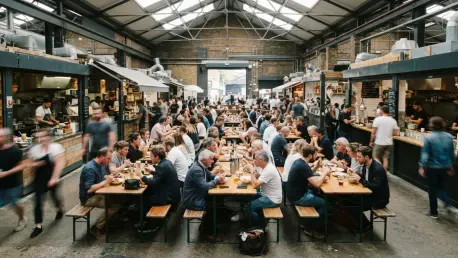
Recognizing that the novelty of street food halls has begun to plateau in a saturated market, the leadership at KERB initiated a comprehensive transformation of Seven Dials Market into a diverse entertainment destination. The central philosophy behind this evolution is the understanding that exceptional food is no longer a sufficient motivator on its own to encourage consumers to commute to central London when they could opt for local delivery or home cooking. Instead, the venue has been repositioned as a multi-functional space where dining is merely one component of a broader social tapestry designed to offer a unique environmental experience. By moving beyond the traditional food hall model, the operator has successfully addressed the changing demands of the modern urban consumer who seeks more than just a meal; they seek a destination that offers variety, atmosphere, and a tangible sense of place. This strategic pivot ensures that the market remains relevant in an era where the experience economy dictates the flow of discretionary spending.
Beyond the physical restructuring of the space, the market has emphasized the creation of “social currency,” ensuring that every visit provides patrons with something worth sharing and remembering. This approach involves a curated selection of twenty-one independent vendors who represent the best of London’s diverse culinary scene, providing an authentic alternative to homogenized chain restaurants. The strategy has effectively turned the market into a business incubator where small-scale entrepreneurs can flourish under the umbrella of a high-traffic destination. By providing these vendors with a platform that handles marketing, infrastructure, and event programming, the venue has created a stable environment for innovation. This collaborative model has proven to be incredibly lucrative, as evidenced by the 18.9% increase in revenue generated by the independent vendor network earlier in 2026. This success underscores the importance of supporting local talent to create a destination that feels deeply rooted in the city’s culture.
Extending Dwell Time: The Role of Entertainment
To solidify its status as a nightlife destination, the venue introduced the “Dials After Dark” initiative, which has played a fundamental role in increasing the average time a customer spends on the premises. By integrating a carefully curated schedule of live musical acts, professional DJs, and street performers into the Friday and Saturday evening schedules, the market has created an atmosphere that naturally transitions from a casual daytime lunch spot to a high-energy social hub. This increase in “dwell time” is a vital metric for success, as it directly correlates with higher per-person spending on beverages and communal snacks. When patrons are entertained, they are far more likely to remain in the venue after finishing their primary meal, leading to a symbiotic relationship between the independent food vendors and the onsite bars. The presence of live entertainment effectively bridges the gap between a quick dining stop and a full evening out, maximizing the revenue potential of every visitor who enters the warehouse.
The successful integration of theatrical events, such as the “Seven Sins Market,” demonstrated that seasonal activations provided a critical boost to consumer engagement and revenue stability. Operators who focused on creating immersive moments, like the indoor snowfall scheduled for the holiday season, effectively converted casual foot traffic into loyal brand advocates. It was clear that the future of urban hospitality relied on the ability to offer experiences that combined high-quality independent food with top-tier entertainment and strategic brand partnerships. Moving forward, businesses were encouraged to leverage data-driven seasonal programming to mitigate the risks associated with economic volatility and shifting consumer sentiment. By prioritizing atmospheric “theater” and social value, destinations like Seven Dials Market established a blueprint for long-term resilience. The key takeaway for the industry was the necessity of evolving from a simple service provider into a comprehensive experience curator, ensuring that every visit felt like a unique event.