
Katarina Railko brings a wealth of experience from the front lines of global tourism and large-scale event management to her role as a leading hospitality expert. With a sharp eye for the nuances of luxury service and the logistical demands of major expos, she is uniquely positioned to analyze the shifting landscape of resort real estate. In this discussion, we explore the operational complexities of managing Pioche Village Park City, a massive 402-unit residential resort that sits at the heart of the Deer Valley expansion. Railko breaks down the strategy behind high-density luxury studios, the intricacies of regional resource sharing in Utah, and the delicate balance of maintaining a high-touch environment for owners and guests alike.
Pioche Village is situated adjacent to the Jordanelle Express Gondola and the new Deer Valley East Village development. How does this specific ski-in/ski-out positioning influence your operational strategy for guest arrivals, and what logistical steps are necessary to manage equipment storage and mountain access for a 402-unit property?
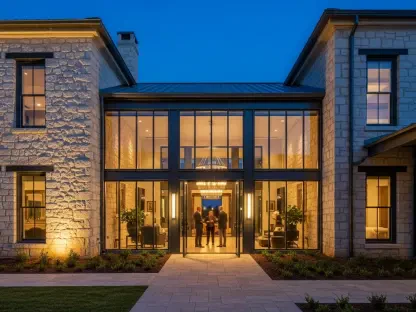
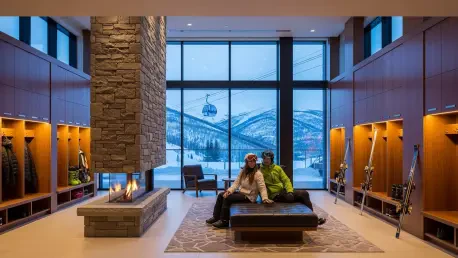
The proximity to the Jordanelle Express Gondola transforms the arrival experience from a standard check-in into a seamless transition to the mountain. For a property with 402 units, the logistical “choreography” must be precise to avoid bottlenecks, especially when guests are eager to catch the first chair on a fresh powder day. We implement a high-efficiency valet and storage system that ensures guests can smell the crisp mountain air rather than waiting in equipment lines. By integrating the ski-in/ski-out flow directly into the mudroom and locker design, we manage the heavy traffic of several hundred skiers while maintaining the quiet, upscale atmosphere expected of a premier Utah destination. It is about creating a sensory journey where the transition from the warmth of the lobby to the snow is felt but never forced.
With approximately 90 percent of the resort consisting of 450-square-foot studio residences equipped with full kitchens, the property targets a specific traveler profile. How do you tailor guest services for extended-stay leisure travelers in these compact layouts, and what metrics do you use to evaluate the success of these specialized accommodations?
While the 450-square-foot footprint is efficient, the inclusion of full kitchens allows us to cater to the modern traveler who values autonomy and the comforts of home during a long mountain retreat. We focus our service on “invisible hospitality,” ensuring that these studios are stocked with high-end provisions and that the culinary tools provided are of professional quality. Success is measured by the average length of stay and repeat booking rates, which indicate if our guests feel the space is a sanctuary rather than just a room. We also look closely at “living efficiency” scores from guest feedback to ensure that families and couples feel the layout enhances their connection to the Park City environment. It is a delicate balance of providing a high-density solution without sacrificing the emotional feeling of a spacious, private residence.
The facility features a diverse range of amenities, including a yoga studio, steam room, media room, and social lounges. How do you balance the maintenance and staffing requirements for such varied social spaces, and what is your process for ensuring these high-touch areas meet the expectations of upscale condominium owners?
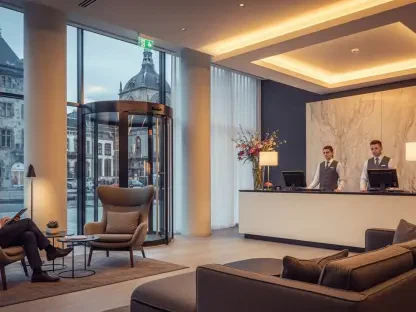
Managing high-touch areas like a steam room or a yoga studio requires a rigorous preventative maintenance schedule that runs like clockwork behind the scenes. We treat these social lounges and wellness spaces as the “living rooms” of the community, where the scent of eucalyptus and the visual tidiness of the billiards room must be consistent 24 hours a day. Our staffing model relies on multi-disciplinary teams who are trained to oversee both the aesthetic and functional aspects of these spaces, ensuring that the leather in the media room is pristine and the steam room temperature is exact. For upscale owners, we provide transparency through regular asset management reports, showing them exactly how their investment is being preserved. The goal is to create a vibrant, shared social fabric where every amenity feels like a private luxury rather than a public utility.
As this property joins a portfolio that includes Black Desert Resort and the upcoming Stelle, how does the expansion into the Sky Ridge Mountain Community impact your regional resource sharing? What specific advantages does a clustered management approach provide for procurement and localized marketing in the Utah market?
Expanding into the Sky Ridge Mountain Community allows us to create a powerful operational hub in Utah, particularly with The Stelle arriving in 2027. This clustering gives us incredible leverage in procurement, allowing us to source local goods and high-end materials at a scale that a single 402-unit property could not achieve alone. Marketing becomes much more effective when we can cross-promote between the southern charm of Black Desert and the alpine luxury of Park City, offering a “Utah circuit” for our travelers. We can share specialized staff and technical resources across these sites, which reduces overhead while elevating the level of expertise available at each front desk. This regional density turns our individual properties into a cohesive ecosystem that can dominate the local market through shared intelligence and buying power.
Managing a residential collection involves overseeing both vacation rental distributions and homeowners associations. What are the primary challenges in aligning the interests of individual property owners with the operational standards of a resort brand, and how do you handle renovation oversight without disrupting the guest experience?
With more than 1,200 residences and 26 homeowners associations already in our broader collection, we have learned that communication is the most vital tool for alignment. Owners often have a deep emotional and financial stake in their units, so we must demonstrate how our rigorous brand standards—from housekeeping to maintenance—directly protect their property value. When it comes to renovation oversight, we utilize a “phased ” approach where heavy work is scheduled during the shoulder seasons to ensure the guest experience remains quiet and undisturbed. We act as the bridge between the individual owner’s vision and the resort’s operational reality, ensuring that every upgrade meets our high-performance criteria. It is about building trust so that the owner feels their asset is in expert hands, while the guest feels only the luxury of a well-maintained home.
What is your forecast for the Park City residential resort market?
The Park City market is entering a transformative phase where the line between a traditional hotel stay and luxury residential living is completely disappearing. With the expansion of Deer Valley and the addition of sophisticated properties like Pioche Village, we are seeing a permanent shift toward high-density, amenity-rich developments that cater to a year-round “work-from-mountain” lifestyle. I expect to see an even greater emphasis on integrated wellness and social spaces as travelers move away from isolated stays toward community-focused environments. As long as we continue to pair incredible mountain access with seamless, high-tech residential management, this region will remain a global gold standard for resort real estate. The demand for these hybrid models is only going to intensify as more people seek out authentic connections to the places where they play and live.