
The physical environment of Sarh presents substantial hazards, as the road infrastructure is in a state of advanced disrepair with significant potholes that become impassable during the rainy season. This structural decay serves as a fitting metaphor for the broader security situation in southern Chad, where the capital of the Moyen-Chari Province struggles to provide basic safety for its residents and the very few international visitors who venture there. Currently, Sarh maintains a safety index of 26, reflecting a high-risk environment where the benefits of being a regional hub for the textile and cotton industries are often negated by systemic instability. The city functions as a vital economic artery, yet it lacks the robust policing and civic infrastructure necessary to mitigate the myriad threats that define life in this corner of the Sahel. For those considering travel in 2026, the reality is one of calculated danger, requiring extensive pre-planning and a level of vigilance that far exceeds what is typically expected in most urban environments. The combination of local crime, regional militant activity, and a lack of emergency services creates a landscape where the margin of error is dangerously thin for anyone entering the city without professional security assistance.
Primary Security Risks and Regional Threats
Terrorism: The Impact of Border Instability
The proximity of Sarh to the border of the Central African Republic creates a volatile security dynamic characterized by the periodic spillover of regional conflicts into Chadian territory. This southern corridor has historically been sensitive to the movements of armed groups and rebels who exploit the porous borders to evade detection and conduct opportunistic raids on local villages and supply lines. In the current climate of 2026, these movements have not abated; rather, they have evolved into a persistent threat of militant incursion that targets both government personnel and civilian infrastructure. The Moyen-Chari Province is frequently listed as a high-alert zone because these extremist elements are known to operate in the rural periphery of Sarh, waiting for moments of administrative weakness to strike. These groups often leverage the dense vegetation and difficult terrain to establish temporary camps, making it extremely difficult for Chadian security forces to maintain a consistent presence or conduct successful counter-insurgency operations without significant international support or heavy military engagement.
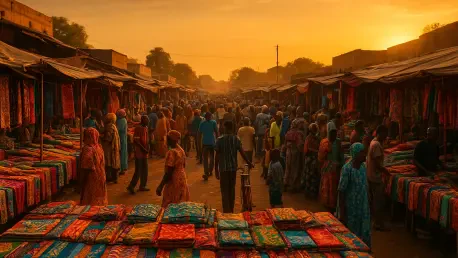
Public spaces in Sarh, including its bustling central markets and key transportation terminals, are often identified as high-value targets for unconventional attacks aimed at creating mass disruption. The threat is not merely theoretical; it is a calculated component of the regional security profile that international non-governmental organizations and diplomatic missions account for in their daily operations. Foreigners and aid workers are viewed by extremist factions as symbolic targets, leading to an increased risk of targeted violence in areas where Western influence is visible. This environment necessitates a strategy of constant situational awareness, as attacks can occur with virtually no warning and often focus on locations with high pedestrian density or where security screening is minimal. Travelers are generally advised to minimize their time in these “soft target” areas, as the local capacity to respond to a major security incident remains hampered by a lack of specialized anti-terrorism units and a decentralized command structure that can lead to delayed reactions during a crisis.
Violent Crime: Understanding the Urban Threat
In addition to organized extremist threats, the daily reality of violent crime in Sarh poses a significant danger to personal security. Armed robbery and carjacking are common occurrences, particularly on the outskirts of the city where police patrols are sporadic or entirely absent. Criminals often operate in small, highly mobile groups, targeting individuals who appear to have wealth or access to high-value items such as electronics and foreign currency. Unlike petty theft, these encounters often involve the use of firearms or blades, and the propensity for violence is high if a victim attempts to resist. Security consultants consistently emphasize that compliance is the only viable strategy during an armed robbery in Sarh, as the local judicial system offers little deterrent to criminals who are often more concerned with immediate gain than the long-term consequences of their actions. This high-crime environment is exacerbated by a lack of street lighting and the absence of a reliable emergency response system, leaving victims with few options once an incident has occurred.
Political volatility and civil unrest further complicate the safety landscape, as southern Chad remains a focal point for dissent against the central government. Protests can erupt spontaneously in Sarh, often triggered by fluctuations in the price of fuel, food shortages, or perceived corruption within the provincial administration. These demonstrations frequently escalate into violent confrontations between protesters and security forces, who are known to use tear gas and live ammunition to disperse crowds. For a traveler, the danger lies in being caught in the crossfire or being mistaken for a political agitator by overzealous local authorities. The rapid escalation of these events means that a seemingly peaceful neighborhood can become a flashpoint for violence within minutes. Consequently, it is essential to monitor local news and social media channels constantly, although the reliability of information can be compromised by government-imposed internet shutdowns during times of acute crisis.
Physical Hazards and Infrastructure Limitations
Transportation: The Perils of Chadian Roads
Navigating the roads in and around Sarh is perhaps the most consistent physical danger a traveler will face, even in the absence of criminal activity. The lack of standardized traffic enforcement means that the roads are a chaotic mixture of overloaded commercial trucks, poorly maintained motorcycles, and wandering livestock. Many vehicles operating in the region are in a state of extreme mechanical neglect, frequently breaking down in the middle of narrow thoroughfares or operating without functioning headlights and brakes. This environment is particularly hazardous during the peak of the cotton harvest, when large, unstable loads of raw materials dominate the transit corridors. The risk of high-impact collisions is substantial, and the lack of a formal ambulance service means that victims of road accidents are often left to rely on the goodwill of passersby for transport to a medical facility, which may be hours away and ill-equipped to handle trauma.
The threat of highway bandits, locally known as “coupeurs de route,” adds a layer of predatory danger to any journey outside the city limits of Sarh. These groups typically set up illegal roadblocks using fallen trees or heavy stones, forcing vehicles to stop in isolated areas where the occupants can be easily robbed at gunpoint. Because of this, nighttime travel is universally condemned by security experts and local authorities alike; once the sun sets, the risk of encountering these bandits increases exponentially, and the lack of visibility makes it impossible to detect an ambush before it is too late. Furthermore, the presence of numerous official and unofficial checkpoints along the main routes to N’Djamena or Moundou can lead to stressful interactions. While intended for security, these stops are frequently used by local personnel to solicit “fees” or engage in prolonged searches of personal belongings, requiring travelers to maintain a calm and compliant demeanor to avoid detention or further extortion.
Health and Environment: Navigating Local Realities
The medical infrastructure in Sarh is woefully inadequate for anything beyond the most basic healthcare needs. Local hospitals and clinics suffer from chronic shortages of essential medicines, sterile supplies, and reliable electricity, making even minor surgical procedures a high-risk endeavor. In 2026, the region continues to struggle with high rates of malaria, meningitis, and various waterborne illnesses, which can quickly become life-threatening for those without pre-existing immunity or access to high-quality treatment. Travelers must understand that a serious health event in Sarh almost always necessitates a medical evacuation, which can cost tens of thousands of dollars and take 24 to 48 hours to coordinate. This lack of a safety net means that any person with a chronic health condition or a compromised immune system is taking a massive gamble by visiting the region, as the local healthcare system is simply not designed to cater to the expectations of international visitors.
Environmental factors also play a significant role in the safety profile of the Moyen-Chari Province, where the tropical climate can be punishingly intense. During the dry season, temperatures in Sarh regularly exceed 100°F, creating a constant risk of heatstroke and severe dehydration for those who are not properly acclimated or who lack access to climate-controlled environments. The physical toll of the heat is compounded by the dust and poor air quality, which can cause significant respiratory distress. Conversely, the rainy season brings the threat of localized flooding, particularly in the neighborhoods bordering the Chari River. These floods not only damage local dwellings but also contaminate the limited clean water sources, leading to a surge in gastrointestinal diseases. For the traveler, these seasonal shifts mean that logistical plans must remain flexible, as a single heavy downpour can wash out a primary bridge or render the local airstrip unusable for days at a time.
Navigating Sarh and Mitigation Strategies
Zoning and Demographics: Risk Stratification
Safety in Sarh is often a matter of geography, with certain sectors of the city offering a relative degree of protection while others remain zones of high vulnerability. The central administrative district, which houses government offices and a handful of established hotels, is generally considered the most secure area for foreigners. These hotels often serve as fortified enclaves, featuring high perimeter walls, gated entries, and private security guards who monitor all arrivals and departures. Staying in such a facility is not a luxury but a fundamental security requirement for any person visiting the city for business or humanitarian work. In contrast, the peripheral residential districts and the areas near the river are characterized by a total lack of street lighting and a minimal police presence, making them ideal environments for criminal activity after dark. Travelers are strictly advised to avoid these areas and to conduct all of their movements during daylight hours in a pre-arranged vehicle.
Specific demographics must also take additional precautions when navigating the social landscape of Sarh. For women, the security risks are significantly heightened due to cultural norms and a general lack of legal protection against harassment or assault. Solo travel for women is strongly discouraged by all international travel advisories, and those who must visit the region should always travel in groups and ensure they have a reliable, vetted local guide at all times. Furthermore, the economic disparity between international visitors and the local population often leads to “opportunistic pricing” and sophisticated social engineering scams. These can range from inflated transportation costs to more elaborate schemes involving fake government permits or requests for “emergency” financial assistance from local acquaintances. Developing a network of trusted local contacts is the only effective way to distinguish between legitimate needs and exploitative demands in an environment where everyone is struggling to survive.
Strategic Preparation and Risk Mitigation: Actionable Outcomes
To successfully navigate the complexities of Sarh, travelers implemented a multi-layered security strategy that began long before their arrival. Successful missions to the region required the procurement of specialized high-risk travel insurance that specifically covered security extraction and medical evacuation by air. These policies proved vital for those who encountered medical emergencies or were caught in areas of sudden civil unrest. Additionally, the use of satellite communication devices became a standard protocol for professionals moving outside the city center, as the local cellular network was prone to frequent outages and government-ordered shutdowns. By maintaining a constant link to a 24-hour security operations center, travelers were able to receive real-time updates on protest locations and militant movements, allowing them to adjust their itineraries dynamically and avoid high-threat zones before they were compromised.
Operational security was further enhanced by the practice of maintaining a low profile and vetting every logistical detail. Travelers avoided the use of marked vehicles or the display of expensive jewelry and electronics, which significantly reduced their visibility as high-value targets. All transportation was conducted through pre-arranged, private contracts with drivers who were familiar with the local security landscape and could navigate the numerous checkpoints without escalating tensions. By prioritizing secure lodging and adhering to a strict “no-travel” policy after dark, visitors successfully minimized their exposure to the most frequent threats in the province. These proactive measures, combined with a deep respect for local cultural norms and a disciplined approach to hygiene and health, provided the only viable path for completing essential work in a region where the margin for safety remained exceptionally slim throughout the year.