
Modern travelers are increasingly rejecting the sterile, cookie-cutter aesthetic of traditional luxury chains in favor of environments that feel like a private residence without sacrificing professional amenities. The debut of Block House in Vancouver marks a pivotal transition for Kalido House Hotels, formerly known as Kalido Hospitality Group, as it solidifies its place in the high-end residential market. This expansion coincides with the official unveiling of a unified parent brand that reflects a strategic evolution toward a specialized hospitality model. This concept aims to satisfy the growing traveler demand for apartment-style accommodations that prioritize residential comfort, flexibility, and spatial abundance without sacrificing the professional service and consistent design typically found in boutique hotels. Kalido’s portfolio now integrates Block House alongside its existing properties, Smithe House and Keefer House, under a singular vision. Managed by Javier Cepeda, the company focuses on creating design-driven stays that foster a deep connection to their local neighborhoods, ensuring each guest feels like a temporary citizen rather than a visitor.
Architectural Heritage: The Transformation of the Commercial Block
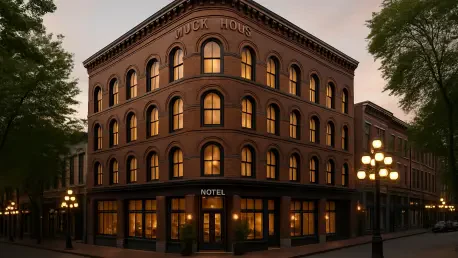
Block House represents a significant piece of Vancouver’s architectural history, located at the intersection of Columbia and Powell at the edge of the historic Gastown district. The building was originally known as the Commercial Block when it was constructed in 1893, designed by the renowned architect William Blackmore. During that era, it served as a vital hub for rail-based trade and was notable for featuring one of the first elevators ever installed in the city. The restoration process, which commenced in early 2026, focused on repurposing the top three floors into 19 loft-style apartments. The design language utilizes mid-century aesthetics to honor the building’s heritage while integrating modern technology for a seamless guest experience. The suites vary in layout, with some featuring full kitchens and others offering streamlined kitchenettes for shorter stays. This careful balance of preservation and modernization defines the current architectural revival seen across the city’s oldest quarters, where history meets high-tech functionality for the discerning modern guest.
Local Integration: Curating the Gastown Guest Experience
To further root the property in its immediate community, Kalido partnered with several high-end local brands to provide curated amenities for its guests. Collaborations with companies such as TALLU, Tealeaves, Pallet Coffee Roasters, and Fable Kitchen ensured that the sensory experience remained distinctly Vancouverite. Strategically situated within walking distance of Chinatown and the waterfront, the property acted as a flagship for the new identity of the brand. When the doors opened on March 21, 2026, the project illustrated a broader trend in the hospitality industry toward heritage preservation and localized, tech-enabled residential stays. Stakeholders in the urban development sector should have looked at this model as a blueprint for sustainable growth that respects local history. Future developments prioritized the integration of existing structures over new builds to reduce environmental impact. Investors found that bridging the gap between traditional hotels and private rentals offered the most resilient returns in an evolving tourism market.