
Today we’re joined by Katarina Railko, a leading expert in the travel and hospitality industry, whose work provides a crucial lens on the intersection of tourism and public policy. As the industry grapples with the dual pressures of potential government shutdowns and persistent workforce shortages, we’ll explore the real-world consequences for travelers and businesses alike. Our conversation will delve into the far-reaching economic impact of funding lapses, the operational strains on our aviation system, and the legislative solutions being proposed to create stability. We’ll also examine the critical role of the H-2B visa program in helping hotels prepare for seasonal surges and major international events on the horizon.
Given that a recent government shutdown cost the economy $6 billion and disrupted over 6 million passengers, could you detail how those impacts ripple through the entire travel ecosystem? Please provide a few specific examples beyond the initial flight cancellations.
It’s a devastating chain reaction that goes far beyond the airport terminal. That headline figure, nearly $140 million lost per day, represents a massive blow to consumer confidence. When travelers see chaos on the news, they hesitate to book future trips, creating a chilling effect. A canceled flight isn’t just an inconvenience for 6 million people; it’s a hotel room in Orlando that sits empty, a rental car that isn’t picked up in Denver, and a family-owned restaurant near a national park that loses a week’s worth of reservations. These shutdowns sever the economic lifelines that connect airlines to hotels, ground transportation, and local attractions, hitting small businesses the hardest and leaving a scar on the economy long after the government reopens.
When frontline federal workers like TSA officers and air traffic controllers are forced to work without pay, what are the direct operational strains on the aviation system? Could you describe the day-to-day challenges and the potential safety implications that arise?
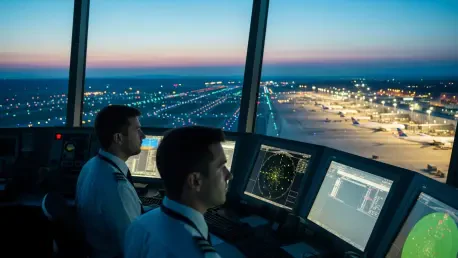
The strain is immense and, frankly, dangerous. You have to put yourself in their shoes. Imagine being an air traffic controller, a job that demands absolute precision and focus, while worrying about how you’re going to pay your mortgage or buy groceries. That personal stress doesn’t just vanish when they step into the control tower. We see higher rates of absenteeism, which forces the remaining staff to work longer, more grueling shifts. This fatigue significantly raises the risk of human error in an already under-resourced system. For TSA officers, the pressure of facing frustrated crowds, combined with their own financial anxiety, degrades morale and can lead to slower screening times and a less secure environment. It stretches the system to its breaking point, and when you’re talking about aviation, that’s a risk we simply cannot afford to take.
The Aviation Funding Solvency and Stability Acts are being proposed as a long-term fix. Can you explain the mechanics of how these bills would use existing funds to pay workers during a shutdown and outline the steps needed to get this bipartisan legislation passed?
These acts are an incredibly practical, common-sense solution. Essentially, they create a protected financial bubble for critical aviation personnel. The system is funded by taxes and fees that travelers and airlines already pay into a dedicated trust fund. These bipartisan bills would allow the FAA to access those specific funds during a government-wide shutdown to ensure that air traffic controllers and other essential employees continue to receive their paychecks. It insulates aviation safety from political stalemates. Getting them passed requires a unified voice from the industry and the public, consistently reminding lawmakers in the House and Senate that the safety and reliability of our air travel system should never be a political bargaining chip.
With nearly 65,000 supplemental H-2B visas being released, how exactly do these workers help hotels meet seasonal demand and prepare for mega-events like the World Cup? Please describe the specific roles they fill and the operational challenges that persist without them.
These supplemental visas are an absolute lifeline, especially with massive events like the FIFA World Cup and America250 on the horizon. H-2B workers are the backbone of seasonal operations, filling crucial roles in housekeeping, groundskeeping, and kitchen support that are often difficult to staff locally during peak demand. Without them, hotels are forced to cap occupancy, close off sections of the property, or reduce services at pools and restaurants. This directly impacts the guest experience and revenue. The release of these nearly 65,000 visas means our members can confidently staff up to maintain the high level of service guests expect, ensuring we’re ready to welcome the world.
Looking beyond these supplemental visas, what would a modernized, needs-based H-2B program look like? Could you walk through the key reforms needed to reduce red tape and better align the legal labor pool with the industry’s actual workforce demands?
A modernized program would be agile and responsive to economic reality, not tied to outdated, arbitrary caps. The key is a needs-based allocation, where the number of available visas is directly linked to proven labor shortages and economic demand. This would eliminate the frantic, lottery-like scramble for visas each year. We also need commonsense reforms that reduce the bureaucratic red tape, especially for returning workers who have already proven to be reliable and are requested by their employers. By streamlining the process and ensuring the legal labor pool can expand and contract with the economy, we can create a stable, predictable system that supports local businesses and protects U.S. workers.
What is your forecast for the travel industry’s stability over the next two years, considering the ongoing legislative challenges with both government funding and workforce solutions?
I am cautiously optimistic, but that optimism is heavily dependent on Congress taking decisive action. The demand for travel is incredibly strong, but the industry is navigating significant headwinds from Washington. If we can pass legislation like the Aviation Funding Stability Acts to prevent future shutdown disruptions, that will build tremendous confidence. Similarly, if we can achieve meaningful, long-term reform of the H-2B program to provide a reliable workforce, the industry will be positioned for incredible growth, especially with major events ahead. However, if we continue to bounce from one funding crisis to the next and rely on last-minute, temporary visa releases, the next two years will be characterized by uncertainty and instability, preventing the industry from reaching its full potential. The path forward is clear; the question is whether our leaders will take it.