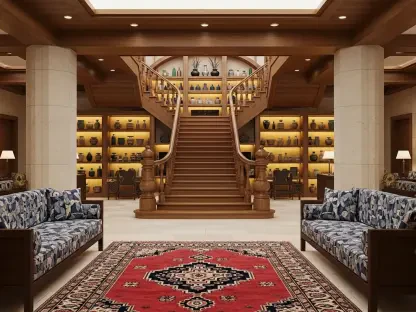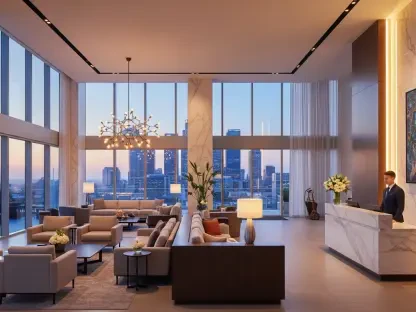

Fresh from a staggering two-billion-dollar transformation that took nearly a decade to complete, the legendary Waldorf Astoria New York has reemerged only to find itself immediately listed for sale, raising a profound question across the global real estate landscape. The decision by its current owner, Dajia Insurance Group, to place this freshly polished global icon on the market initiates a new, uncertain chapter for the Park Avenue landmark. This move forces market observers to scrutinize the complex intersection of immense financial investment, geopolitical maneuvering, and the calculated timing required to divest from one of the world’s most recognizable assets.
A Tale of Two Owners and a Government Intervention
The Waldorf Astoria’s recent journey has been anything but stable, marked by a dramatic shift in ownership and international politics. The saga began in 2014 with a record-shattering $1.95 billion sale from Hilton to China’s Anbang Insurance Group, a deal that transferred an American institution into the hands of an ambitious overseas conglomerate. Anbang’s vision was grand, promising to restore the hotel to its former glory and beyond, earmarking what would become a $2 billion budget for a top-to-bottom overhaul.
However, this ambitious plan was soon derailed by forces far beyond the New York real estate market. The Chinese government, in an effort to curb capital flight and speculative overseas investment, launched a broad crackdown that ensnared Anbang and its high-profile chairman. The subsequent state takeover of the insurance giant in 2018 led to the creation of a new entity, Dajia Insurance Group, which was tasked with managing Anbang’s sprawling portfolio, including the half-renovated Waldorf Astoria. This intervention fundamentally altered the asset’s trajectory, transforming it from a corporate trophy into a state-managed holding slated for eventual divestment.
The Billion Dollar Gamble on Park Avenue
The renovation itself evolved into a monumental undertaking, far exceeding its initial scope and timeline. What was planned as a significant but manageable project spiraled into a near-decade-long endeavor, ultimately reopening its doors five years behind schedule and more than $1 billion over its initial budget. The sheer scale of the work was transformative, not just restoring the hotel’s Art Deco splendor but fundamentally reimagining its purpose for the modern luxury consumer.
This strategic pivot involved a drastic reconfiguration of the building’s interior. The original layout of nearly 1,400 hotel rooms was deconstructed and reborn as a hybrid property. The new Waldorf Astoria now comprises 375 ultra-luxury hotel guestrooms and suites, complemented by 372 exclusive private residences known as The Towers of the Waldorf Astoria. This dual-purpose model was designed to diversify revenue streams, appealing to both transient high-end travelers and permanent residents seeking an iconic address, a strategy intended to de-risk the massive capital expenditure.
Capitalizing on a Red Hot Luxury Market
While selling an asset immediately after such a costly and lengthy renovation appears counterintuitive, the timing is strategically sound when viewed through the lens of New York City’s current hospitality market. The city’s luxury hotel sector is experiencing an unprecedented boom, creating a uniquely favorable environment for sellers of high-value properties. This period of robust performance presents a prime window for Dajia to maximize its return and exit its complex investment.
The data underscores this opportune moment. Over the past decade, the average daily rate (ADR) for New York’s luxury hotels has soared from approximately $400 to a new high of $580. More tellingly, revenue per available room (RevPAR), a key industry performance metric, has seen a year-over-year increase of 9.4 percent. This powerful growth trajectory suggests that the top tier of the market is not only resilient but thriving, driven by a clientele that prioritizes unique experiences and is less sensitive to price fluctuations.
Expert Analysis on Price and Prestige
Market analysts widely agree that the sale is less about recouping the full investment and more about leveraging the property’s immense prestige in a seller’s market. Jan Freitag, an analyst with CoStar, points to the “tremendous pricing power” that unique luxury hotels command. For the world’s wealthiest travelers and investors, the Waldorf Astoria is not just a building; it is a piece of history and a symbol of status, allowing it to command premium rates and attract a specific class of buyer.
Consequently, the consensus is that the new owner will likely be an international entity, such as a sovereign wealth fund or a family office, seeking to acquire a “trophy asset.” These buyers are often motivated by long-term capital preservation and the cachet of owning an irreplaceable landmark, rather than the immediate, high-yield returns sought by U.S. private equity firms. Reports suggest an asking price exceeding $1 billion, which, while substantial, signals that Dajia Insurance Group does not expect to recover its total $4 billion expenditure but aims to secure a significant return in a favorable market.
What This Sale Means for the Market’s Future
The sale of the Waldorf Astoria will undoubtedly set a new benchmark for the ultra-luxury real estate market, yet its unique circumstances make it a difficult precedent to replicate. The combination of its storied history, the sheer scale of the renovation, and its hybrid hotel-residence model creates a singular data point. Other developers and investors will watch closely, but the specific financial and political factors driving this sale limit its applicability as a straightforward market indicator.
Amid the speculation over the final sale price and the identity of the new owner, one element remains constant: the hotel’s operational future. Hilton has secured a 100-year management contract, ensuring that the day-to-day running of the Waldorf Astoria will continue seamlessly, regardless of who holds the deed. This long-term agreement provides crucial stability, safeguarding the brand’s standards and assuring guests and residents of uninterrupted service. Ultimately, the sale was a complex financial maneuver born of unique geopolitical circumstances, concluding a tumultuous chapter while positioning the iconic hotel for its next century on the world stage.