
The modern landscape of travel has been irrevocably altered by a consumer base that no longer views a hotel room as a mere place to sleep but as a semi-permanent sanctuary for life and work. As traditional lodging continues to grapple with the unpredictable nature of leisure tourism and shifting corporate travel budgets, the extended-stay sector has emerged as a formidable pillar of stability. Recent performance metrics reveal that these properties maintained an occupancy rate roughly 14 percentage points higher than the broader hospitality industry, signaling that the demand for long-term accommodations is not merely a passing trend. This resilience is rooted in a fundamental shift in traveler behavior, where the presence of a kitchenette and additional living space has transformed from a luxury into a necessity for those navigating a world of remote work and housing shortages.
The Suite Spot in a Shifting Economy
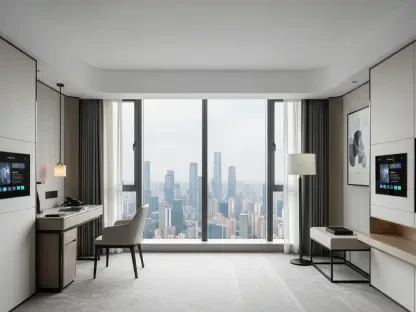
The hospitality landscape is witnessing a profound realignment where the traditional hotel model is being tested by new economic realities. While standard hotels often find themselves at the mercy of seasonal vacations and fleeting business trips, the extended-stay sector thrives on a different kind of guest—the individual who requires a base of operations for weeks or months at a time. This segment has carved out a “suite spot” by catering to a demographic that values functionality over frills. By providing amenities that mirror a residential environment, such as full-sized refrigerators and dedicated workspaces, these properties have become the preferred choice for a workforce that is increasingly mobile and project-oriented. This shift is not just about physical space; it represents a strategic pivot toward a more predictable revenue model that remains insulated from the typical volatility of the travel market.
Moreover, the financial robustness of the extended-stay model is driven by its inherent operational efficiency. Unlike full-service hotels that require massive staffing levels for daily housekeeping, room service, and extensive lobby maintenance, extended-stay properties utilize a “light-touch” service approach. This model focuses on weekly housekeeping and streamlined front-desk operations, which significantly lowers labor costs and increases profit margins. In an era where labor shortages and wage inflation have squeezed the bottom lines of traditional hoteliers, the lean nature of the extended-stay operation has turned it into a powerhouse for real estate investors. The ability to maintain high occupancy with minimal overhead ensures that these properties can survive even when the broader economy experiences a temporary cooling period.
This economic resilience is further bolstered by the changing nature of the “guest.” Today, the person staying in an extended-stay suite is just as likely to be a digital nomad as they are a relocation specialist or a construction contractor. The versatility of the product allows it to capture multiple market segments simultaneously, ensuring that rooms are rarely empty. As high housing costs make traditional apartment leases less accessible for those in transition, these hotels have stepped in to fill the gap, providing a middle ground between a short-term rental and a permanent home. This evolution has solidified the sector’s reputation as a recession-resistant asset class that continues to attract significant capital even as other real estate sectors face uncertainty.
Why the Extended-Stay Model Is Reaching a Turning Point
To understand where this sector is headed, it is essential to recognize that it has moved beyond its origins as a niche solution for construction crews and military personnel. For years, extended-stay hotels were the “quiet performers” of the hospitality world, operating under the radar while glamourous urban resorts took the spotlight. However, the convergence of several major trends has pushed this model into the mainstream. The rise of infrastructure-led demand, fueled by massive national investments in energy, technology, and healthcare, has created a permanent need for workforce housing. Whether it is a team of engineers working on a multi-year bridge project or traveling nurses supporting a regional hospital system, the demand for reliable, long-term lodging is higher than ever before.
This transition marks a maturation of the sector from a period of rapid, sometimes disorganized expansion into a more disciplined phase of development. In the early days of the current boom, developers were often rewarded simply for adding kitchenettes to standard rooms. Now, the market is becoming more discerning. Brand identity and guest experience have become critical differentiators as the field becomes more crowded. The industry is moving toward a standard where operational excellence and technological integration are no longer optional. This turning point reflects a broader realization that the extended-stay model is not just a sub-category of the hotel business but is actually a hybrid between hospitality and multi-family residential housing.
Furthermore, the rise of the digital nomad and the decentralization of the traditional office have provided a consistent tailwind for the sector. As more professionals gain the freedom to work from anywhere, they are choosing to spend longer periods in different cities, seeking accommodations that offer the comforts of home without the long-term commitment of a lease. This trend has forced brands to reconsider their design philosophies, leading to the creation of properties that feel less like sterile transit hubs and more like community-focused living spaces. As the sector matures toward the end of the decade, the winners will be those who can provide a seamless transition between work and life, balancing the efficiency of a hotel with the warmth of a residence.
Market Dynamics: Supply Surges and the K-Shaped Recovery
The trajectory of the extended-stay market is currently being shaped by a complex interplay between record-breaking demand and a significant influx of new inventory. Recent data indicates that supply growth has reached its highest levels since 2019, creating a situation where the sheer volume of new rooms is beginning to outpace demand in certain geographical regions. This “dilution” of occupancy means that while more people are staying in extended-stay hotels than ever before, individual properties must work harder to maintain their market share. The competitive environment is no longer just about having an available room; it is about providing the best value and location in a market that is increasingly saturated with options.
This saturation is occurring against the backdrop of a “K-shaped” economic recovery, which has created a visible divide in how different segments of the market perform. While luxury and upper-scale suites continue to see robust spending from high-earning professionals and corporate clients, the economy and midscale segments are feeling the pressure of inflation. Travelers who traditionally relied on budget-friendly extended-stay options are becoming more price-sensitive, forcing operators to make a choice: they must either compete on rock-bottom pricing or enhance their amenities to justify higher rates. This stratification is a critical dynamic for investors to watch, as it dictates which sub-sectors will remain profitable and which will struggle to keep up with rising operating costs.
Despite these supply concerns, massive infrastructure projects serve as a reliable “floor” for occupancy levels across the country. As the energy sector pivots toward new technologies and the healthcare industry expands to meet the needs of an aging population, the requirement for temporary housing for specialized labor remains constant. These large-scale projects often span several years, providing a steady stream of “heads in beds” that traditional hotels cannot access. This unique demand driver ensures that even in an oversupplied market, properties located near industrial hubs, tech centers, or medical complexes will continue to perform well. The future of the sector relies heavily on identifying these growth corridors before they become overcrowded with competitors.
Expert Perspectives on Maturation and the “Rate Cliff”
Industry leaders and market analysts are increasingly vocal about the fact that the era of indiscriminate expansion has come to an end. We are now entering a period of “deliberate performance differentiation,” where the success of a project is determined by surgical precision in site selection and a deep understanding of local demand. Experts argue that the “Wild West” phase of the extended-stay boom—where almost any property with a stove could succeed—has been replaced by a more sophisticated landscape. Developers who once focused on major urban centers are now looking toward secondary and tertiary markets where supply is lower and the demand for workforce housing is underserved. This strategic shift is necessary to avoid the pitfalls of over-saturation in high-profile cities.
One of the most significant challenges identified by analysts is the looming “rate cliff.” Over the past few years, the cost of constructing a single hotel room has jumped from approximately $100,000 to as much as $135,000 or more. This increase is driven by higher material costs, stricter building codes, and a shortage of skilled labor. To break even on these expensive new builds, developers are forced to charge nightly rates that are significantly higher than historical averages for the economy segment. If these rates climb too high, there is a legitimate risk of alienating the very budget-conscious workers and relocating families that form the backbone of the sector. Navigating this gap between construction costs and consumer affordability is the primary hurdle for the next generation of extended-stay properties.
To mitigate these risks, industry veterans suggest that operators must focus on enhancing the “perceived value” of their properties. This does not necessarily mean adding expensive luxuries, but rather improving the core utilities that long-term guests care about, such as high-speed internet reliability, secure storage, and community outdoor spaces. By leaning into these “experience-driven” stays, brands can justify the higher rates necessitated by construction inflation. The experts emphasize that the market is currently sorting the “true” extended-stay players from those who are simply trying to capitalize on a trend. Those who understand the operational nuances of the long-term guest will be better positioned to weather the financial pressures of the “rate cliff.”
Strategies for Success in a Competitive Landscape
To maintain profitability in an environment defined by rising costs and increased competition, successful operators are evolving their business models with a focus on extreme efficiency. The core strength of the extended-stay model remains its ability to operate with significantly fewer employees than a traditional hotel. Forward-thinking companies are doubling down on this advantage by integrating automated check-in kiosks and digital merchandising platforms that allow guests to purchase essentials without staff intervention. By automating routine tasks, hotels can redirect their limited labor resources toward property maintenance and safety, ensuring that the guest experience remains high even as the “light-touch” service model is pushed to its limits.
Another critical strategy involves a shift in how these properties acquire their guests. Many new developments fall into the trap of relying too heavily on online travel agencies, which charge high commissions and typically deliver short-term, “transient” guests. These visitors are more expensive to serve because they increase turnover frequency and wear and tear on the rooms. Winning strategies in the current market involve aggressive direct-sales efforts aimed at securing long-term corporate and government contracts. By locking in a base of guests who stay for months at a time, operators can significantly reduce their marketing costs and operational overhead. This focus on direct relationships ensures a more stable and predictable occupancy “floor” that is less susceptible to the whims of online booking algorithms.
Finally, the high cost of new construction has made strategic asset conversions an increasingly attractive option for savvy developers. Rather than building from the ground up, many players are identifying underperforming traditional hotels or even office buildings and retrofitting them with the kitchenettes and storage required for extended stays. This approach offers a much faster route to market and allows developers to bypass some of the most punishing aspects of current construction inflation. Conversions also tend to be located in established areas where new land is unavailable, giving these properties a competitive advantage in terms of location. As the sector continues to mature, the ability to breathe new life into existing structures will be a hallmark of the most successful firms in the hospitality landscape.
Hoteliers and developers who prioritized long-term adaptability over short-term trends found themselves in a much stronger position as the market landscape shifted. They moved away from the outdated notion that extended-stay was merely a backup plan for traditional lodging and instead treated it as a distinct, specialized asset class. This transition required a disciplined approach to site selection, where properties were placed near permanent infrastructure hubs rather than ephemeral tourist attractions. By doing so, they established a foundation that was less vulnerable to the fluctuations of the general economy and more aligned with the persistent needs of a mobile workforce.
The focus eventually turned toward integrating technology and community features that allowed guests to maintain a sense of normalcy during their long-term stays. Operators who implemented flexible, modular room designs and invested in high-quality direct-booking platforms saw a marked improvement in their operating margins. These professionals recognized that the success of the sector was not just about providing a bed, but about facilitating a lifestyle that balanced privacy with convenience. They worked to eliminate the “rate cliff” by optimizing their operational costs through automation and reducing their dependency on expensive third-party distributors.
Ultimately, the sector reached a state of maturity where brand loyalty was earned through consistent utility rather than flashy marketing. Developers who sought out conversion opportunities in high-barrier-to-entry markets gained a significant head start over those who waited for construction costs to stabilize. These proactive steps ensured that the industry remained a resilient and profitable component of the real estate world. The lessons learned during this period of growth highlighted the importance of operational leanness and strategic market positioning, providing a clear roadmap for anyone looking to navigate the complexities of modern hospitality.