
The entire fabric of the travel industry is being rewoven by a technological revolution, rapidly accelerating toward a future defined by hyper-personalization, seamless automation, and deeply immersive experiences. Advanced technologies, most notably artificial intelligence and sophisticated automation systems, have moved beyond the role of supplementary tools to become the core infrastructure that redefines every stage of the travel journey. This seismic shift is not merely about adding convenience; it is about creating an entirely new paradigm for how we explore the world. From the initial spark of inspiration to the final moments of a trip, these intelligent, data-driven systems are setting a new standard for efficiency, intuition, and connection, promising to make every traveler’s experience uniquely their own in a way that was once the domain of science fiction. The change is profound, often invisible to the consumer, yet it is fundamentally altering operations from end to end.
The Rise of the Intelligent Travel Companion
A foundational transformation is taking place with the evolution of sophisticated AI agents that function as dedicated, personal travel co-pilots for every journey. Moving far beyond the capabilities of common chatbots, these advanced, “always-on” systems provide comprehensive, end-to-end support by proactively managing and optimizing itineraries. They achieve this by communicating with a vast network of external systems, allowing them to adapt in real time to unpredictable variables such as flight delays, gate changes, or inclement weather, and then re-routing or re-booking services to ensure a smooth experience. Industry-leading travel aggregators, including Booking.com and Google, are already deploying these intelligent agents to personalize the entire trip-planning process from start to finish. A compelling real-world example of this technology in action is Heathrow airport’s agentic assistant, Hallie, which operates via WhatsApp and successfully resolves approximately 90% of all customer inquiries without any need for human intervention, demonstrating the remarkable efficiency and future direction of this technology.
The rapid consumer adoption of generative AI tools like ChatGPT is fundamentally reshaping the marketing and discovery landscape for the entire tourism sector. Millions of travelers now consider these AI chatbots to be indispensable companions for a wide range of tasks, from translating restaurant menus and finding nearby attractions to navigating the complexities of unfamiliar cities. This significant behavioral shift presents a direct challenge to the dominance of traditional marketing channels, such as search engines and social media platforms, which are becoming less central to the initial discovery process for many consumers. As a consequence, travel and hospitality operators are now compelled to develop entirely new strategies. The primary goal has shifted from achieving broad visibility on search results to ensuring their services, hotels, and destinations are prominently and accurately represented when travelers turn to generative AI for highly personalized itineraries and on-the-ground local recommendations, marking a pivotal change in how the industry connects with its customers.
The Dawn of the Automated Environment
Pervasive automation is quietly transforming the hospitality sector, creating the concept of the “smart hotel” where technology operates as an invisible, data-driven nerve center for the entire guest experience. This seamless integration is accomplished through a powerful combination of robotics, the expansive Internet of Things (IoT), and AI-powered predictive analytics that anticipate guest needs before they even arise. For example, Marriott is already leveraging artificial intelligence to deliver “predictive hospitality” by optimizing housekeeping schedules and resource allocation based on real-time data. Similarly, Accor is pioneering the development of “smart rooms” that learn and dynamically adapt to a guest’s personal preferences for lighting, ambient temperature, and media entertainment, while also enhancing accessibility for all guests. The application of automation spans a broad spectrum, from robots that handle room service delivery, as seen in a San Francisco hotel, to the more extreme case of a Japanese hotel staffed almost entirely by robots capable of guest interaction and entertainment, illustrating the vast potential for streamlining operations and elevating guest convenience.
The customer journey is being further enriched by virtual and augmented reality (VR/AR), which are introducing a new dimension of “virtual travel” that fundamentally alters how trips are planned and previewed. These highly immersive technologies empower potential customers to experience remarkably realistic digital recreations of hotel rooms, cruise ship cabins, and even entire tourist landmarks before they commit to a booking. Major platforms like Expedia and Booking.com have already begun integrating immersive 360-degree room views, while innovative operators are developing comprehensive “digital twin” models of entire resorts and attractions. This trend serves a dual purpose: it allows travelers to plan their trips in a much more engaging and informed manner, effectively turning the often-tedious planning phase into an exciting experience in its own right. Simultaneously, it provides operators with a powerful new channel to build and maintain a strong connection with their customers, engaging them long before they arrive and continuing the relationship well after they have departed.
Technology as the Unseen Architect
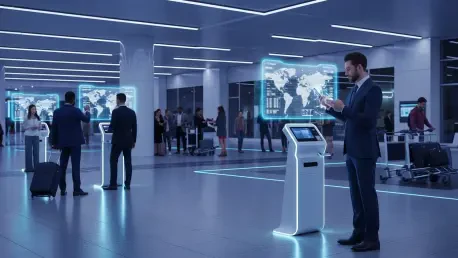
The expanding use of biometric technology is moving far beyond its traditional role in border control to create a more cohesive and frictionless travel experience from beginning to end. Prominent hotel chains such as Marriott, CitizenM, and Accor are actively piloting facial recognition and fingerprint scanning systems to enable completely seamless check-in processes, keyless room access, and effortless payments throughout their properties. The primary objective of these initiatives is to eliminate frustrating wait times and enhance the overall guest experience, while also reducing the financial and environmental costs associated with producing and managing physical keycards. As biometric identification becomes the standard protocol at airports and transportation hubs around the world, our unique biological markers are effectively becoming our universal passports, granting us access not only for crossing international borders but also for a wide and growing range of facilities and services encountered throughout an entire journey, making travel more secure and convenient.
The convergence of these technologies ultimately defined a new era in travel and hospitality. The industry’s most forward-thinking organizations recognized that success was no longer just about destinations or amenities; it was about the seamless integration of intelligent systems. They leveraged AI agents, pervasive automation, and integrated biometrics to remove points of friction from the travel process, transforming what were once stressful logistical challenges into effortless transitions. The most profound shift was the ability to deliver deeply personalized customer experiences at scale, where every interaction felt uniquely tailored to the individual. This was all underpinned by a commitment to operating in a more efficient and responsible manner, driven by sustainability-focused technologies that minimized waste and reduced environmental impact. The organizations that successfully built this holistic, interconnected ecosystem were the ones that ultimately thrived in the new landscape.