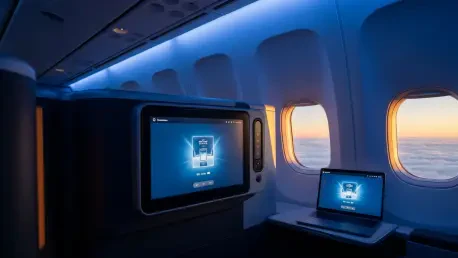

The sky is no longer a dead zone for productivity or a sanctuary from the digital world; it has become a sophisticated extension of our connected lives. Modern aviation digital integration represents a fundamental pivot in how carriers perceive their passengers. Instead of simply transporting bodies from one terminal to another, airlines are now constructing intricate digital ecosystems that blur the lines between transportation and tech-heavy hospitality. This evolution has shifted the industry focus toward a connected “experience economy,” where the quality of the onboard interface is as vital as the flight itself.
Evolution of Digital Ecosystems in Modern Aviation
Digital integration in the cockpit and cabin has moved beyond basic telemetry to a holistic infrastructure that manages the entire passenger journey. Historically, onboard technology was a siloed experience, often characterized by clunky, unresponsive screens and unreliable internet. Today, the core principles revolve around seamless connectivity, where the aircraft functions as a mobile node within a global network. This transformation has emerged as a response to a more demanding traveler who views flight time as an opportunity for either high-stakes work or premium leisure.
In the current technological landscape, this shift is essential for survival. As the market moves away from a commodity-based model where price is the only differentiator, digital depth has become the new benchmark for excellence. By integrating cloud computing and real-time data streaming into the airframe, airlines have turned the cabin into a living laboratory for consumer behavior, moving the industry toward a future where the transition from ground to air is digitally invisible.
Core Components of the Integrated Passenger Experience
High-Speed Satellite Connectivity and Onboard Platforms
At the heart of this digital revolution lies high-speed satellite connectivity, specifically systems leveraging low-earth orbit constellations like Amazon Leo. Unlike older geostationary tech that suffered from high latency, these modern systems provide high-bandwidth connections that mimic home or office environments. This performance capability allows passengers to stream ultra-high-definition content or engage in video conferencing without the traditional lag of cruising altitudes, turning the seat into a fully functional remote office.
Moreover, these connectivity hubs serve as the backbone for the loyalty ecosystem. By providing a stable, high-speed pipe, carriers can offer proprietary platforms that host a variety of services. The technical significance here is profound; the connectivity is not just a perk but a primary data acquisition funnel. This ensures that the airline remains the central gatekeeper of the passenger’s digital interactions, creating a closed-loop environment that fosters brand stickiness.
Personalized Loyalty Interfaces and Synchronized Content
The second pillar of this integration is the passenger-facing interface, such as the Delta Sync platform. These systems are designed to provide cross-device synchronization, allowing a traveler to start a movie on their personal tablet and finish it on the seatback screen without losing their place. This technical fluidity is achieved through sophisticated backend profile management, where every digital touchpoint is linked to a unique loyalty ID, driving deep brand engagement through sheer convenience.
Beyond entertainment, these interfaces act as personalized concierges. Performance characteristics are measured not just by speed, but by how well the platform anticipates user needs—offering real-time connection updates or personalized meal options. By synchronizing content from third-party media giants, airlines transform the seatback into a high-value real estate asset that bridges the gap between traditional travel and modern digital media consumption.
Emerging Trends in Predictive Analytics and Consumer Immunity
Aviation leaders are increasingly utilizing predictive data analytics to insulate their revenue streams from the volatility of the global economy. By analyzing massive datasets, carriers can identify “immune” consumer segments—high-net-worth individuals whose travel habits remain unchanged despite fluctuating fuel prices or geopolitical tensions. This hyper-segmentation allows airlines to tailor their digital services to the specific preferences of the most resilient demographics, ensuring a steady cash flow even during macroeconomic shifts.
This trend toward hyper-personalization is not merely a marketing tactic; it is a structural defense mechanism. Using AI-driven insights, airlines can predict when a “main cabin” traveler is likely to convert to a premium tier based on their digital footprint and past interactions. This level of granular targeting represents a departure from traditional broad-market advertising, moving the industry toward a model where every digital interaction is an opportunity for upselling and revenue optimization.
Real-World Applications of Digital Integration at Delta Air Lines
Delta Air Lines has become a primary case study in the successful execution of these digital strategies. By offering free, high-speed Wi-Fi, the airline has created a powerful incentive for passengers to join their loyalty programs. This “free” service is actually an exchange of value: the passenger receives connectivity, while the airline gains a wealth of first-party data. This strategy has successfully converted millions of casual flyers into dedicated loyalty members, significantly increasing the lifetime value of each customer.
Furthermore, Delta’s integration of third-party media content from sources like YouTube and The New York Times creates a familiar digital environment for the user. These partnerships are unique use cases that move beyond standard movie libraries, offering dynamic content that keeps passengers engaged longer. This ecosystem encourages users to stay within the Delta digital environment, making the airline a central part of their digital lifestyle rather than just a means of transit.
Structural Challenges and Technical Hurdles
Despite these advancements, significant hurdles remain, particularly regarding the hardware limitations of older aircraft. Reconfiguring an entire fleet with the latest satellite antennas and high-speed wiring is a massive capital undertaking that takes years to complete. This creates a fragmented experience where passengers on newer planes enjoy cutting-edge tech while those on older routes face legacy systems. Regulatory hurdles regarding data privacy also pose a constant challenge, as airlines must navigate complex international laws when collecting and storing passenger information.
Market obstacles, such as the high cost of sustainable aviation fuel and fluctuating energy prices, also impact the return on investment for digital upgrades. To mitigate these issues, carriers are adopting modular digital architectures that allow for easier software updates without needing to replace physical hardware. Rapid fleet reconfiguration programs are also underway to ensure that the “premium” experience remains consistent across the entire network, regardless of the specific airframe being used.
The Future of Connected Skies and Premium Automation
The trajectory of aviation digital integration points toward a state of total immersion, where the passenger journey is managed by an invisible, automated digital layer. Future breakthroughs in satellite coverage will likely eliminate current “dead zones” over the poles and deep oceans, providing truly global high-speed access. As high-capacity premium configurations become the standard, the industry will see a shift where the digital experience is the primary factor in purchasing decisions, overshadowing even schedule and price.
This transition will likely lead to a long-term stabilization of the industry’s economic health. By leaning into premium automation and digital services, airlines can reduce their reliance on the price-sensitive segments of the market. The result will be a more resilient business model that can withstand external shocks, as the cabin becomes a specialized environment tailored specifically for the needs of the modern, digitally-native traveler.
Assessment of the Digital Shift in Aviation
The transformation of the aviation sector from a traditional transportation model to a service-oriented digital platform has redefined the metrics of success. Carriers that successfully integrated satellite connectivity and personalized data ecosystems created a significant competitive advantage, effectively “moating” their best customers away from low-cost competitors. This evolution proved that technical infrastructure is now as critical as mechanical reliability in maintaining financial resilience. By prioritizing the digital experience, the industry moved away from being a mere utility and became an essential part of the modern experience economy. Ultimately, the successful deployment of these integrated systems showed that the future of flight lay in the cloud, as much as it did in the atmosphere.