
Katarina Railko brings a wealth of expertise to the hospitality sector, having sharpened her skills across the travel, tourism, and large-scale event industries. With a particular focus on how entertainment and major conferences reshape urban landscapes, she offers a unique perspective on the intersection of luxury lodging and civic development. In this discussion, we explore the intricate process of launching a high-stakes lifestyle property in a historic district, examining how regional identity, high-end design, and strategic dining concepts come together to redefine a city’s skyline and guest experience.
Developing a $185 million property over a decade involves significant long-term planning and financial risk. How do you navigate the challenges of modernizing a site with historical significance like the 1968 World’s Fair grounds, and what specific milestones define the success of such a lengthy project?
Navigating a project of this magnitude requires a delicate balance between honoring the past and investing in the future, especially when the site carries the weight of the 1968 World’s Fair. For a developer like Zachry Hospitality, the key is to treat the $185 million investment not just as a construction project, but as a multi-generational commitment to the city’s evolution. Success is measured through milestones that go beyond the 2023 construction start, such as securing the integration into the 40-acre Hemisfair district and successfully opening 200 rooms that feel like a “new chapter” rather than a mere renovation. The real achievement lies in transforming a historic void into a 17-story beacon that respects local ties while meeting modern luxury standards.
This 17-story hotel is positioned within a 40-acre reimagined urban district near major landmarks. What are the logistical complexities of integrating a high-rise lifestyle hotel into a public park setting, and how does this proximity change the way you market amenities to both tourists and locals?
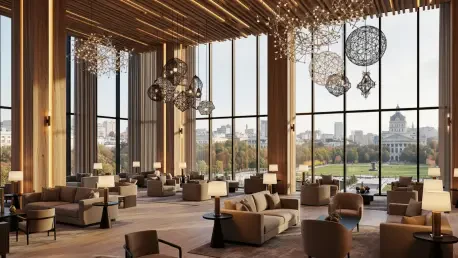
Integrating a high-rise into a public park like Hemisfair involves complex logistics, particularly regarding guest privacy and the seamless flow between private luxury and public recreation. We have to ensure that while the 17 stories offer sweeping views of the River Walk and the Alamo, the ground-level experience feels welcoming to the thousands of people visiting the park. Marketing shifts from being purely “tourist-centric” to a “community-hub” model, where amenities like the Nectarie Café are specifically designed to serve local park-goers as much as hotel guests. By blurring the lines between the 40-acre district and the hotel’s 15,000 square feet of event space, the property becomes a living part of the city’s social fabric rather than an isolated fortress.
The architectural design features a $2 million public art installation and interiors inspired by regional nature. How does investing in high-end, site-specific art influence the guest’s perception of a luxury brand, and what steps are taken to ensure the decor authentically reflects the local environment?
Investing $2 million in a public art installation like La Mariposa serves as a powerful visual anchor that immediately communicates a brand’s prestige and its dedication to the local culture. When guests see art inspired by the monarch butterflies that migrate through the region, it creates an emotional connection that feels far more authentic than generic luxury decor. The collaboration between firms like Overland Partners and The Gettys Group ensures that the “movement of nature” is woven into the very fabric of the furniture and layout. This site-specific approach tells a story of the region’s ecology, making the guest feel like they are experiencing a curated gallery that could only exist in this specific corner of San Antonio.
Premium guest rooms often utilize Italian linens, interactive tablets, and locally sourced bath products to distinguish themselves. How do these specific tactile details impact long-term brand loyalty, and what metrics help determine if these upscale “lifestyle” amenities provide a sufficient return on investment?
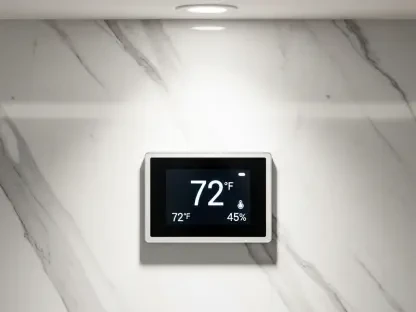
The tactile experience of SFERRA Italian linens and Niven Morgan bath products creates a sensory memory that guests associate with the brand long after they check out. In a 200-room lifestyle hotel, these details—alongside modern conveniences like Platinum Vertuo Nespresso machines and interactive tablets—are the primary drivers of repeat bookings and high guest satisfaction scores. We measure the return on investment by looking at the “lifestyle premium” in the Average Daily Rate (ADR) and the frequency of returning visitors who cite specific room comforts in their feedback. When a guest feels the luxury of blackout curtains and high-end textiles, they are much more likely to choose the Curio Collection over a standard corporate alternative.
Managing three distinct dining concepts—a wood-fired steakhouse, a Yucatan-inspired rooftop, and a French-influenced bistro—requires diverse operational expertise. How do you maintain consistent service quality across such varied culinary themes, and what strategies are most effective for drawing neighborhood residents into hotel-based restaurants?
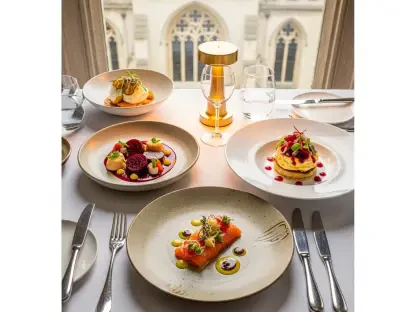
Maintaining quality across three diverse themes like Oak & Amber, Aleteo, and The Nectarie Café requires a “chef-driven” operational model where each venue has its own distinct identity but shares a unified service standard. The wood-fired steakhouse offers a high-end, grounded experience, while the Yucatan rooftop provides a vibrant, sensory escape with a view, demanding different styles of hospitality. To draw in neighborhood residents, the strategy involves making the French-influenced bistro an accessible daily stop for locals walking through the park, creating a “low-friction” entry point to the property. By establishing the hotel as a culinary destination for the city, we ensure that the dining rooms stay full even during the mid-week periods when tourist traffic might dip.
With several new properties and historic renovations opening in the same downtown area, the competitive landscape is shifting rapidly. What operational strategies allow a new 200-room property to stand out in a crowded market, and how do you adapt your service model to compete with nearby established hotels?
To stand out against established competitors and other new openings like the El Sítio Tropicano, a property must lean heavily into its “lifestyle” identity and superior amenities. Our strategy focuses on the “all-in-one” destination appeal, offering a full-service spa with four treatment rooms, a 550-square-foot fitness studio, and a 5,000-square-foot ballroom that can handle high-end weddings and corporate events. We adapt by offering a level of personalization that larger, 300+ room hotels often struggle to maintain, ensuring every guest feels the “new chapter” energy of the Monarch. Being part of the Curio Collection also provides the backing of a global loyalty program, which is a massive advantage when competing for travelers who want both a unique boutique feel and reliable brand standards.
What is your forecast for San Antonio’s luxury hospitality market?
I expect San Antonio’s luxury market to undergo a significant upward correction as it evolves from a purely “leisure and convention” destination into a sophisticated urban hub for lifestyle travelers. The $185 million investment in properties like The Monarch is just the beginning; we will likely see a 15-20% increase in high-end inventory over the next few years as the downtown core becomes more residential and walkable. As the city continues to leverage its 40-acre urban parks and historic districts, the demand for “experience-first” lodging will outpace traditional hotels, making San Antonio a top-tier competitor for luxury travelers who previously might have only looked at markets like Austin or Dallas.