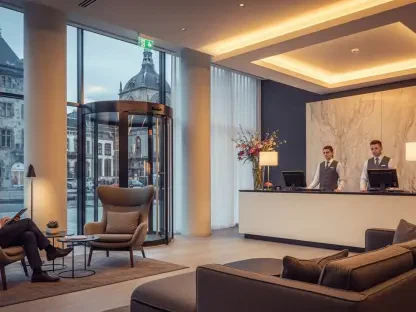
The sun-drenched cobblestone streets of Lisbon and the rugged cliffs of the Algarve are no longer merely whispering the secrets of a hidden gem; they are now shouting the success of a global hospitality powerhouse that has reached seven billion euros in annual revenue. This financial milestone marks a definitive era where Portugal has transitioned from a budget-friendly destination into a sophisticated, high-end market. The influx of international travelers is demanding a level of service that only global brands seem equipped to provide at scale.
This evolution is fundamentally altering the guest experience across the nation. While the charm of local boutique stays remains, the skyline is increasingly defined by the logos of world-renowned hotel groups. The presence of these international flags has brought a standardized excellence that appeals to the most discerning global travelers, effectively reshaping the country’s tourism identity into one of prestige and reliable luxury.
Understanding the Great Internationalization: A Strategic Evolution
The shift from small, family-run establishments to institutional, brand-led operations is not merely a trend but a structural reorganization of the entire sector. In an unpredictable global climate, Portugal has emerged as a secure, premium European haven, offering a blend of political stability and cultural richness. This reputation has acted as a magnet for institutional capital, turning the country into a primary target for those looking to diversify their portfolios in a mature yet growing environment.
Investors are no longer just looking for quick turnarounds; they are seeking long-term value through professional management and global loyalty programs. This maturation of the market is attracting record levels of foreign direct investment, as the risks associated with independent operations are mitigated by the operational expertise of major hotel groups. Consequently, the Portuguese hospitality landscape is becoming a sophisticated arena for high-stakes financial activity and long-term strategic planning.
Analyzing the Market: International Surges vs. Domestic Contraction
A clear divergence has appeared in the trajectories of hotel operators. International chains have experienced a 21% surge in growth, while domestic players have seen a 10% contraction in their presence. This shift highlights a professionalization of the market, where a 46% key penetration rate indicates that nearly half of all available rooms are now under the umbrella of a recognized brand. Such metrics underscore the difficulty independent owners face when competing with the marketing budgets and distribution networks of global giants.
Much of this change is fueled by a new wave of high-spending travelers from North America. These guests typically prioritize brand standards and loyalty rewards, dictating a need for the consistency that only international flags can offer. Despite these rapid changes, the economic vitals of the industry remain stable, with occupancy rates holding steady at 62% and revenue streams continuing to climb, proving that the market is expanding in value rather than just volume.
The Flight to Quality: Luxury and Upscale Dominance
The upscale and upper upscale segments have become the backbone of the Portuguese market, now accounting for 51% of all branded hotels. This concentration reflects a strategic flight to quality, where developers prioritize premium assets over the mid-scale or budget tiers. The luxury segment specifically has seen remarkable expansion, now representing 29% of the branded supply, as the demand for bespoke, high-end experiences continues to outpace the broader tourism market.
Investment confidence is being bolstered by the entry of heavyweight institutional firms such as Davidson Kempner and Arrow Global, who are doubling down on Portuguese assets. The development pipeline remains robust, with 32 new projects currently transforming Lisbon’s urban core, while the Norte and Algarve regions are also seeing significant interest. These projects are not just adding rooms; they are redefining architectural and service standards across the Iberian Peninsula, ensuring that the supply meets the expectations of a high-net-worth clientele.
Navigating the New Landscape: Strategies for Investors and Developers
Success in this competitive environment requires a laser focus on premium positioning and the integration of global standards. Developers must navigate a complex terrain defined by rising construction costs and significant licensing delays, which remain the primary hurdles to rapid expansion. However, the ability to leverage international marketing reach to capture the lucrative North American market provides a significant competitive advantage that outweighs many of the local operational challenges.
The path forward demanded a delicate balance between global efficiency and local cultural authenticity. Investors who successfully integrated international brand standards while honoring Portuguese heritage found themselves at the forefront of this lucrative transformation. Stakeholders focused on sustainable growth and high-end service models to secure the nation’s position as a top-tier destination. By prioritizing quality over quantity, the industry ensured that the recent surge in revenue translated into long-term economic stability and global prestige.