
The once-ubiquitous complimentary plastic water bottle, a long-standing symbol of guest care in the hospitality industry, is rapidly becoming a relic of an inefficient and unsustainable past. A profound transformation is underway as hotels and resorts across the globe re-evaluate their relationship with water, moving beyond the simple provision of a disposable amenity toward the strategic implementation of advanced, integrated water technology. This is not merely an environmental initiative but a calculated business decision that redefines operational efficiency, enhances the guest experience, and unlocks significant new revenue streams. The industry is awakening to a powerful reality: the most valuable water source is the one already on the property.
The New Wave How Water Technology is Redefining Hotel Operations
The paradigm shift from procuring single-use bottled water to deploying integrated on-site filtration and reuse systems marks a fundamental re-engineering of hotel operations. This evolution represents a move from a linear model of consumption and disposal to a circular one of conservation and value creation. Advanced systems are no longer confined to back-of-house kitchens or conference centers; they are becoming a property-wide utility, with elegant dispensing taps appearing in lobbies, fitness centers, and increasingly, directly within guest rooms. This transition streamlines logistics, reduces waste management burdens, and provides a consistently high-quality product that often surpasses bottled alternatives.
This adoption is not limited to a niche segment of the market. While luxury resorts were early adopters, leveraging premium water solutions as a sophisticated amenity, the compelling return on investment and operational benefits are driving implementation across all tiers of the industry. From sprawling five-star properties to select-service and budget-friendly hotels, operators are recognizing that the financial and brand advantages of sustainable water technology are universally applicable. The scalability of these solutions allows for tailored applications, whether it is a comprehensive greywater recycling system in a large new-build or a simple yet effective point-of-use filtration system in a boutique hotel’s guest corridors.
Leading this charge are innovative technology providers that offer a spectrum of solutions designed for the unique demands of the hospitality environment. Companies like Vivreau have become synonymous with high-end, designer dispensing systems that provide on-demand still and sparkling water, turning hydration into a luxury experience. In contrast, firms such as Epic Cleantec are pioneering holistic water reuse with their OneWater systems, which capture, treat, and repurpose a building’s greywater for non-potable uses. Meanwhile, established players like Culligan-Quench offer a wide range of filtration and dispensing products, including sophisticated in-room options like the Zip Water HydroTap, catering to the growing demand for convenience and premium amenities.
The ROI Wellspring Unpacking Market Trends and Financial Gains
Beyond the Bottle Core Drivers Fueling the Water Tech Transition
One of the most powerful forces compelling this industry-wide change is the modern traveler’s heightened environmental consciousness. Today’s guests, particularly in the premium and lifestyle segments, actively seek out and patronize businesses that align with their personal values of sustainability. They arrive with reusable water bottles in hand and expect properties to facilitate, not hinder, their eco-friendly habits. The provision of filtered water refill stations is no longer just a perk; it is a detail that guests notice, appreciate, and increasingly expect as a standard of responsible hospitality. This consumer demand has transformed sustainability from a corporate social responsibility checkbox into a crucial element of brand identity and a key differentiator in a competitive market.
Beyond meeting guest expectations, the move toward on-site water systems is a strategic decision rooted in improving operational efficiency. The traditional model of managing bottled water inventory is fraught with complexity and hidden costs, including shipping fees, fuel surcharges, refrigerated storage expenses, and the labor required for stocking, distributing, and clearing away empty bottles. By implementing self-serve refill stations or in-house bottling programs, hotels can dramatically simplify these logistics. This alleviates the workload for housekeeping and food and beverage staff, frees up valuable real estate previously dedicated to storage, and creates a more streamlined, less labor-intensive operation that contributes directly to a healthier bottom line.
Perhaps the most compelling driver is the ability of these systems to transform water from a persistent cost center into a profitable asset. Hotels have historically absorbed the expense of providing complimentary bottled water, but on-site filtration opens the door to new revenue opportunities. In food and beverage outlets, offering house-bottled still and sparkling water as a premium menu item can generate nearly 100 percent profit margins, as demonstrated by properties like the Boston Harbor Hotel. This approach not only covers the system’s operational costs but also creates a significant new income stream. This financial alchemy, turning a utility expense into a revenue generator, represents a fundamental shift in how hotel operators approach resource management.
The Bottom Line on Tap Measuring the Impact of Smart Water Solutions
The financial data emerging from early adopters provides a clear and compelling case for investment in sustainable water technology. Case studies reveal dramatic cost reductions that often result in a rapid return on investment. The Fairmont Copley Plaza in Boston, for example, saw its daily program cost for providing water plummet from nearly $96 to just over $14 after implementing a Vivreau system. These savings are amplified in larger properties and in regions with high water and waste disposal costs. Furthermore, sophisticated greywater recycling systems can slash a hotel’s municipal water and sewer bills by hundreds of thousands of dollars annually by replacing up to 50 percent or more of their potable water intake with treated, repurposed water.
The environmental impact is just as impressive and provides a powerful narrative for marketing and corporate responsibility reporting. The Boston Harbor Hotel’s program single-handedly prevented over 43,000 plastic bottles from entering landfills and oceans in a single year. By eliminating the need to manufacture, package, and transport water, often from distant international sources, hotels significantly reduce their carbon footprint. This quantifiable reduction in waste and emissions serves as a tangible testament to a property’s commitment to sustainability, resonating deeply with environmentally conscious guests and meeting the increasingly stringent criteria of corporate travel partners.
Looking ahead, market projections indicate robust growth for in-room and point-of-use water systems, particularly within the luxury and wellness sectors. As guest expectations for personalization and convenience continue to rise, the demand for on-demand sparkling and hot filtered water directly in suites is expected to become a new standard of luxury. The integration of these systems into wellness-focused amenities, such as spas and fitness centers offering naturally infused water options, further expands the market. This trend suggests a future where high-quality, sustainable hydration is not just an operational feature but a central and marketable component of the guest experience.
Navigating the Flow Overcoming Implementation and Technical Hurdles
A primary consideration for many hotel operators is the initial capital investment required to install advanced water filtration or reuse systems. While the upfront cost can appear substantial when compared to the incremental expense of purchasing bottled water, this perspective overlooks the significant long-term financial payback. The most successful implementations are framed as a capital investment with a clear and often rapid return, driven by the elimination of procurement costs, reduced utility bills, lower waste management fees, and new revenue generation. The key is a thorough financial analysis that accounts for all direct and ancillary costs associated with the traditional bottled water supply chain versus the comprehensive benefits of an on-site system.
As water systems become more sophisticated, they must also address emerging health and environmental challenges to maintain guest trust and ensure compliance. A growing concern among consumers and regulators is the presence of polyfluoroalkyl substances, or PFAS, commonly known as “forever chemicals,” in water supplies. Proactive technology providers are already tackling this issue head-on. Vivreau, for instance, has established a dedicated research group to identify and implement the most effective filtration methods for eliminating these contaminants. This commitment to staying ahead of health concerns demonstrates the industry’s focus on delivering not just sustainable, but verifiably safe and pure water to guests.
The long-term success of these advanced systems hinges on effective management and maintenance. Modern water technology is increasingly integrated with smart, data-driven platforms that move beyond reactive repairs to a model of predictive maintenance. By leveraging Internet of Things (IoT) sensors and machine learning algorithms, systems can monitor their own performance in real time, track usage patterns, and automatically alert technicians when a filter change or service is imminent. This data-driven approach minimizes system downtime, ensures uninterrupted service for guests, optimizes the lifespan of components like filters, and reduces the carbon footprint associated with unnecessary service visits, ensuring peak operational efficiency.
The Regulatory Current How Water Scarcity and Compliance Shape Investment
External pressures, particularly from municipal regulations and regional environmental conditions, are playing a significant role in accelerating the adoption of water conservation technologies. In water-stressed areas such as California and the American Southwest, escalating water costs and stringent restrictions on usage make technologies like greywater recycling less of a choice and more of a necessity for large-scale properties. The ability of a system like Epic Cleantec’s to recycle hundreds of thousands of gallons of water per year provides a critical buffer against drought conditions and regulatory mandates, ensuring operational continuity and mitigating financial risk.
Simultaneously, the standards governing water quality are constantly evolving, requiring technology providers to remain at the forefront of filtration and purification science. As new potential contaminants are identified and acceptable levels for existing ones are lowered, water systems must be capable of meeting and exceeding these rigorous compliance demands. Leading manufacturers invest heavily in research and development to ensure their systems can effectively remove a wide range of impurities, from heavy sediments and microplastics to emerging chemical concerns. This commitment to superior water quality is essential for protecting guest health and safeguarding a hotel’s reputation.
The push toward sustainable water management is also being driven from the top down by corporate ESG mandates. As institutional investors and parent companies place greater emphasis on Environmental, Social, and Governance metrics, individual properties are increasingly required to meet specific targets for waste reduction and resource conservation. Water technology provides a direct and measurable way to achieve these goals. Adopting comprehensive filtration and reuse systems allows hotel brands to demonstrate a tangible commitment to their ESG principles, which is crucial for attracting investment, satisfying corporate stakeholders, and building a brand that is recognized as a leader in responsible hospitality.
The Future on Tap Innovations Shaping Tomorrow’s Guest Experience
The next generation of water management will be defined by the integration of IoT and artificial intelligence, creating systems that are not just efficient but truly intelligent. Self-monitoring platforms are becoming the new industry standard, providing hotel operators with a wealth of data on consumption patterns, filter performance, and system health. These smart systems can detect anomalies, predict maintenance needs, and optimize performance without human intervention. This data-driven approach ensures maximum efficiency, prevents service disruptions, and provides valuable insights that can inform broader sustainability strategies across a property or an entire portfolio.
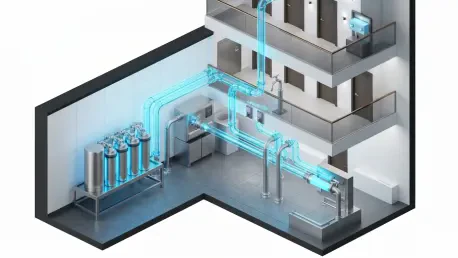
The frontier of innovation is expanding beyond drinking water to encompass a property’s entire water footprint, turning it into a completely recyclable asset. The concept of holistic water reuse is gaining traction, where systems capture and treat not only greywater from showers and sinks but also condensate from HVAC systems and runoff from irrigation. This highly treated water can then be repurposed for a wide array of non-potable applications, from toilet flushing and cooling towers to landscape irrigation and even decorative water features. This closed-loop approach dramatically reduces a property’s reliance on municipal sources and embodies the ultimate goal of sustainable water management.
As technology enables greater control and quality, the focus will shift toward creating personalized and wellness-oriented water amenities. The simple choice between still and sparkling is just the beginning. Future systems will offer on-demand, flavor-infused water using natural fruit essences, catering to health-conscious guests in spas, fitness centers, and guest suites. This evolution positions water not just as a means of hydration, but as an integral part of a curated wellness experience, allowing hotels to offer a unique and customizable amenity that enhances guest satisfaction and reinforces a commitment to health and well-being.
Turning on the Profit Spout A Strategic Summary and Outlook
The cumulative evidence makes it clear that sustainable water technology delivers a powerful trifecta of advantages. Financially, it slashes operational costs, mitigates supply chain risks, and creates new high-margin revenue streams. Environmentally, it drastically reduces plastic waste and the carbon footprint associated with traditional bottled water, aligning properties with the values of the modern traveler. Operationally, it simplifies logistics, reduces labor demands, and provides a consistently superior product that enhances the overall guest experience.
This industry-wide movement necessitates a fundamental change in perspective, shifting away from the outdated concept of “wastewater” and toward the strategic view of “water as a valuable resource.” The technology now exists to treat and repurpose nearly every drop of water that flows through a property, transforming what was once a liability into a tangible asset. This circular approach to water management is not a compromise on quality or luxury; rather, it is a smarter, more resilient, and more profitable way of doing business in the 21st century.
Looking forward, technology will continue to be the cornerstone of innovation and competitive advantage in modern hospitality. The hotels and brands that embrace these intelligent, data-driven water solutions today are not just making an environmental statement; they are making a strategic investment in their future. They are building more efficient, resilient, and profitable operations while delivering an elevated guest experience that will define the next era of luxury and responsible travel. The future of hospitality is not just sustainable; it is smart, circular, and flowing with new opportunities.