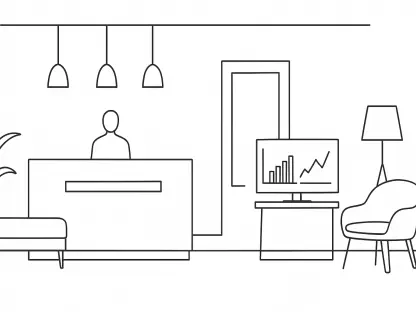

Behind the polished marble of a luxury lobby and the seamless smile of a concierge, a silent friction often grinds away at the fundamental profitability of modern hotel operations. While guest-facing technology has become increasingly sleek, the machinery behind the scenes remains a digital paradox. Properties are currently saturated with more software than ever before, yet staff members frequently find themselves working harder just to keep these disparate tools synchronized. The result is an environment where employees act as manual bridges, frantically relaying data between siloed applications through phone calls, paper notes, and repetitive data entry. This phenomenon represents the primary obstacle to profitability in the current hospitality landscape, creating a hidden drain on resources that traditional accounting often misses.
The importance of addressing this friction cannot be overstated as the industry navigates the complexities of 2026. This “invisible labor tax”—the high cost of human intervention required to fix disconnected technology—erodes margins even as occupancy rates stabilize. When a front desk agent must manually email a maintenance request or a housekeeper must wait for a radio response to confirm a room status, the hotel loses money in the form of wasted minutes. These inefficiencies aggregate across hundreds of staff members and thousands of tasks, forming a systemic barrier to excellence. Transitioning from task-based digitization to holistic system integration is no longer a luxury but a strategic necessity for those seeking to protect their bottom line.
The Invisible Labor Tax Draining Your Bottom Line
The modern hotel staff is often trapped in a cycle of manual coordination that functions as a silent levy on every hour worked. Instead of focusing on high-value guest interactions, employees spend a significant portion of their shifts compensating for software that does not communicate. This reliance on human intervention to bridge the gaps between a Property Management System and specialized service apps creates a bottleneck that slows down every department. When the technology stack is fragmented, the employee becomes the primary communication protocol, which is the most expensive and error-prone way to manage a facility.
This labor tax is particularly damaging because it is frequently masked by high-performance metrics in individual departments. A housekeeping team might be hitting its cleaning targets, yet the hotel still struggles with late check-ins because the notification system failed to update the front office in real time. The resulting friction requires supervisors to spend their day “chasing down” information rather than leading their teams. By failing to integrate these systems, ownership groups effectively pay a premium for administrative tasks that should be automated, diverting capital away from property improvements or guest amenities.
The Productivity Paradox: Faster Tasks, Higher Costs
As of the current year 2026, many hotel owners are facing a frustrating reality where granular efficiency gains do not translate to macro-level savings. Data indicates that while room attendants have become faster at the physical act of cleaning, the overall labor expenditure per room continues to climb. This discrepancy highlights the limit of squeezing individual performance in a tightening economic climate. The industry is realizing that making a worker scrub a floor faster provides diminishing returns if that same worker must then spend ten minutes navigating a clunky interface or waiting for a supervisor to verify the work.
The shift in focus must move toward reducing the “work between the work,” which comprises the administrative lag between the completion of one task and the start of the next. From 2026 to 2028, the most successful hospitality groups will be those that transition from “task-based digitization” to “holistic system integration.” By automating the hand-off between departments, management can capture the efficiency gains that were previously lost to the ether. The goal is to ensure that technology serves as a propellant for productivity rather than an additional burden that requires constant monitoring and manual updates.
The High Price of Fragmented Workflows
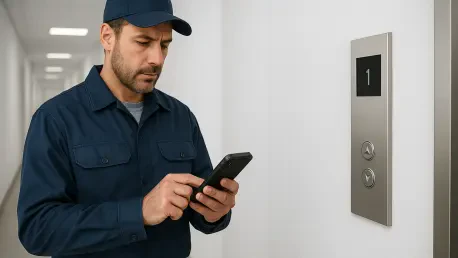
When operational systems do not communicate, the resulting friction creates systemic failures that erode both profit margins and the guest experience. Consider the anatomy of a standard guest request: a five-minute repair to a leaking faucet often requires thirty minutes of coordination behind the scenes. This involves the front desk taking the call, entering it into a log, calling the engineering dispatcher, the dispatcher finding an available technician, and the technician eventually reporting the completion back through the same chain. Each of these “touches” represents a point of failure and a waste of labor capital that could have been avoided with an automated routing system.
This “App Accumulation Trap” occurs when hotels add standalone software to solve specific problems without considering the broader ecosystem. While an individual app might be great for managing engineering tasks, its value is halved if it does not automatically pull guest data from the Property Management System. Fragmented technology prevents a unified view of property operations, leaving managers to make decisions based on incomplete or outdated information. Eliminating the manual movement of data across the front office, engineering, and housekeeping is the only way to achieve a truly lean operational model that responds to guest needs in real time.
Expert Perspectives on the Value of Connectivity
Industry leaders and recent research suggest that the next frontier of hospitality excellence lies in the precision of cross-departmental communication. Insights from Deloitte have highlighted a widespread struggle with fragmented hotel technology, noting that nearly half of all properties lack a unified operational view. Experts like Rob Schneider have identified “disconnectedness” as the fundamental friction in daily operations, arguing that the lack of synergy between tools is more detrimental than a lack of technology itself. This perspective reframes the challenge not as a need for more software, but as a need for better-connected software.
Real-world success stories from major players like Rosen Hotels & Resorts and Caribe Royale Orlando demonstrate the power of silencing operational noise through integration. These properties have utilized centralized platforms to automate task routing and escalation, ensuring that the right person receives the right information at the exact moment it is needed. Platforms such as FCS1 have played a pivotal role in this shift by providing a single environment where housekeeping, maintenance, and guest services coexist. When the entire property operates from a single source of truth, the reliance on manual status checks evaporates, allowing the staff to focus entirely on the guest.
Strategies for Auditing and Optimizing Systemic Efficiency
To recover lost labor capital, hoteliers moved toward a framework that prioritized time-based metrics over simple subscription costs. The definition of ROI shifted from the initial price of a software package to the number of “Minutes Eliminated” from a standard workday. This analytical approach allowed managers to identify exactly where manual coordination was stalling progress. By implementing response compression strategies, properties shortened the distance between a guest request and its fulfillment, significantly improving guest satisfaction scores. The transition from “chasing down” information to viewing real-time dashboards transformed how supervisors allocated their most expensive resource: human labor.
The industry ultimately recognized that selecting platforms favoring automated data flow over manual entry was the only sustainable path forward. Organizations that adopted these integrated ecosystems observed a substantial decline in the administrative burden placed on their front-line staff. These systems allowed for a more scalable operation, where the workforce remained productive even as guest demands grew more complex. The focus centered on the realization that every minute saved from manual data entry was a minute returned to the guest experience. By the end of this transition, the most profitable hotels were those that successfully treated their technology stack as a single, cohesive engine of efficiency.