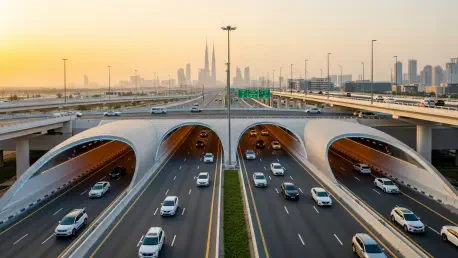

Urban centers across the globe often struggle with the suffocating reality of traffic congestion, yet Dubai is currently executing an infrastructure transformation that rewrites the rules of metropolitan movement. The Roads and Transport Authority (RTA) has launched a series of high-stakes interventions designed to dismantle the bottlenecks that have long hindered the flow between major residential and commercial districts. At the heart of this massive logistical undertaking is a commitment to seamless connectivity, utilizing advanced engineering to bridge the gap between historic neighborhoods and modern business hubs. By prioritizing the integration of existing road networks with futuristic transit solutions, the city is not just fixing roads but is actively engineering a more fluid urban experience. This overhaul represents a departure from traditional expansion, focusing instead on high-efficiency corridors that can handle the intensifying demands of a growing population without sacrificing the speed that defines this global financial center.
Urban Integration: Modernizing the Arteries of the Emirate
The Oud Metha and Al Asayel Streets Development Project serves as the central nervous system for this ongoing geographical revitalization effort, linking several of the most critical thoroughfares in the city. By creating a more intuitive connection between Al Khail Road and Sheikh Rashid Road, engineers have targeted a specific geographic friction point where traffic traditionally slowed to a crawl during peak hours. This project does not merely add lanes; it fundamentally restructures how vehicles transition between high-speed highways and local access points. This strategic focus on the Oud Metha corridor is essential because it anchors the transit needs of thousands of daily commuters who move between the older districts of Bur Dubai and the glass-and-steel skylines of the newer business sectors. The result is a more resilient infrastructure that anticipates the needs of a city that refuses to stand still, providing the structural backbone necessary for sustained economic activity and social mobility.
One of the most impressive technical feats achieved during this phase is the recent opening of a major three-lane bridge that has already begun to transform the daily experience for thousands of drivers. This structure, which spans a significant distance, allows for the smooth passage of approximately 3,600 vehicles every hour, effectively siphoning traffic away from the congested surface-level intersections. By providing a direct elevated route for those traveling from Al Khail Road toward Al Asayel Street, the Roads and Transport Authority has effectively eliminated the stop-and-go patterns that previously defined this route. This intervention was not just about increasing the sheer number of cars on the road, but rather about optimizing the velocity of those already in transit. As these vehicles bypass local bottlenecks, the surrounding neighborhood streets see a secondary benefit in the form of reduced noise pollution and improved safety for local residents who are no longer competing with heavy through-traffic.
Precision Engineering: Optimizing Traffic Flow and Capacity
As the final touches are applied to a series of specialized tunnels and an additional bridge by the end of August, the focus remains on the total elimination of what engineers call traffic overlap. This phenomenon, where different streams of vehicles cross paths at the same grade, is a primary driver of delays and minor collisions that ripple through the entire network. One of the newly commissioned tunnels will provide a dedicated path for the Oud Metha service road leading toward Bur Dubai, while another ensures a direct link from the Dubai–Al Ain Road to Al Wasl Club Street. These precision-engineered bypasses allow the city to reach an incredible milestone in urban transit management. These specific tunnels are designed with advanced ventilation and lighting systems to ensure that the driver experience is as safe as it is efficient. By isolating these movements, the RTA has created a subterranean layer of logic that keeps the surface streets clear for local residents.
The statistical impact of these engineering marvels is nothing short of revolutionary for the emirate, as travel times along the upgraded corridor are projected to drop from twenty minutes down to a mere five. Such a drastic 75% reduction in commute time is made possible by a 50% increase in total road capacity, which now allows Oud Metha Street to accommodate a staggering 15,600 vehicles per hour without any significant loss in speed. By unweaving traffic streams and providing dedicated paths for transit toward major hubs like Business Bay, the RTA is effectively separating local traffic from long-distance commuters. This massive throughput improvement ensures that the city can maintain its rapid pace of business operations without the economic drag associated with idling vehicles. Furthermore, the reduction in fuel consumption and vehicle wear-and-tear provides an indirect but substantial benefit to the environment and the personal finances of the city’s many daily commuters.
Community Growth: Future-Proofing the Metropolitan Landscape
This infrastructure project is a critical response to the rapid expansion of Dubai’s residential and commercial landscape, particularly for the surging populations in Zabeel, Al Jaddaf, and Oud Metha. With current projections indicating that the number of residents in these specific zones will climb past the 420,000 mark by 2030, the existing road networks would have faced total gridlock without these proactive upgrades. The RTA is essentially future-proofing the city’s livability by ensuring that the transit system scales at the same rate as the housing and office developments it supports. By unweaving complex traffic patterns and providing dedicated paths for long-distance commuters, the city is preserving the character of its local neighborhoods. This strategic foresight allows for the continued development of high-density housing projects and commercial centers, knowing that the underlying infrastructure can handle the resulting demand for mobility and access across the district.
The completion of this multifaceted project provided a definitive blueprint for how modern metropolises can navigate the challenges of rapid urbanization through targeted engineering. By focusing on the removal of conflict points where merging traffic once caused frequent accidents, the city established a new standard for public safety and predictable travel times. Enhanced access to essential services like Latifa Hospital and prominent landmarks such as Al Wasl Club demonstrated that infrastructure investment yielded dividends far beyond mere convenience. Planners observed that the transition to a more fluid transit network required not just physical construction, but a sophisticated understanding of traffic data and behavioral patterns. Moving forward, the successful integration of these high-capacity tunnels and bridges offered a viable model for upcoming developments. This transformation stood as a testament to the power of proactive urban management in a rapidly changing world.