
The familiar skyline of New York City is on the brink of a dramatic transformation, not by another skyscraper, but by the shimmering lights of three newly approved, multi-billion-dollar casino resorts set to redefine entertainment in the outer boroughs. Following a competitive and lengthy bidding process, the New York State Gaming Commission has given the green light to monumental developments in Queens and the Bronx, a decision that promises significant economic shifts and community changes. The approval marks the end of intense speculation and the beginning of a new chapter for the city’s hospitality and gaming landscape.
This article serves as a comprehensive guide to understanding this landmark decision. It aims to answer the most pressing questions surrounding the new casinos, from their specific locations and financial scale to the key players involved and the projected impacts on local communities. Readers can expect to gain a clear and detailed overview of what these projects entail and why they were chosen over other prominent proposals, providing a complete picture of one of the most significant development initiatives in New York City’s recent history.
Key Questions or Key Topics Section
What Prompted This Major Casino Approval
The journey toward this decision was a multi-year marathon, involving a highly competitive bidding process that attracted numerous powerful contenders. Several high-profile proposals, including a planned complex in Coney Island and various bids for Manhattan locations, ultimately failed to secure the necessary local backing or regulatory approval, highlighting the immense challenge of balancing commercial interests with community concerns. The state’s selection process rigorously evaluated each proposal not just on its financial viability but also on its ability to integrate into the existing fabric of the neighborhoods.
Ultimately, the New York State Gaming Commission, with the endorsement of Governor Kathy Hochul, selected the three winning bids based on a clear set of criteria. According to the governor, the approved projects from Hard Rock, Genting Group, and Bally’s stood out because they demonstrated strong local support, articulated clear and direct community benefits, and presented sustainable long-term economic plans. This focus on community partnership and economic sustainability was the deciding factor that elevated these proposals above their rivals.
Where Are the New Casinos Located and Who Is Behind Them
The approved casinos are strategically located in Queens and the Bronx, signifying a major investment in boroughs outside of Manhattan. The first, named Metropolitan Park, is an $8.1 billion joint venture in Flushing, Queens, spearheaded by Hard Rock International and New York Mets owner Steve Cohen. This ambitious project will be developed on a 50-acre parcel surrounding Citi Field, placing it at the heart of a vibrant sports and entertainment hub. The ownership consortium also includes construction firm McKissack & McKissack and investment bank Siebert Williams Shank & Co.
The second approval was granted for a $7.5 billion expansion of the existing Resorts World New York City facility in South Ozone Park, Queens. The Genting Group, which operates the current facility near the Aqueduct Racetrack, will oversee this massive transformation. Finally, Bally’s Corporation secured approval for a $4 billion integrated resort in the Ferry Point section of the Bronx. This development is poised to become the largest private investment in the borough’s history, as stated by Bally’s Chairman, Soo Kim, reflecting a deep commitment to the area’s economic future.
What Can Visitors and Locals Expect from These Developments
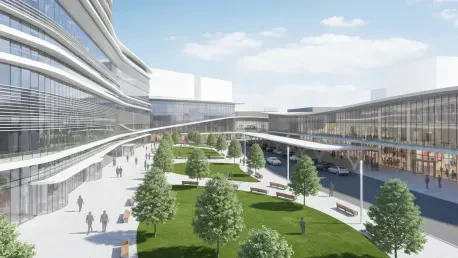
Each of the three integrated resorts is designed to be a comprehensive entertainment destination. The Metropolitan Park project in Queens plans to feature a Hard Rock hotel, a state-of-the-art casino and sportsbook, and a wide array of restaurants and retail outlets. A key attraction will be a 5,650-capacity theater, complemented by a unique “Taste of Queens” food hall designed to showcase local culinary vendors, directly connecting the resort to the borough’s diverse food scene.
Similarly, the Resorts World expansion will dramatically enhance its current offerings. The plan includes a new 2,000-key hotel, a vast 500,000-square-foot gaming floor with hundreds of table games expected by March 2026, and a new 7,000-seat multipurpose entertainment venue. Moreover, the project is committed to community well-being, with plans for over 12 acres of new public green space. In the Bronx, Bally’s resort will feature a 500-key upscale hotel, a large gaming space, and a 2,000-person event center, with a distinct focus on integrating and celebrating the unique culture of the Bronx through its dining and entertainment venues.
What Are the Promised Economic and Community Benefits
The primary justification for approving these massive projects centers on their anticipated economic and social contributions. Governor Hochul has projected that the three casinos will collectively generate billions of dollars in public revenue, which will be directed toward funding the MTA and state education initiatives. This influx of capital is expected to address critical public service needs while providing a new, consistent source of funding for the state.
Beyond public revenue, the developments are being hailed as powerful job creators, with officials forecasting the creation of tens of thousands of employment opportunities across construction, hospitality, and operations. The projects also come with specific commitments to their local communities. For instance, Bally’s has affirmed a long-term commitment to community benefits for Bronx residents. Robert DeSalvio, president of Genting Americas East, framed the Resorts World expansion as the culmination of over 15 years of work supporting its local community, suggesting a continuation of that partnership.
Summary or Recap
The approval of three major hotel casinos in Queens and the Bronx represents a pivotal moment for New York City’s economic development strategy. This decision concludes a rigorous selection process, favoring proposals from Hard Rock International, the Genting Group, and Bally’s Corporation that demonstrated robust community support and viable economic plans. With a combined investment of nearly $20 billion, these projects are set to create comprehensive entertainment districts around Citi Field, the Aqueduct Racetrack, and Ferry Point.
At their core, these developments are presented as engines for widespread public benefit. The official narrative emphasizes the generation of billions in revenue for essential services like transportation and education, the creation of tens of thousands of jobs, and the delivery of tangible benefits to their surrounding communities. As these projects move forward, they carry the promise of transforming the economic and social landscape of their respective boroughs.
Conclusion or Final Thoughts
The state’s approval of these three casino resorts did more than just select winning bids; it signaled a deliberate strategic shift toward fostering large-scale economic development in the outer boroughs. By anchoring these massive private investments in Queens and the Bronx, New York has embarked on a path that could significantly rebalance the city’s economic geography, historically centered on Manhattan.
This decision has set in motion a profound transformation whose full impact on local economies, infrastructure, and community identity will unfold over the coming years. The success of these ventures will ultimately be measured not only by the revenue they generate but also by how well they integrate into and uplift the neighborhoods they will soon call home, marking a new era of development and opportunity for New York City.