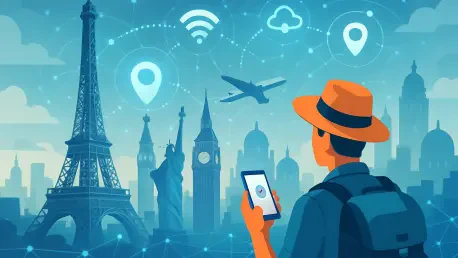

The global travel landscape has reached a pivotal junction where the digital and physical worlds no longer just intersect but have fused into a single, cohesive experience. Today, the success of a destination is measured not just by its natural beauty or historical significance but by the robustness of its digital nervous system. Smart tourism technology has emerged as the primary architect of this new reality, integrating complex data streams to ensure that travel remains a viable and enriching pursuit despite a world defined by rapid geopolitical shifts and economic fluctuation.
Introduction to Smart Tourism Systems
At its foundation, smart tourism is the sophisticated application of Information and Communication Technology (ICT), the Internet of Things (IoT), and Cloud Computing to enhance how humans interact with unfamiliar environments. It is a paradigm shift from traditional sightseeing toward a data-driven ecosystem where every touchpoint—from a traveler’s initial search to their local transit use—is optimized for efficiency. By utilizing interconnected sensors and pervasive connectivity, these systems allow destinations to respond dynamically to visitor needs, creating a seamless “smart experience” that reduces the friction traditionally associated with international travel.
A truly smart destination is more than just a city with fast Wi-Fi; it is a tripartite structure composed of physical infrastructure, social connectivity, and digital platforms. The physical layer involves the “hard” assets like smart grids and automated transport, while the social layer focuses on the people and institutions that drive local culture. The digital platform serves as the connective tissue, aggregating information from these disparate sources to provide a unified interface for both the traveler and the local administrator. This integration is particularly vital in the current landscape of global volatility, as it provides the agility needed to maintain industry resilience when traditional supply chains or diplomatic channels are disrupted.
Key Components of Smart Tourism Infrastructure
Artificial Intelligence and Hyper-Personalization
Artificial Intelligence has moved beyond simple chatbots to become the foundational engine of the traveler lifecycle. By analyzing vast datasets, AI now facilitates hyper-personalization, a process where the system anticipates a user’s desires before they are explicitly stated. This level of service is unique because it moves the industry away from “one-size-fits-all” packages toward bespoke itineraries that evolve in real-time. For instance, if a traveler shows an interest in local architecture via their digital footprint, the system can automatically adjust their daily schedule to include a newly opened gallery or a less-crowded historical site.
The performance of these AI systems is most evident in the pre-trip phase, where virtual reality and predictive modeling allow consumers to “test-drive” experiences. This reduces the cognitive load of decision-making and increases consumer confidence. However, the unique value proposition here is not just convenience; it is the ability of AI to filter out the noise of an oversaturated information market, presenting only the most relevant and high-quality options to the traveler. This creates a high-trust environment where the technology acts as a digital concierge, balancing efficiency with a deep understanding of individual human preference.
Big Data Analytics and Early Warning Systems
The technical backbone of modern destination management lies in Big Data analytics, which serves as a sophisticated early warning system. By monitoring global news cycles, social media sentiment, and flight telemetry, these systems can predict potential disruptions, such as sudden environmental shifts or regional instability, before they manifest as crises. This predictive modeling allows for proactive management rather than reactive scrambling. For example, when a localized event threatens to disrupt a specific region, data-driven systems can instantly reroute travelers or provide alternative “safe-haven” options, effectively mitigating the economic and human impact of the situation.
This real-world usage of real-time data is a game-changer for industry safety. Unlike traditional crisis management, which relied on delayed reports, smart tourism technology utilizes live feeds to provide granular updates to both travelers and authorities. This capability ensures that tourism can continue to function as a stable economic driver even during periods of “permacrisis.” The ability to turn raw data into actionable intelligence is what differentiates modern smart systems from the static digital tools of the previous decade, making them indispensable for maintaining global travel flows.
Emerging Trends and Market Dynamics
The current market is witnessing a shift toward “social sustainability,” where technology is used to protect the fabric of local communities. This moves the needle beyond basic green metrics—like carbon tracking—to more complex socio-economic indicators. For example, smart systems now monitor local housing markets and noise levels to ensure that high visitor volumes do not erode the quality of life for residents. This holistic approach ensures that tourism remains a welcomed industry rather than a source of local friction, fostering a more balanced relationship between the visitor and the host.
Furthermore, a distinct market bifurcation has emerged, where technology is used to create clear tiers of experience. High-net-worth individuals utilize smart tech for exclusive, low-friction luxury, while price-sensitive travelers use the same platforms to find the best value in an inflationary environment. This trend is driven by a global “permacrisis” mindset, leading to a surge in demand for package holidays and “safe-haven” destinations that offer a high degree of predictability. Technology enables this by providing transparent pricing and verified safety data, allowing travelers to navigate an increasingly complex economic landscape with greater certainty.
Real-World Applications and Sector Integration
Smart technology is now being used strategically for “de-marketing” over-saturated areas. By utilizing real-time density data, destination managers can incentivize travelers to visit “hidden gem” locations or secondary markets through digital coupons and targeted notifications. This not only protects the integrity of famous landmarks but also redistributes economic benefits to rural or underdeveloped regions. This geographic load-balancing is a unique application that ensures the longevity of popular sites while simultaneously fostering growth in new, less-explored areas.
Innovation is also expanding into social equity, with smart services designed specifically for travelers with disabilities and the reconstruction of tourism in post-conflict zones. In regions like Ukraine, digital twins and cloud-based infrastructure are being used to plan for the return of travelers, ensuring that new facilities are inclusive and technologically advanced from the ground up. These use cases demonstrate that smart tourism is not just a luxury tool but a vital component of social recovery and international diplomacy, helping to rebuild bridges between nations through shared cultural experiences.
Challenges, Regulatory Hurdles, and Technical Limitations
Despite its successes, the technology faces a significant “digital vs. human” divide. There is an ongoing concern that an over-reliance on automated systems could strip travel of its essential human connection. To counter this, developers are focusing on “high-touch” integrations where technology facilitates, rather than replaces, human interaction. Additionally, regulatory hurdles regarding data privacy remain a major obstacle. As systems become more sophisticated in tracking traveler preferences, the need for robust ethical frameworks and transparent data management is paramount to maintain public trust and comply with global privacy standards.
Technical limitations also persist, particularly regarding the energy costs associated with running massive data centers and AI models. In an era of rising energy prices, the industry must find ways to make smart infrastructure more sustainable and cost-effective. Ongoing development efforts are currently focused on decentralized data processing and more efficient algorithms to reduce the environmental footprint of these digital systems. Balancing the drive for technological perfection with the realities of economic and environmental constraints remains the primary challenge for the next generation of smart tourism developers.
Future Outlook and Technological Trajectory
The trajectory of smart tourism suggests a future where travel serves as a powerful instrument of soft power and international diplomacy. We are moving toward a world where AI-driven reputation management and trust-based communication systems will define how nations interact with the global public. These breakthroughs will likely lead to a more transparent global market where a destination’s value is tied directly to its ability to provide safe, inclusive, and technologically seamless experiences. As these systems mature, they will play a crucial role in maintaining global social equilibrium by promoting understanding through travel.
In the long term, the equitable distribution of socio-economic benefits will be the ultimate metric of success. Future systems will likely integrate even more deeply with local urban planning, creating “smart cities” that serve both residents and visitors with equal efficiency. The move toward a more resilient and agile industry will be driven by the continued evolution of predictive analytics and the integration of blockchain for secure, transparent transactions. This evolution will transform tourism from a volatile sector into a stable pillar of the global economy, capable of weathering any storm.
Comprehensive Summary and Assessment
The integration of smart technology into the travel sector proved to be a decisive factor in maintaining industry stability during recent global challenges. By blending high-tech efficiency with a renewed focus on social sustainability, the industry successfully facilitated billions in transactions while navigating complex geopolitical landscapes. The review highlighted that the most effective implementations were those that did not seek to replace the human element but rather used data to amplify the quality of personal connections. This dual approach ensured that even as the world became more fragmented, the ability to travel remained a cohesive and accessible reality for millions.
Moving forward, the focus shifted toward refining these digital tools to be more energy-efficient and ethically sound. The transition from reactive crisis management to proactive, data-driven resilience allowed destinations to protect both their economic interests and their local populations. Ultimately, the advancements in smart tourism technology provided a blueprint for a more responsible and agile global sector. By prioritizing transparency and inclusivity, the industry moved closer to a future where travel serves as a bridge between cultures, supported by a digital infrastructure that is as robust as it is invisible.