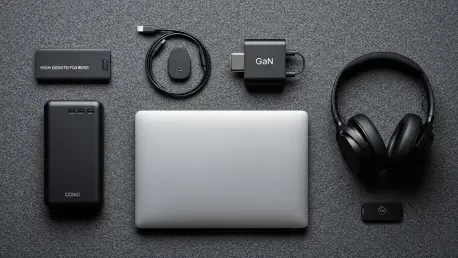

The current state of global transit demands a level of logistical precision that was once reserved for professional navigators, making the selection of personal hardware a critical factor in travel success. As international boundaries become more porous and travel frequency reaches new records, the focus of the modern traveler has shifted toward a curated set of tools designed to minimize friction and maximize operational efficiency. It is no longer about the quantity of gadgets one carries in a backpack, but rather the reliability and multi-functional nature of each specific component in the technical stack. This evolution prioritizes the reduction of mental fatigue by automating mundane tasks and ensuring that connectivity remains constant regardless of the local infrastructure. By focusing on high-performance essentials that provide tangible solutions to real-world transit problems, the modern voyager can navigate complex airport environments and unfamiliar cities with a sense of security and preparedness that was previously difficult to achieve without heavy equipment.
Consolidating Power and Charging Solutions
Managing the energy needs of multiple high-performance devices has become the primary challenge for those moving between different electrical standards and terminal facilities. The advent of Gallium Nitride (GaN) technology has revolutionized this space, allowing for the creation of ultra-compact charging bricks that provide massive power output without the heat or bulk of traditional silicon-based wall plugs. These high-density chargers are now capable of powering a laptop, a tablet, and a smartphone simultaneously from a single outlet, effectively eliminating the need for bulky power strips or multiple adapters. This consolidation not only saves significant space in a carry-on bag but also ensures that travelers can make the most of limited time at airport charging stations or in hotel rooms with poorly placed sockets. The integration of intelligent power distribution ensures that each connected device receives the optimal voltage, protecting sensitive electronics from surges while drastically reducing the time spent waiting for a full battery before the next leg of a journey.
Complementing these wall-based solutions are high-capacity, high-density power banks that serve as a vital lifeline during long-haul flights or in regions where reliable electricity is not always guaranteed. Modern battery technology has advanced to provide high-wattage output in slim profiles that meet international aviation safety standards for carry-on luggage. These portable units are often equipped with integrated cables or magnetic charging surfaces, reducing the clutter of tangled wires and the risk of losing essential accessories while in transit. For the professional traveler, having a dedicated power reserve that can sustain a laptop for several hours of intensive work is no longer a luxury but a necessity for maintaining productivity across time zones. Furthermore, the durability of these units has increased, with ruggedized casings and weather-resistant ports becoming common features that protect the internal cells from the physical rigors of constant travel. This reliability allows for a seamless transition from the office to the airport lounge without any disruption in digital operations.
Strengthening Security and Digital Privacy
Maintaining the security of physical belongings and digital information is a top priority for travelers navigating through high-traffic international hubs and dense urban environments. Bluetooth tracking technology has matured into a standard safety net, allowing individuals to monitor the precise location of checked luggage, wallets, and laptop bags through a unified interface on their mobile devices. These trackers utilize a global network of connected hardware to provide real-time updates, which has proven invaluable in recovering lost items or verifying that a suitcase has indeed been loaded onto the correct aircraft. This layer of visibility provides significant peace of mind, as the uncertainty of baggage handling is replaced with actionable data. Beyond simple location tracking, many of these devices now feature proximity alerts that notify the owner if a bag is moved beyond a certain distance, acting as a proactive deterrent against theft in crowded public spaces where situational awareness might be momentarily compromised by the distractions of navigation and scheduling.
Digital privacy has become equally critical as the physical safety of hardware, especially as more sensitive personal and financial information is accessed through public Wi-Fi networks in terminals and lounges. Travelers are increasingly adopting physical privacy filters that limit the viewing angle of their device screens, preventing visual hacking by strangers sitting in adjacent seats or standing in line behind them. These simple but effective tools ensure that passport numbers, login credentials, and private communications remain confidential even in the most crowded environments. On the software side, the use of hardware-based security keys for two-factor authentication has become a standard practice for protecting digital accounts from sophisticated phishing attempts that often target those on the move. When combined with encrypted storage solutions and robust virtual private networks, these physical and digital safeguards create a comprehensive security perimeter. This proactive approach to privacy allows the traveler to engage in remote work or personal banking with the confidence that their data remains shielded.
Mastering Connectivity: The New Standard
The widespread adoption of eSIM technology has fundamentally changed how travelers access cellular data, removing the need to locate physical SIM card vendors upon arrival in a new country. This digital-first approach allows for the immediate activation of local data plans, enabling travelers to maintain a high-speed internet connection for navigation and communication from the moment they step off the aircraft. By utilizing dual-SIM capabilities, individuals can keep their primary home number active for emergency calls while using a cost-effective local plan for heavy data consumption. To complement this digital mobility, the rise of portable Solid State Drives (SSDs) as a core component of the travel kit has addressed the need for high-speed, durable storage. These drives offer the capacity required to store hours of 4K video footage and critical work files without the fragility of traditional mechanical hard drives. Their rugged construction makes them ideal for transit, ensuring that data remains safe in the most demanding environments, even if the device experiences significant physical shock.
The successful integration of these technologies into a lean, high-performance toolkit allowed travelers to move through the world with a degree of self-sufficiency that was previously unattainable. Those who prioritized functional minimalism over the pursuit of every new gadget found that their journeys were defined by a lack of technical friction and a heightened focus on the experience itself. The shift toward Gallium Nitride power solutions and eSIM connectivity proved that the most effective travel tech was that which operated silently in the background, solving problems before they could escalate into major disruptions. Moving forward, the focus remained on the refinement of these existing systems, with an emphasis on sustainable materials and even greater energy efficiency. Industry experts suggested that the next phase of development would likely involve deeper integration between personal hardware and municipal infrastructure to further automate the transit process. Ultimately, the lessons learned from this era demonstrated that a well-curated set of high-quality tools was the most valuable asset a global citizen could carry.