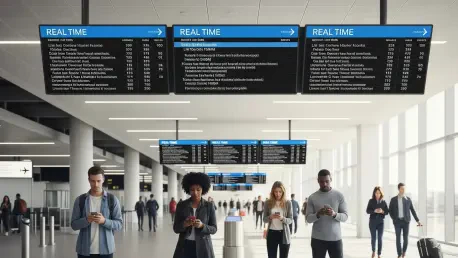

The silent struggles of millions of travelers are finally echoing through the corridors of power as the aviation industry confronts a long-standing communication crisis that has historically marginalized deaf and hard-of-hearing passengers. For the better part of a century, the global travel experience was built upon an “audio-first” foundation, where the public address system served as the primary, and often only, source of real-time operational updates. This structural reliance on sound created a massive “information vacuum,” leaving those with hearing impairments in a state of constant logistical uncertainty. The current era marks a pivotal turning point where the industry is forced to move beyond the limitations of mere legal compliance and toward a model of universal communication.
The necessity of this shift is driven by a growing recognition that equitable access to information is not a secondary convenience but a fundamental human right within the travel sector. In the present landscape, a “visual-first” philosophy is no longer a niche request; it is becoming a baseline expectation for modern terminal design. The analysis explores how the sector is pivoting to address these deep-seated inequities, examining the transition from chaotic, sound-dependent environments to streamlined, digitally integrated hubs. This evolution aims to restore dignity and independence to millions of travelers who have long been forced to navigate the world through guesswork or the charity of strangers.
Stakeholders across the globe are realizing that the old ways of managing passenger flow are increasingly incompatible with a modern, inclusive society. While the industry has made strides in physical accessibility, such as ramps and specialized seating, the “digital divide” in communication remained largely unaddressed until very recently. By scrutinizing the historical reliance on audio and the emerging technological solutions, the industry can finally see a path where every passenger, regardless of their sensory abilities, has the same access to the same information at the same time.
The Legacy of the Loudspeaker: Understanding the Audio-Centric Terminal
To fully grasp the magnitude of the current crisis, it is essential to look at the historical development of airport infrastructure and the persistent dominance of the loudspeaker. For decades, the rhythm of major global hubs like Chicago O’Hare or London Heathrow was dictated by vocal announcements that announced everything from gate changes to boarding priorities. This foundational concept was established long before the digital revolution, creating a landscape where hearing passengers processed vital information subconsciously. This sensory-specific architecture effectively baked discrimination into the very walls of the airport, making reform a complex task of dismantling established operational habits.
These background factors matter because they influenced how staff were trained and how information systems were prioritized in budget allocations. For years, the loudspeaker was viewed as the most efficient tool for mass communication, a perspective that completely ignored the segment of the population unable to hear those broadcasts. This legacy resulted in a systemic blind spot where the primary “pulse” of the airport was invisible to anyone with a hearing impairment. The industry is now dealing with the consequences of this audio-centric design, which has left modern terminals playing catch-up with the needs of a diverse traveler base.
Furthermore, the historical lack of integration between audio and visual systems meant that communication was often redundant for some but non-existent for others. Even as digital screens were introduced, they were frequently treated as secondary or tertiary information sources, often lagging behind the live voice of a gate agent. Understanding this history is crucial for realizing that the current move toward visual-first communication is not just a technological upgrade; it is a profound cultural shift that challenges a century of industry tradition.
The Hidden Risks of Communication Disparity
The Dangerous Gap Between Sound and Sight
A critical aspect of the current communication crisis is the persistent “lag time” between audio announcements and visual updates on terminal monitors. In many international terminals, when a gate agent announces a delay or a change in boarding priority, the physical monitors often remain static for several minutes or, in some cases, fail to update entirely. This delay is more than a minor nuisance; it represents a systemic failure of real-time data parity. For a deaf traveler, this gap creates a reliance on “ad-hoc” navigation, where they must constantly monitor the body language of the crowd or hope that a helpful stranger provides a timely tip about a sudden change.
This lack of synchronization leaves disabled passengers stranded in a state of perpetual uncertainty, especially during weather-related rerouting or high-stress scheduling shifts. When information is delivered at different speeds across different mediums, the person relying on the slower medium is inherently at a disadvantage. This disparity often leads to missed flights, lost connections, and a significant increase in travel-related anxiety. The industry is currently under pressure to ensure that the “digital twin” of any audio announcement is delivered instantly across all visual platforms to eliminate this dangerous information gap.
Safety Implications in High-Stakes Scenarios
The disparity in communication becomes a matter of life and death during emergency situations. Safety experts have long raised alarms that during building evacuations, security breaches, or urgent aircraft diversions, the reliance on the spoken word puts deaf individuals at an extreme disadvantage. If an emergency instruction is delivered only via a loudspeaker, a deaf passenger may remain in a dangerous area while others flee. They are often forced to follow a crowd without understanding the nature of the threat, which complicates security efforts and increases individual vulnerability.
This highlights that accessible communication is not a luxury or a customer service perk; it is a fundamental component of aviation safety. In high-stakes scenarios, the absence of clear, visual, and real-time instructions can lead to tragedy. The industry is beginning to recognize that safety protocols must be redesigned to ensure that visual alerts are as prominent and immediate as sirens or verbal warnings. Without this parity, the aviation sector remains in violation of the basic principle that safety must be guaranteed for all passengers, not just those who can hear a PA system.
The Legislative Compliance Gap and Global Inconsistency
Despite robust frameworks like the Americans with Disabilities Act in the United States and the Persons with Reduced Mobility framework in the European Union, a significant “compliance gap” remains. Regulators have traditionally measured accessibility by the presence of physical assistance, such as wheelchair services, rather than the usability of communication systems. This has led to a fragmented global landscape where a traveler may experience world-class visual integration in one city and a total lack of support in the next, creating a stressful and unpredictable journey for those with hearing loss.
Civil rights advocates are increasingly pushing for mandatory, audit-based benchmarks that require technological parity across all communication channels. The current trend suggests a shift away from optional guidance toward enforceable international standards that treat information access as a core requirement for operating a commercial terminal. To close this gap, legislative bodies must update their definitions of accessibility to include the synchronization of audio and visual data. Only through rigorous, standardized enforcement can the industry ensure that a traveler’s safety and independence are not determined by their geographic location.
Digital Innovation and the Future of Terminal Interaction
The future of aviation communication is being shaped by disruptive technologies that aim to synchronize the sensory experience for all travelers. Emerging trends suggest a massive shift toward AI-powered transcription, where gate announcements are instantly converted to text on terminal screens and individual mobile devices. Some forward-thinking hubs, such as Minneapolis-Saint Paul International, are already setting a gold standard by introducing on-demand sign language interpreting services. These innovations suggest a future where the airport environment adapts to the passenger, rather than forcing the passenger to navigate a hostile sensory landscape alone.
Furthermore, the integration of Augmented Reality for wayfinding and enhanced mobile push notifications promises to fill the traditional “dead zones” of information within the airport. Travelers can now receive real-time updates directly to their smartphones that match the live announcements happening at the gate. As these technologies become more affordable and easier to implement, the expectation is that they will move from high-end amenities to standard features in every major terminal. This digital transformation is not just about helping a specific demographic; it is about creating a more efficient and transparent travel ecosystem for everyone.
The rise of these technologies also allows for a more personalized travel experience. In the coming years, we can expect to see terminals where information is pushed to passengers in their preferred format, whether that be text, sign language, or simplified visual icons. This level of customization ensures that the “information vacuum” is permanently filled. By leveraging artificial intelligence and high-speed connectivity, the aviation industry can finally bridge the gap that the loudspeaker created nearly a century ago, ensuring that the terminal of the future is a truly inclusive space.
Strategies for a More Inclusive Aviation Industry
For the industry to evolve effectively, stakeholders must adopt a strategy of universal design that benefits the widest possible range of people. Implementing live captioning in noisy, crowded terminals does not just benefit deaf passengers; it assists non-native speakers, elderly travelers, and anyone struggling to hear over the ambient terminal noise. Best practices for airlines and airport operators should include the implementation of synchronized visual alerts as a default setting rather than an “opt-in” feature. This proactive approach ensures that inclusivity is baked into the operational DNA of the business.
Mandatory staff training focused on communication equity is another critical strategy for closing the gap between policy and practice. Employees at every level, from gate agents to security personnel, must be equipped with the tools and knowledge to interact effectively with deaf and hard-of-hearing passengers. This includes basic training in visual communication strategies and the use of on-demand interpreting technology. When staff are empowered to provide equitable service, the overall quality of the passenger experience improves, leading to higher satisfaction scores and increased brand loyalty from a demographic that has historically been underserved.
Businesses that prioritize these updates will likely see a significant reduction in travel anxiety and the financial losses associated with missed connections and logistical errors. Moreover, by tapping into the loyal market of travelers who currently avoid flying due to accessibility barriers, airlines can find new avenues for growth. The move toward inclusive communication is not just a moral or legal imperative; it is a sound business strategy that enhances the resilience and efficiency of the entire aviation network. By focusing on clarity and accessibility, the industry can create a more welcoming environment for the global traveling public.
Achieving Parity in the Skies
The transition from an audio-first paradigm to a truly inclusive communication network was recognized as an urgent necessity for the global aviation industry. The analysis demonstrated that the crisis of inaccessible communication was a multifaceted issue involving outdated infrastructure, inconsistent regulation, and significant safety risks that could no longer be ignored. However, the rise of vocal advocacy combined with rapid technological advancement provided a clear and actionable path forward. Stakeholders began to understand that true inclusivity was not about meeting minimum legal requirements; it was about redesigning the entire travel experience to ensure information was available to everyone simultaneously.
Industry leaders moved toward implementing synchronized visual-audio systems that functioned as the new global standard for terminal operations. This shift allowed for a journey defined not by the barriers encountered, but by the seamless access provided to all passengers regardless of their hearing status. Actionable next steps involved the adoption of AI-driven transcription as a mandatory feature for all public address systems and the integration of haptic or visual emergency alerts in every terminal zone. These solutions addressed the root causes of the communication gap while enhancing the overall safety and efficiency of the travel experience.
As the industry moved forward, the focus shifted to maintaining these standards through rigorous international audits and continuous technological updates. The goal was to ensure that the progress made was not temporary but represented a permanent change in how aviation serves the public. By prioritizing the independence and dignity of every traveler, the sector finally started to end the crisis of inaccessible communication. The strategic insights gained from this period of transformation highlighted that a truly universal design philosophy was the only way to guarantee a safe and equitable future for global air travel.