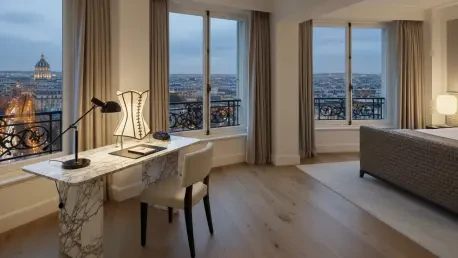

Standing as the sole five-star sanctuary directly on the world’s most illustrious promenade, the Paris Marriott Champs-Élysées Hotel has recently completed a metamorphosis that redefines the relationship between architectural space and high-fashion heritage. This comprehensive renovation signifies a pivotal chapter for a property that sits at the crossroads of global tourism and French elegance. By reimagining every corner of its historic structure, the hotel moves beyond the traditional constraints of hospitality to offer a curated experience where history and modernity exist in a delicate, stylish balance.
The project sought to answer whether a building could function as both a high-capacity luxury hotel and a living tribute to the art of the garment. Through a meticulous selection of materials and a narrative-driven aesthetic, the renovation transformed the property into a residential haven that mirrors the rhythm of the city. Every element, from the grand atrium to the private suites, was designed to evoke the precision and flair of a bespoke suit, ensuring that the guest experience remains as polished as the storefronts lining the avenue outside.
A Sartorial Evolution at the Heart of the World’s Most Famous Avenue
The unveiling of the renovated Paris Marriott Champs-Élysées Hotel marks a significant shift in how hospitality intersects with high fashion. A historic building at 70 Avenue des Champs-Élysées—the former creative home of a pioneering couturière—successfully embodies the spirit of a runway show while functioning as a premier luxury destination. The recent transformation suggests that the boundary between architecture and attire is more porous than ever, offering a sanctuary where “savoir-faire” is woven into every guest experience. This evolution captures the essence of a city that has long been the epicenter of global style.
By repositioning the hotel as a fashion-forward landmark, the redesign honored the site’s unique place in Parisian history. The property now serves as a cultural anchor on the avenue, attracting travelers who value the intersection of historical significance and contemporary luxury. This sartorial evolution was not merely about changing the decor; it was about altering the hotel’s DNA to reflect the artistry of the surrounding fashion houses.
Why the Fusion of Fashion and Architecture Matters in Modern Travel
Luxury travelers now seek more than just standard five-star amenities; the connection between a property’s physical design and its cultural history has become a vital differentiator. This renovation addresses the growing demand for authentic, narrative-driven stays that celebrate local heritage. By aligning its identity with the golden age of French couture, the hotel transitions from a traditional corporate landmark into a curated residential sanctuary, reflecting a broader trend where hospitality serves as a bridge to a city’s artistic soul. The shift toward meaningful storytelling ensures that guests feel a profound connection to the Parisian spirit.
This fusion also serves a functional purpose by creating an environment that feels more intimate and personalized. When architecture takes cues from the fluidity and texture of fashion, it breaks down the monolithic feel of traditional hotel design. The result is a space that feels lived-in yet exceptional, providing a sense of comfort that resonates with the global elite. By focusing on these intersections, the property established a new benchmark for how luxury hotels should communicate their identity.
The Core Elements: A Couture-Driven Hotel Transformation
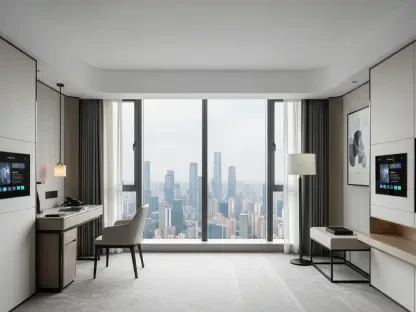
The visual identity of the property was meticulously rebuilt through a design philosophy that prioritized texture, movement, and material. Muza Lab’s creative vision utilized a sophisticated monochromatic palette accented by saffron, mirroring the drape and energy of high-end garments. Key features of this overhaul included the 192 guestrooms and 58 suites, which utilize oak flooring and Italian marble to create a residential feel. The centerpiece remained the glass-domed atrium, now softened by biophilic design elements and bespoke lighting that created a theatrical transition from the bustling street to the interior.
Every room was treated as a gallery of French craftsmanship, with furniture and lighting that echoed the curves of the human form and the rigidity of structured tailoring. The use of noble materials ensured that the renovation would stand the test of time, much like a classic piece of couture. This attention to detail extended to the communal spaces, where the interplay of light and shadow was choreographed to highlight the hotel’s new architectural silhouettes.
Drawing Inspiration from the Legacy of Jenny Sacerdote and French Savoir-Faire
The redesign found its heartbeat in the history of Jenny Sacerdote, the French couturière who once operated from this very address. This connection was reinforced through intricate design details, such as lamps shaped like corsets, headboards referencing leatherwork from luxury goods houses, and geometric carpets inspired by tailored patterns. The culinary landscape further cemented this legacy with “Jenny,” a signature restaurant and bar offering refined, seasonal cuisine. These elements served as a tribute to French craftsmanship, ensuring the renovation was not merely aesthetic but rooted in a legitimate historical narrative.
The legacy of Sacerdote provided a rich tapestry for the designers to explore, allowing them to integrate subtle nods to the world of dressmaking throughout the property. From the embroidery-inspired artwork to the specific tactile quality of the upholstery, the hotel became a sensory experience. This dedication to “savoir-faire” elevated the property from a place of rest to a place of inspiration, honoring the artisans who defined Parisian elegance in the early twentieth century.
How to Engage with the New Standard of Parisian Hospitality
To fully experience the hotel’s synthesis of design and service, guests utilized a framework of bespoke offerings tailored to high-end artistry. The “Ultimate Guerlain Experience” provided suite guests with personalized treatments at the nearby Institut Guerlain, while on-site curators arranged private watchmaking workshops and olfactory consultations. For those seeking a deeper connection to the city, the hotel facilitated private cruises along the Seine and exclusive teatime services. These strategic partnerships allowed travelers to transition from admiring the hotel’s design to actively participating in the luxury lifestyle it represented.
The transformation ultimately proved that a hotel could be more than just a destination; it could be an active participant in the city’s cultural dialogue. By offering experiences that mirrored the precision of its design, the property invited guests to immerse themselves in the very best of Paris. Future considerations for the hotel focused on maintaining this high level of engagement by continuously evolving its suite of services to meet the changing tastes of the modern traveler. The renovation successfully secured the hotel’s position as a timeless icon of style on the world’s most famous avenue.