
Katarina Railko brings a wealth of expertise from the intersection of high-end travel, global exhibitions, and commercial real estate development. As a hospitality specialist who has spent years analyzing the evolution of luxury brands, she offers a unique perspective on how historic architecture and modern guest expectations converge. In this conversation, we explore the strategic expansion of Minor Hotels, the transition of a legendary London dining institution into a full-scale hotel brand, and the intricate design and operational choices required to thrive in the competitive landscape of Midtown Manhattan.
The Wolseley is a legendary London culinary landmark. How does the 76-room property near Times Square translate that legacy into a full-scale hospitality experience, and what specific design choices were made to honor the building’s original 1905 McKim, Mead & White architecture?
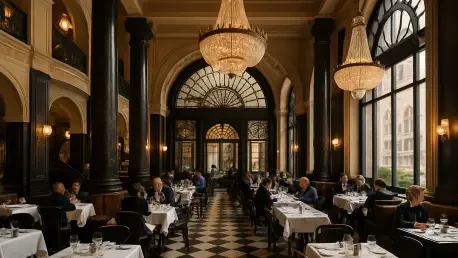
Translating a dining icon into a living space requires a deep respect for the physical history of the site. We are working within a magnificent 1905 structure originally designed by McKim, Mead & White, a firm synonymous with the Gilded Age’s architectural triumphs. To honor this, we are preserving the grandeur of the original clubhouse layout while integrating the “all-day” European grand café culture that made the London original famous. This means the 76 guest rooms aren’t just sleeping quarters; they are extensions of a civic gathering place, utilizing bespoke in-room amenities and thoughtful detailing that mirror the craftsmanship of the early 20th century. By maintaining the integrity of the facade and the monumental proportions of the common areas, we ensure that the transition from the bustling street to the refined interior feels like a step back into a more elegant era, yet with every modern convenience.
This project seeks to balance British sophistication with New York’s cultural energy. What specific elements in the guest suites bridge traditional and modern styles, and how will the social atmosphere at the cellar-level speakeasy and wellness center differ from established Midtown competitors?
The design philosophy for our suites is rooted in a “distinctly cosmopolitan lens” that avoids being a mere period piece. We have curated a blend of traditional British aesthetics—think rich textures and classic tailoring—interspersed with the sharp, edgy lines of modern New York design. This creates a residential feel that is both internationally polished and unmistakably local. Our social spaces are where we truly differentiate ourselves from the high-inventory corporate hotels nearby. While competitors focus on high-volume foot traffic, our cellar-level speakeasy is designed as an intimate, subterranean retreat that prioritizes privacy and exclusive “refined social energy.” Similarly, our reimagined wellness center moves away from the standard hotel gym model, offering a curated environment that feels more like a private club for cultural and business leaders than a communal fitness floor.
The all-day restaurant serves as the social heart of the hotel. How will the food and beverage program anchor the guest experience, and what steps are necessary to ensure the restaurant maintains an exclusive, refined feel within such a high-traffic district?
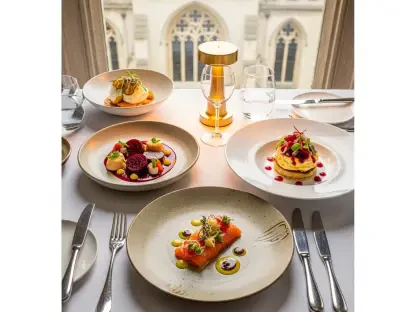
The Wolseley restaurant is the “social nexus” of the property, functioning as the heartbeat from breakfast through late-night cocktails. In a high-traffic area like Times Square, exclusivity is maintained through a combination of meticulous service standards and spatial design that creates a sanctuary from the outdoor chaos. We focus on the concept of the “gathering place” for civic and business leaders, which means our staff is trained to recognize the nuances of guest preferences, ensuring that the atmosphere remains sophisticated rather than tourist-heavy. By anchoring the hotel in a world-class culinary scene, we give guests a reason to stay on-property, making the lobby and restaurant feel like a private enclave for the “in-the-know” crowd. It is about fostering an environment where a high-stakes business meeting can happen at one table while a relaxed celebratory brunch occurs at the next, all under the umbrella of refined British hospitality.
With an ambitious goal to add 200 properties to the global portfolio by late 2026, why was Midtown Manhattan selected as the flagship site for this brand? How do you plan to scale this specific luxury model across diverse markets in Asia, Europe, and the Middle East?
Midtown Manhattan was the inevitable choice for our flagship because it represents the pinnacle of global commerce and culture, mirroring the prestige of our London roots. Minor Hotels currently manages over 550 hotels across 56 countries, and we see New York as the ultimate proving ground for this boutique luxury model. Scaling this to markets in Asia and the Middle East involves a “bespoke” approach where we take the core DNA of the brand—culinary excellence and historic architecture—and adapt it to local contexts. In Bangkok or Dubai, the physical structure might be modern, but the “social energy” and focus on being a cultural hub will remain constant. Our strategy is to ensure that while the design reflects the local city, the guest experience always feels like a homecoming to the refined world of The Wolseley.
Several large-scale hotels have recently opened in the Times Square area, adding over 900 rooms to the local inventory. What challenges do you anticipate when launching a smaller, boutique luxury property in this crowded market, and how will you measure its success against these high-inventory corporate brands?
The primary challenge is rising above the “noise” of high-inventory properties like the 529-key Kimpton Era or the 419-room voco Times Square. However, our smaller scale of 76 rooms is actually our greatest competitive advantage. We aren’t competing for mass-market volume; we are competing for the discerning traveler who finds large-scale hotels impersonal. Success for us isn’t just measured by occupancy rates, but by the “stickiness” of our social spaces and the profile of our clientele. We look at the restaurant’s reputation as a standalone destination and the frequency of returning guests who value the intimacy of a boutique setting. In a sea of nearly 1,000 new corporate rooms, our focus on being a curated, exclusive landmark provides a clear alternative that the larger brands simply cannot replicate.
What is your forecast for the luxury boutique hotel market in New York City?
The market is shifting away from generic luxury toward “experience-rich” hospitality where history and storytelling are the primary currencies. In a city as dense as New York, I forecast that the most successful properties will be those that offer a sense of “place” and “sanctuary.” We are seeing a move toward smaller, more agile luxury brands that can offer personalized service that 400-room hotels find impossible to execute. As travelers become more sophisticated, they will increasingly seek out hotels like ours that function as cultural hubs rather than just a place to sleep. The future of New York luxury lies in the ability to blend the energy of the city with an atmosphere of exclusive, old-world refinement, and I believe we will see more historic buildings being reimagined into high-concept, low-inventory gems.