
Tucked away in the dense, storied lanes of London’s financial heart, a Victorian-era office building is poised to begin a remarkable new life, illustrating how a city’s architectural past can be thoughtfully repurposed to serve its dynamic future. The City of London Corporation has granted full approval for the transformation of 27–28 Clements Lane, a Grade II-listed structure, into a luxury hotel. This decision marks a pivotal moment in the ongoing evolution of the Square Mile, signaling a commitment to creating a vibrant, multifaceted destination that honors its heritage while embracing modern demands for hospitality and public engagement.
A New Chapter for a Victorian Landmark
The official green light from the City of London Corporation authorizes the comprehensive redevelopment of the historic building into a sophisticated, design-forward hotel. This approval is a cornerstone of the City’s “Destination City” initiative, a strategic vision aimed at transforming the area from a weekday financial hub into a seven-day-a-week destination for residents, visitors, and tourists. By blending commerce with culture and leisure, the initiative seeks to create a more resilient and dynamic urban environment.
The conversion of 27–28 Clements Lane is a tangible expression of this goal. The project breathes new life into an underused heritage asset, diversifying the local economy and enhancing the public realm. By introducing high-quality hospitality into a historically commercial zone, the development promises to attract a new demographic to the area, contributing to the creation of a richer, more mixed-use urban fabric that remains active long after the trading floors have closed.
The History and Context of 27–28 Clements Lane
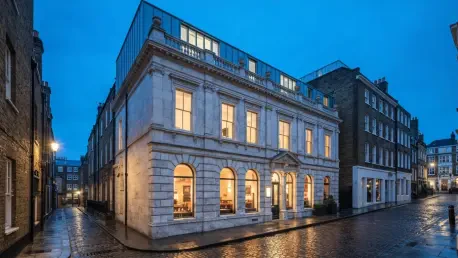
Constructed during the Victorian era, the building at 27–28 Clements Lane stands as a testament to the period’s architectural confidence and craftsmanship. Its significance is formally recognized by its Grade II-listed status, a designation from Historic England that highlights its special architectural and historic interest. The building features a prominent marble-clad ground-floor facade and elaborately corniced windows, details that speak to the prosperity and ambition of 19th-century London.
Despite its architectural merits, the structure had become underutilized in recent years, a dormant landmark in a highly strategic location nestled between the Monument and Bank transport hubs. Its position within a network of characterful lanes and courts presented both a challenge and an opportunity. The approval of the hotel conversion unlocks the building’s potential, ensuring its preservation while adapting it for a contemporary purpose that reintegrates it into the life of the city.
The Approved Vision Key Features of the Transformation
The vision for the site, masterfully crafted by architectural firm Studio Moren for the JMK Group, has now secured both full planning permission and listed-building consent, clearing the path for its realization. The approved plan is a nuanced and carefully considered response to the building’s historic context and the city’s future needs, encompassing a meticulous restoration, a sensitive contemporary addition, and a deep commitment to public and environmental benefits.
This comprehensive approach demonstrates a sophisticated understanding of modern urban development, where success is measured not only by commercial viability but also by cultural and social contributions. The project for the 180-room hotel is designed to function as a cohesive whole, where heritage and innovation are not in conflict but are instead mutually reinforcing elements of a singular, compelling vision.
A Heritage Led Design Philosophy
Central to the project’s ethos is a profound respect for the building’s historical integrity. The design philosophy is explicitly heritage-led, focusing on the careful restoration and preservation of the structure’s most significant features. This commitment extends to the striking marble-clad facade, the original interior staircases, and the robust cast-iron columns that define its internal character. Each of these elements will be meticulously conserved to retain the building’s authentic Victorian spirit.
Beyond preservation, the project also aims to reinstate historical details that have been lost or obscured over time. The plans include the reintroduction of decorative plaster ceilings and chimney breasts, details that will enrich the interior spaces and offer guests a more immersive connection to the building’s past. This restorative approach ensures that the hotel is not merely housed within a historic shell but is deeply interwoven with its unique architectural identity.
Integrating a Contemporary Extension
To meet the spatial demands of a modern 180-room hotel without compromising the integrity of the original structure, the plan incorporates a new lightweight metal roof extension. This contemporary addition is designed with contextual sensitivity, drawing architectural cues from the segmental arches of the existing building and the vaulted forms of the adjacent St. Clement’s Church. The result is an intervention that feels both modern and deeply rooted in its historic surroundings.
This extension is critical to the project’s viability, providing the necessary floor space for additional guest rooms and amenities. Its design demonstrates how new architectural layers can be added to historic buildings in a way that respects the existing urban scale and character. Rather than overpowering the original structure, the extension is conceived as a deferential yet confident addition that enables the landmark to adapt and thrive in the 21st century.
Enhancing the Public Realm
A key objective of the transformation is to invigorate the surrounding streetscape and create a more animated public environment. The hotel’s entire ground floor will be publicly accessible, featuring a vibrant mix of a lounge, restaurant, café, and bar. This design strategy activates the frontages along Lombard Court and St. Clement’s Court, transforming what were once quiet back-lanes into lively social spaces.
By repurposing an existing service door to create a welcoming entrance for the bar and restaurant, the project thoughtfully integrates the new hotel into the local urban fabric. This approach will not only increase footfall and vibrancy but also enhance passive surveillance, making the area’s characterful lanes safer and more inviting for everyone. The development thus extends its benefits beyond its own walls, contributing positively to the wider public realm.
A Commitment to Sustainable Revitalization
Sustainability is a foundational principle of the development, embedded into the design from its inception. The project champions a “retrofit and reuse-first” approach, a strategy that significantly minimizes embodied carbon by retaining the majority of the listed building’s structure and fabric. This reuse of existing materials is a powerful statement on the environmental benefits of heritage adaptation over new construction.
The commitment to sustainability is further reinforced by a suite of advanced environmental measures. These include the specification of low-carbon materials and HVAC systems, the installation of rooftop solar panels to generate renewable energy, and upgrades to fabric insulation to improve thermal performance. Additionally, the design incorporates rainwater harvesting and a biodiverse green roof, which will help mitigate flood risk, counter the urban heat island effect, and introduce new green infrastructure. These efforts are aimed at achieving a BREEAM Excellent rating, proving that heritage conservation and high environmental standards can be successfully aligned.
A Balanced Approach to Urban Redevelopment
The project at 27–28 Clements Lane is distinguished by its holistic and balanced approach to urban renewal. It masterfully synthesizes four critical elements: the respectful preservation of a cherished heritage asset, a thoughtful and context-aware modern architectural intervention, a genuine enhancement of the public realm, and an unwavering commitment to high sustainability standards.
This integration of diverse objectives sets a new benchmark for redevelopment projects within historically sensitive urban contexts. It serves as a compelling model for how cities can unlock the potential of their underutilized historic buildings, transforming them into valuable assets that meet contemporary needs while preserving the unique character and identity of the urban landscape for future generations.
From Blueprint to Reality The Path Forward
With full planning permission and listed-building consent now secured, the project has officially transitioned from a visionary blueprint to an approved reality. This milestone represents the culmination of a rigorous design and consultation process, and it clears the way for the next phase of development.
The JMK Group and Studio Moren will now move forward with the detailed planning and preparations required for construction. The path ahead involves translating the approved architectural drawings into a tangible program of works, a process that will demand continued collaboration and expertise. As the project progresses toward breaking ground, it will begin its physical transformation from a dormant office building into a vibrant new destination in the heart of the City.
Reflection and Broader Impacts
The approval of this development represents more than just a single planning decision; it is a reflection of a broader shift in urban thinking. The project’s significance lies in its thoughtful response to the complex challenges facing historic city centers today.
Reflection
The project’s primary strength lies in its successful negotiation between commercial viability, public benefit, and environmental responsibility. It demonstrates that a luxury hotel can be a catalyst for positive urban change, activating public spaces and preserving architectural heritage. However, the path to achieving this balance is not without challenges. Retrofitting a Grade II-listed building to meet the exacting standards of a modern hotel and a BREEAM Excellent rating requires significant investment, technical expertise, and a patient, detail-oriented approach to conservation.
Broader Impact
On a wider scale, this development serves as an influential precedent for urban regeneration in historic cities globally. It provides a compelling case study in how underutilized heritage assets can be adaptively reused to support strategic municipal goals, from boosting the local visitor economy to promoting sustainability. This project shows that historic buildings are not obstacles to progress but can be central players in creating more resilient, dynamic, and livable cities. It proves that with the right vision, the past can be effectively reimagined to build a better urban future.
A Landmark Reimagined for the Future
The story of 27–28 Clements Lane became one of forward-looking transformation. The project was defined by a respectful restoration that honored its Victorian soul, a sensitive modern addition that enabled its new purpose, and a strong commitment to delivering tangible public and environmental benefits. The decision to approve this development was framed not just as the preservation of a building, but as a strategic investment in London’s identity as a vibrant, global destination—a city that cherishes its history while confidently building its future.