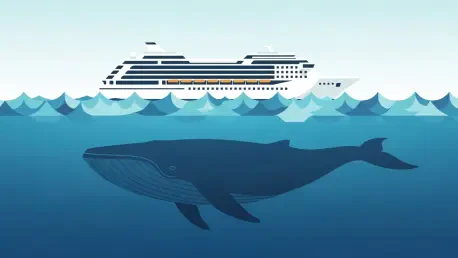

In the bustling maritime corridors off the California coast, a groundbreaking environmental initiative is expanding its reach, creating a safer passage for some of the planet’s largest creatures and cleaner air for coastal communities. The state’s celebrated Protecting Blue Whales and Blue Skies program is now formally incorporating cruise lines into its successful framework, a strategic development that enhances a decade-long effort to harmonize commerce with conservation. This new chapter builds upon a proven model of voluntary cooperation, encouraging massive passenger vessels to reduce their speed in designated zones. The core principle is simple yet profound: by slowing down, ships can drastically reduce the risk of fatal collisions with endangered whales and significantly cut their harmful emissions, addressing two of the most pressing environmental challenges posed by modern shipping in a single, elegant solution. This expansion represents a pivotal moment in the ongoing collaboration between industry and environmental stewardship, promising to amplify the program’s already considerable positive impacts.
A Proven Model for Marine Conservation
The Protecting Blue Whales and Blue Skies initiative has firmly established itself as a highly effective program for mitigating the environmental impact of large vessel traffic since its inception. Primarily designed to address the dual threats of fatal ship strikes on endangered whales and the emission of harmful air pollutants, the program has successfully engaged with a broad coalition of over 50 global cargo shipping lines. The central strategy involves incentivizing these commercial vessels to voluntarily reduce their transit speed to 10 knots or less while navigating through critical whale habitats along the California coastline. This operational adjustment, though seemingly minor, has yielded multifaceted environmental benefits, demonstrating that economic activity and ecological preservation can coexist. The program’s success has created a robust foundation and a clear blueprint for expanding its scope, proving that collaborative, incentive-based approaches can achieve what stringent regulation alone often cannot.
The remarkable efficacy of this strategy is substantiated by a wealth of compelling data that highlights its profound and measurable impact on the marine environment and regional air quality. To date, the initiative has facilitated over 1.6 million nautical miles of whale-safe transit, a milestone that translates directly into a 50% reduction in the likelihood of fatal ship strikes for the vulnerable blue, fin, and humpback whale populations that frequent these waters. On the atmospheric front, the program has prevented approximately 5,900 tons of nitrogen oxides (NOx) and 200,000 metric tons of greenhouse gases from being released into the air. Moreover, the slower vessel speeds have led to a quantifiable 4.1-decibel decrease in underwater noise pollution from participating ships. This reduction in acoustic disturbance is vital for the health of marine ecosystems, as excessive noise can severely disrupt the essential communication, navigation, and feeding behaviors of whales and other marine life.
Extending the Initiative to Cruise Vessels
The decision to extend the program to the cruise line industry is a deliberate and strategic move aimed at magnifying the initiative’s overall environmental benefits. While cruise ships are responsible for a relatively small portion of the total distance traveled within the designated Vessel Speed Reduction zones—approximately 3% in 2024—their contribution to total vessel emissions within those same areas is disproportionately high, at about 6%. This disparity reveals a significant and untapped opportunity for targeted environmental improvement. Currently, cruise vessels often operate at speeds ranging from 14 to 15 knots, with some capable of reaching 20 knots. By voluntarily adhering to the program’s recommended speed of 10 knots, these ships can substantially decrease their environmental footprint, turning a high-impact sector into a key partner in conservation and creating a more comprehensive protective shield for California’s coastal environment.
By joining the initiative, cruise lines will immediately contribute to a healthier marine ecosystem and cleaner air. The same 50% reduction in the risk of fatal whale strikes observed with cargo ships would apply, offering life-saving protection to vulnerable marine mammals along their migratory and feeding routes. This reduction in speed also directly translates to lower fuel consumption, which in turn leads to a significant decrease in harmful emissions, including smog-forming NOx and climate-altering greenhouse gases. This single change in operational procedure therefore addresses multiple environmental concerns simultaneously, making the inclusion of the cruise industry a highly efficient and impactful enhancement to the program. The integration of these passenger vessels amplifies the collective effort, demonstrating that all segments of the maritime industry play a crucial role in safeguarding our shared natural resources for future generations.
Forging a Path Toward a Sustainable Future
Beyond the critical protection of marine life, the expansion of the Blue Whales and Blue Skies program promises direct and tangible benefits for regional air quality and public health. The reduction of vessel speeds is one of the most effective and immediate methods for lowering the output of smog-forming emissions. For the numerous coastal communities throughout California, many of which grapple with persistent air pollution challenges, a decrease in emissions from ocean-going vessels represents a significant step toward cleaner, healthier air. This alignment with public health objectives is a cornerstone of the program’s holistic approach to environmental stewardship, linking the well-being of marine ecosystems with that of human populations. As cruise ships contribute to this effort, their actions will help improve the quality of life for residents and protect sensitive terrestrial habitats along the coast, reinforcing California’s broader environmental commitments.
The evolution of this initiative ultimately underscored the power of industry collaboration in advancing conservation. Its success was built on a model that incentivized responsible corporate behavior, proving that partnership could yield profound and lasting environmental victories. The strong foundation laid by the cargo shipping industry paved the way for this new phase, and by bringing cruise lines into the coalition, the program reinforced the principle that all maritime sectors shared a collective responsibility to protect the environment. This collaborative framework became essential for tackling large-scale issues that transcended any single industry. The integration of cruise ships multiplied the program’s collective impact, solidifying its status as a powerful and replicable model for marine conservation and environmental stewardship worldwide.