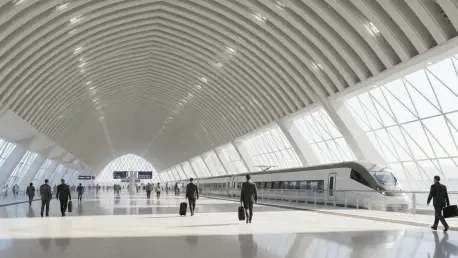

The long-envisioned dream of a unified national railway has become a tangible reality, fundamentally reshaping how people and commerce move across the United Arab Emirates. With the official launch of the Etihad Rail national passenger network this year, the nation embarks on a transformative journey, introducing its first fully integrated rail system designed to connect its diverse communities and economic hubs. This landmark infrastructure project moves beyond simply offering an alternative mode of transport; it represents a strategic leap forward in the country’s development, promising to enhance national connectivity, foster economic growth, and improve the quality of life for citizens, residents, and tourists alike. Building upon the proven success of its freight operations, which commenced in 2023, the passenger service is now poised to become a central pillar of a sophisticated and sustainable national transport ecosystem, ushering in an era of unprecedented mobility and efficiency from the western coast to the eastern mountains.
A New Era of National Mobility
Forging Connections Across the Emirates
The launch of the Etihad Rail passenger service marks a monumental achievement in national infrastructure, weaving together the fabric of the UAE with an extensive network spanning 11 key cities and regions. This ambitious undertaking creates a seamless connection from Al Sila in the west to the port city of Fujairah in the east, effectively bridging the length of the country. The network is anchored by major stations in the metropolitan centers of Abu Dhabi, Dubai, and Sharjah, ensuring that the nation’s primary population and business districts are at the heart of this new transport artery. Further extending its reach, the railway incorporates strategically placed stations in Al Sila, Al Dhannah, Al Mirfa, Madinat Zayed, Mezairaa, Al Faya, and Al Dhaid. This comprehensive coverage is meticulously designed to serve a wide array of communities, providing a safe, reliable, and efficient mobility option that was previously unavailable. By linking these disparate locations, Etihad Rail is not just building a railway but is actively fostering greater national cohesion and accessibility for all.
The strategic placement of each station within the Etihad Rail network underscores a broader vision for balanced national development and socio-economic integration. The railway does more than simply connect points on a map; it creates vital conduits for growth by linking industrial zones with urban centers, and remote regions with bustling coastal cities. This thoughtful planning ensures that the benefits of enhanced mobility extend far beyond the major metropolitan areas, supporting the UAE’s long-term goals for economic diversification and social progress. By providing a dependable alternative to road travel, the network facilitates easier commutes, stimulates local economies around its stations, and opens up new opportunities for businesses and residents in previously underserved areas. This initiative stands as a cornerstone of the UAE’s national transport ecosystem, offering a sustainable and efficient solution that supports continued growth while strengthening the social and economic bonds that unite the Emirates.
The Passenger-Centric Approach
At the core of the new passenger service is a profound commitment to delivering a world-class travel experience, designed to meet the expectations of a modern, dynamic population. Each train in the fleet is a testament to this philosophy, featuring a capacity of 400 passengers and outfitted with a host of amenities aimed at ensuring comfort, convenience, and productivity. Passengers can expect ergonomically designed seating that provides ample space and support for both short and long journeys. To cater to the needs of today’s connected traveler, the trains are equipped with complimentary Wi-Fi and accessible power outlets at every seat, allowing passengers to stay online, work, or enjoy entertainment throughout their trip. With an estimated capacity to serve 10 million passengers annually, the service is positioned not merely as a mode of transport but as a premium travel option. This focus on a high-quality passenger experience is intended to make rail travel the preferred choice for a significant portion of the population, setting a new standard for public transportation in the region.
Operational excellence is the engine driving the Etihad Rail passenger network, ensuring that the system is not only comfortable but also exceptionally reliable and efficient. The service operates on precise, fixed schedules, providing a level of predictability that is often unattainable with road travel, particularly during peak hours. This dependability is a critical factor in encouraging a modal shift from private vehicles to public rail. The most compelling demonstration of this efficiency is the drastically reduced journey times between major cities. For instance, the trip between Abu Dhabi and Dubai is now a swift 57 minutes, a significant reduction that transforms the feasibility of daily inter-city commuting and business travel. Building on the operational expertise gained from the successful launch of its freight services in 2023, Etihad Rail has established a robust framework for its passenger operations, promising a seamless and punctual travel experience that will serve as a reliable backbone for the nation’s mobility needs for decades to come.
Future Horizons and Economic Impact
A Catalyst for Growth and Quality of Life
The Etihad Rail network is far more than a transportation project; it is a long-term national investment strategically designed to yield substantial economic and social dividends. One of its most significant impacts is expected to be on domestic tourism, as the railway makes inter-Emirate travel more accessible, affordable, and appealing than ever before. By connecting coastal cities with inland regions and cultural heritage sites, the network encourages residents and international visitors to explore the diverse landscapes and attractions the UAE has to offer, thereby distributing tourism revenue more evenly across the country. Beyond its economic contributions, the initiative is set to profoundly improve the overall quality of life. The reduction in commute times and the alleviation of road congestion translate into less stress and more personal time for individuals. Furthermore, the enhanced connectivity expands access to employment, education, and healthcare opportunities, empowering communities and fostering a more integrated and equitable society.
Looking beyond the immediate launch, Etihad Rail has already confirmed significant progress on a separate, even more ambitious high-speed rail project, signaling a continued commitment to pioneering the future of transportation. This next-generation line is projected to operate at speeds of up to 350 km/h, which will further slash the travel time between Abu Dhabi and Dubai to an astonishing 30 minutes. The economic implications of such a development are immense. Projections indicate that this high-speed rail will add approximately D#45 billion to the UAE’s Gross Domestic Product (GDP) over the next 50 years. This substantial economic injection will be driven by increased business productivity, the creation of new industries, and the strengthening of the UAE’s position as a global hub for trade and tourism. The current national network, therefore, serves as a crucial foundation, paving the way for a future where high-speed rail further accelerates the nation’s progress and solidifies its status as a leader in advanced infrastructure.
Concluding a Landmark Achievement
The inauguration of the Etihad Rail passenger network was a pivotal moment that redefined the landscape of national mobility within the United Arab Emirates. This monumental project, brought to fruition through years of meticulous planning and execution, successfully established a sustainable and efficient transport backbone that now connects the nation’s key economic and social hubs. It transcended its role as mere infrastructure to become a powerful symbol of unity and progress, effectively redrawing the country’s map in the minds of its people by making vast distances feel manageable and accessible. The seamless journeys between cities fostered a new sense of national cohesion and opened up unprecedented opportunities for growth, tourism, and personal mobility. This achievement not only enhanced the quality of life for all who call the UAE home but also solidified its reputation as a global leader in visionary infrastructure and forward-thinking innovation, setting a new benchmark for regional development.