
In a year when the global aviation industry seemed perpetually on the brink of another crisis, Brussels Airport presented a compelling case study in resilience, achieving notable growth in 2025 amidst significant operational headwinds. Despite facing widespread labor strikes and unforeseen disruptions, the airport not only increased its passenger traffic but also strategically expanded its global network. This article explores the core strategies and operational decisions that enabled Brussels Airport to navigate a turbulent environment and emerge stronger. It delves into how a proactive approach to network development, a relentless focus on operational efficiency, and long-term infrastructure investments formed the bedrock of its success, offering valuable insights into thriving amidst adversity.
The Pre-2025 Landscape: An Industry Primed for Disruption
To fully appreciate Brussels Airport’s performance in 2025, it is essential to understand the context of the preceding years. The global aviation industry had been in a state of delicate recovery, grappling with volatile demand, supply chain issues, and persistent labor shortages. This environment created a fragile ecosystem where any new disruption could have an outsized impact. For Brussels Airport, this meant that planned growth strategies had to be balanced against the constant threat of external shocks, from geopolitical tensions to the domestic challenge of labor relations. The seven national trade union strikes and a cyber incident at a key supplier in 2025 were not isolated events but rather acute manifestations of the industry’s underlying vulnerabilities.
The Pillars of Resilience: Strategy in Action
Strategic Network Expansion: Building Global Gateways
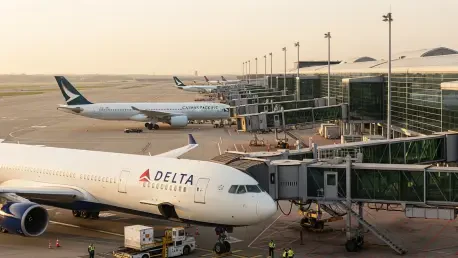
A cornerstone of Brussels Airport’s 2025 success was its aggressive and targeted network expansion. Rather than adopting a defensive posture, the airport went on the offensive, welcoming three new airlines: Cathay Pacific, Air Senegal, and Smartwings. This diversification was critical, as it opened up new markets and reduced reliance on existing partners. The strategy yielded immediate results with the launch of three major long-haul destinations—Atlanta with Delta Air Lines, Chongqing with Hainan Airlines, and Hong Kong with Cathay Pacific—significantly strengthening its role as a key European hub connecting to North America and Asia. The growth was not limited to intercontinental routes; new short- and medium-haul services to Bordeaux, Larnaca, and Scandinavian Mountains Airport broadened its European connectivity, catering to a robust leisure travel market.
Optimizing the Core: Enhancing Hub Efficiency and Passenger Flow
Beyond adding new routes, the airport focused intensely on maximizing the efficiency of its existing operations. This was evident in the record-breaking average of 145 passengers per flight, an increase from 144 the previous year, demonstrating a clear ability to optimize capacity even as total aircraft movements grew by 2.8%. The airport solidified its position as a crucial hub for Star Alliance, with transfer passengers accounting for a stable 14% of all departing travelers. These passengers, primarily connecting between Europe, Africa, and North America, are vital for the hub’s economic sustainability. The strong performance in leisure travel and visits to friends and relatives, highlighted by top source countries like Spain, Italy, and Türkiye, proved that the airport successfully catered to the most resilient segments of post-pandemic travel.
Confronting Headwinds: Managing Labor Disputes and Operational Integrity
The true test of the airport’s mettle came from its handling of severe disruptions. The seven national strikes led to the cancellation of 2,400 flights, affecting an estimated 275,000 travelers. While these figures represent a significant blow, the airport’s ability to maintain overall annual growth of 3.3% to 24.4 million passengers speaks volumes about its underlying operational strength and recovery capabilities. This resilience was also reflected in its disciplined management of regulatory constraints. Despite the immense pressure, the airport operated 15,938 commercial night flights, remaining within the legal limit of 16,000 slots. Furthermore, its success in reducing the number of night flights without a slot by 29% over three years showcased a deep-seated commitment to compliance and operational integrity, which builds long-term trust with regulators and the surrounding community.
Beyond 2025: The Vision for Hub 3.0 and Future Growth
Looking ahead, Brussels Airport is not resting on its laurels. The initiation of Hub 3.0, a large-scale investment project, signals a clear vision for the future. This ambitious program is designed to fundamentally enhance the passenger experience, streamline operations, and increase capacity. As described by airport leadership, this investment is a forward-looking strategy to prepare the airport for the next generation of air travel. By modernizing infrastructure and integrating new technologies, Hub 3.0 aims to solidify the airport’s competitive position in Europe. This project will likely focus on improving everything from baggage handling systems and security screening to terminal comfort and digital services, ensuring that the airport can handle future growth sustainably and efficiently.
Lessons in Resilience: Key Strategies for Navigating Uncertainty
The 2025 performance of Brussels Airport offers several key takeaways for the aviation industry. First, proactive network development is not just a growth strategy but a resilience tool, diversifying risk and capturing new revenue streams. Second, a relentless focus on operational efficiency—maximizing passengers per flight and optimizing hub connectivity—creates a robust financial and operational cushion to absorb shocks. Finally, long-term investment in infrastructure, as seen with Hub 3.0, is crucial for staying ahead of the curve and demonstrating a credible commitment to future growth. For other airports and airlines, the lesson is clear: a multifaceted strategy that balances expansion, optimization, and future-proofing is essential to navigate an inherently unpredictable industry.
A Blueprint for Success: Brussels Airport’s Enduring Strength
In conclusion, Brussels Airport’s ability to thrive amidst the turmoil of 2025 was no accident. It was the result of a deliberate and well-executed strategy that combined ambitious growth with disciplined operational management. By expanding its global reach while simultaneously strengthening its core hub functions, the airport successfully counteracted the significant negative impacts of labor strikes and other disruptions. The year concluded on a high note, with a 3.9% passenger increase in December, affirming the robustness of its model. As the aviation industry continues to face uncertainty, Brussels Airport’s journey through 2025 stood as a powerful blueprint for building a resilient and forward-looking aviation enterprise.