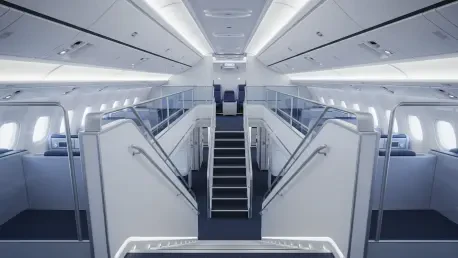

The architectural transformation of the Airbus A380 represented a fundamental departure from the linear, tube-like constraints that had defined commercial aviation for over seven decades of flight. While previous widebody aircraft relied on a single-deck configuration with perhaps a small spiral staircase leading to a lounge, the “Superjumbo” introduced a revolutionary multi-story layout that fully utilized the vertical dimension of the fuselage. This structural shift allowed the aircraft to accommodate up to 853 passengers in a high-density configuration, yet its most lasting legacy remains the way it enabled a tiered social hierarchy and a new level of cabin luxury. By treating the aircraft interior as a three-dimensional living space rather than just a sequence of seating rows, Airbus designers forced the industry to rethink how passenger volume relates to brand identity. The staircase became the physical and symbolic bridge between these environments, moving away from utilitarian transportation toward an immersive, premium architectural experience.
Technical Foundations: Integrating Verticality Into a Pressurized Frame
Developing a permanent, load-bearing vertical structure within the confines of a pressurized fuselage required engineers at the Airbus headquarters in Toulouse to solve unprecedented mechanical hurdles. A significant challenge involved placing a 600-kilogram staircase assembly into the airframe without compromising the delicate weight distribution or the overall structural integrity of the jet. Designers eventually decided to position the primary staircase strategically between the cockpit and the main passenger areas on the upper deck, a choice that optimized the aircraft’s center of gravity while simultaneously creating a grand entrance for premium travelers. This location serves as a structural anchor, ensuring that the additional weight of the stairs does not adversely affect the flight dynamics or fuel efficiency of the massive quad-engine aircraft. The integration of such a heavy fixed component required a complete redesign of the floor beams to handle the localized stresses of passenger traffic during boarding.
To keep the weight penalty as low as possible while maintaining maximum safety, the engineering teams turned to a sophisticated blend of aluminum alloy composites reinforced with high-grade carbon fiber. This advanced material selection provides the extreme rigidity necessary to support compressive forces exceeding 2,000 pounds per step, allowing for the safe movement of large groups of people during peak boarding or emergency scenarios. Beyond mere strength, the staircase incorporates precision-engineered expansion joints that allow for up to 15 millimeters of movement. This flexibility is critical for surviving the extreme thermal transitions as the aircraft climbs from a climate-controlled runway environment into the freezing atmospheric temperatures of high-altitude transcontinental flight. Without these joints, the different rates of contraction between the staircase materials and the aluminum fuselage would cause massive structural strain, potentially leading to cracks or unsettling metallic noises during the cruise.
The physical makeup of the staircase reflects an uncompromising commitment to long-term operational durability and ease of maintenance for global airline operators. Every component, from the wear-resistant stainless steel tread edges to the ergonomic rubber handrails, is designed to withstand a projected 25-year service life during which the structure will endure millions of footsteps. This longevity is essential because a staircase, unlike a removable galley or a seat, is a permanent fixture of the airframe that cannot be easily replaced during a standard maintenance check. By adhering to and exceeding the international safety standards set by aviation authorities, Airbus ensured that the staircase remains a reliable and silent feature throughout decades of heavy use. This focus on material science demonstrates how aviation design has evolved to treat interior components with the same level of engineering rigor as the engines or the wings themselves.
Dynamic Engineering: Safety Systems and Acoustic Comfort
Innovation in the A380 staircase design extends far beyond its static appearance, utilizing a sophisticated pivot mechanism and hydraulic damping systems to manage the vibrations of flight. These dynamic features are essential for passenger comfort, as they allow the massive internal structure to flex slightly during periods of moderate to heavy turbulence without transferring those forces directly into the surrounding cabin walls. By isolating the staircase from the primary airframe vibration, engineers prevented the buildup of resonance and rattling that often plagues smaller stair designs in older aircraft. This ensures that the transition between decks remains smooth and quiet, maintaining the premium atmosphere that airlines demand for their first and business-class cabins. The result is a structure that feels as solid and stable as a staircase in a luxury hotel, even while flying at 500 miles per hour through shifting air currents.
Safety is further enhanced through the integration of load sensors that provide real-time data directly to the aircraft’s onboard maintenance computers. This proactive monitoring system allows ground crews to track the structural health of the staircase and identify potential fatigue or mechanical wear long before it becomes a safety concern. Such data-driven maintenance is a hallmark of modern aviation, ensuring that complex mechanical assemblies do not require the aircraft to be taken out of service for unnecessary manual inspections. Furthermore, the staircase design incorporates a sophisticated lighting system featuring recessed LEDs that provide shadow-free illumination on every step. This specific lighting choice was implemented to reduce slip-and-fall incidents during boarding, particularly when passengers are carrying heavy luggage or when the cabin lights are dimmed for overnight flights. These subtle safety features are woven into the aesthetic fabric of the aircraft.
The spatial layout of the staircase was calculated through computational fluid dynamics and passenger flow modeling to determine the optimal width of 2.3 meters. This generous dimension was specifically chosen to allow for seamless two-way traffic, preventing bottlenecks during the high-stress periods of boarding and disembarkation when hundreds of passengers are moving simultaneously. This width also ensures that the aircraft remains highly accessible to individuals with mobility limitations, setting a new industry benchmark for inclusive design in long-haul aviation. By prioritizing the human experience through spatial abundance, the A380 staircase serves as a functional tool that speeds up ground operations for airlines while providing a sense of openness for the travelers. It effectively proves that engineering for high capacity does not have to result in a cramped or claustrophobic environment for the people on board.
Strategic Value: Psychological Framing and Brand Presence
The presence of the staircase plays a pivotal role in the psychological framing of the flight experience, creating a physical and symbolic transition that justifies the premium nature of the upper deck. For first and business-class travelers, the act of ascending a wide, well-lit staircase creates a sense of separation from the high-density main deck, reinforcing the exclusivity of their environment. This vertical separation is a powerful marketing tool for airlines, as it allows them to sell the “upper deck experience” as a distinct product rather than just a better seat. In the current digital landscape, the staircase has also become a significant asset for organic brand visibility, appearing in countless social media posts and travel reviews. Airlines have successfully quantified this value, noting that the architectural grandeur of the staircase significantly influences passenger preference and contributes to higher brand loyalty among high-value customers.
Beyond its role as a marketing icon, the staircase offers practical benefits for the cabin environment by acting as a natural buffer between different functional zones of the aircraft. The vertical void created by the staircase facilitates superior air circulation and climate control performance, as it allows air to move more freely between the decks compared to a standard flat-ceiling layout. Additionally, the multi-layered composite construction of the stairs serves as an acoustic barrier, making the surrounding cabin areas significantly quieter by absorbing the noise generated in the galleys or during passenger movement. Surveys of international travelers indicate that nearly 90% of A380 passengers rate their flight experience as superior to other widebody jets, frequently citing the unique spatial feel and the quiet, stable environment provided by the innovative vertical design. This high level of satisfaction proves that architectural investment can lead to direct commercial success.
For the modern traveler, understanding the engineering behind the A380 staircase offers several actionable strategies to enhance their journey. Passengers seeking the quietest possible environment should prioritize seating on the upper deck near the staircase, as these areas often benefit from the enhanced air circulation and reduced engine noise. When booking a flight, travelers should verify the aircraft type and deck configuration, as the presence of the staircase and its associated amenities can vary depending on the specific airline’s layout. Furthermore, those with mobility concerns can rely on the advanced safety features of the staircase, though it is always advisable to alert flight attendants who are trained to assist passengers in navigating the vertical transitions. As aviation design continues to evolve toward more personalized and spacious interiors, the A380 staircase remains a masterclass in how to combine material science, structural engineering, and human-centered design into a single, iconic feature.