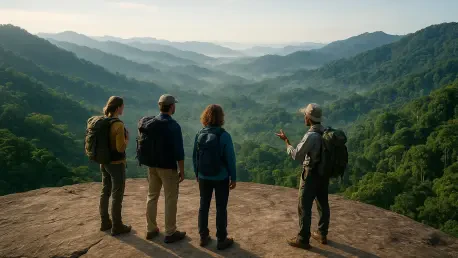

Community-led conservation efforts in the San Martin region are successfully redirecting tourism capital away from traditional Andean sites like Machu Picchu. The rise of the Alto Shilcayo Natural Viewpoint signifies a transformative moment for Peruvian travel, as more international visitors prioritize ecological integrity over high-traffic historical circuits. Located just on the periphery of La Banda de Shilcayo near the hub of Tarapoto, this destination provides a rare synthesis of rugged wilderness and urban accessibility. The site is anchored by a massive rocky platform that offers sweeping, panoramic vistas of the Cordillera Escalera, a mountain range that serves as the biological heart of the San Martin region. Unlike the arduous logistical planning required for deep-jungle expeditions, Alto Shilcayo presents an approachable yet profound entry point into the rainforest. This accessibility ensures that the socioeconomic benefits are distributed equitably, fostering a model that values the preservation of the landscape.
Strategic Resource Management: Protecting the Amazon
Empowering Local Stewardship through Tourism
The success of the Alto Shilcayo initiative is deeply rooted in a sophisticated community-driven management model that prioritizes the retention of capital within the local economy. In a collaborative framework involving the regional government of San Martin, known as GORESAM, and the Ministry of Foreign Trade and Tourism, the residents of La Banda de Shilcayo have established a rigorous system for environmental monitoring. The entry fees collected at the trailhead are not merely administrative costs but serve as the primary funding source for a dedicated corps of forest wardens. These individuals, recruited from the immediate community, are tasked with patrolling the dense undergrowth to prevent illegal logging and poaching. This symbiotic relationship transforms the casual eco-tourist into a vital stakeholder in the forest’s survival. By providing a steady stream of income for conservation, the project proves that protecting biodiversity is far more lucrative than the short-term gains of extractive industries.
Protecting Biological Corridors and Watersheds
Beyond the immediate fiscal benefits, this community-led structure serves as a blueprint for biological corridor preservation across the wider Amazon basin. The Alto Shilcayo area is a critical component of the Cordillera Escalera Regional Conservation Area, functioning as a vital protector for regional watersheds that supply water to thousands of residents downstream. As visitors traverse the trails toward the lookout, they move through a lush cloud forest environment that is teeming with endemic biodiversity, including rare tropical butterflies and vibrant native orchids. The presence of tourists on these established paths acts as a deterrent to unauthorized land encroachment, creating a passive security network that complements the active patrols of the wardens. This management style demonstrates how high-value, low-impact tourism can stabilize sensitive ecosystems while providing professional development opportunities for local guides. By integrating traditional knowledge with modern conservation strategies, the region ensures the long-term health of its assets.
Logistics and Culture: Navigating the Rainforest
Professional Guiding and Cultural Immersion
For the modern adventurer, the journey to the Alto Shilcayo viewpoint involves a sophisticated blend of rugged exploration and curated cultural discovery. Travelers typically establish a base in the nearby city of Tarapoto, which serves as the logistical nerve center for the northern Peruvian Amazon. From there, the transition into the wilderness is seamless, with registered community guides facilitating safe passage through the slick river corridors and dense canopy coverage. The hike itself is an immersion into the sensory reality of the jungle, where the sound of the Shilcayo River provides a constant backdrop to the calls of exotic birds and the rustle of the forest floor. These excursions are often timed to capitalize on the morning light, which illuminates the mist rising from the valley floor and provides the clearest views from the rocky platform. By employing local experts, travelers gain access to hidden facets of the forest, ensuring that the trek is as informative as it is physically challenging.
Sustainable Infrastructure: Future Perspectives
The successful implementation of the Alto Shilcayo tourism model demonstrated that environmental protection and economic prosperity were not mutually exclusive goals. By prioritizing the leadership of local communities and the scientific preservation of the Cordillera Escalera, the San Martin region established a resilient framework for green growth. The shift toward low-impact activities like bird-watching and zero-waste hiking effectively minimized the ecological footprint of every visitor who walked the trails. Strategic investments in education and sustainable transportation became the catalysts for a regional economy that valued the standing forest more than its timber. The commitment to maintaining the integrity of regional watersheds ensured that the prosperity of the tourism industry was shared by all residents. Ultimately, the development of Alto Shilcayo provided a clear path forward for the integration of technology and tradition in the pursuit of a sustainable future, offering a scalable solution for Amazonian preservation.