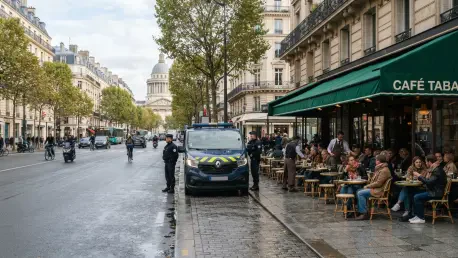

Prime Minister Sébastien Lecornu has adopted a dual-track strategy of negotiation and law enforcement, committing billions of euros to school renovations while maintaining a massive police presence. This delicate balancing act comes at a time when the French social fabric is being tested by a significant wave of civil unrest that has permeated nearly every corner of the nation. The movement, which reached a fever pitch in late October, is a complex intersection of socioeconomic grievances, ranging from a biting cost-of-living crisis to specific demands for educational reform. Travelers arriving in the country are met with a landscape defined by “principled resistance,” a historical French tradition where the citizenry engages in large-scale mobilization to safeguard perceived rights. While the government attempts to mitigate these issues with long-term financial promises, the immediate reality for many visitors is one of unpredictability, where the charm of a Parisian café may suddenly be juxtaposed with the distant sound of protest chants and the heavy presence of security forces.
Regional Hotspots and Geographic Risks
Assessing the Reach of Unrest Beyond Paris
While the international media often focuses its lenses on the capital, the current wave of demonstrations is a truly national phenomenon that has significantly impacted regional travel hubs. In Lyon, the tension has manifested in more aggressive forms, with the historic Place Bellecour and the commercial Presqu’île district witnessing instances of arson and looting that have unsettled both residents and visitors. The destruction of local tourist offices in these areas has limited the support network typically available to international guests, forcing many to rely on digital updates rather than physical help desks. This expansion of the unrest into the provinces indicates that the grievances are not merely localized to the Parisian elite but are felt deeply in the industrial and cultural hearts of the country, from the northern reaches of Lille to the southern ports of Marseille.
The unpredictability of these regional demonstrations is perhaps their most challenging feature for the modern traveler. Cities like Limoges, which are usually considered quieter alternatives to the bustle of the capital, have seen devastating damage to landmark architecture, including the fire-damaged roof of the 19th-century Hôtel de Ville. In western cities like Nantes and Rennes, the atmosphere can shift with remarkable speed from peaceful daytime marches to late-night skirmishes involving makeshift barricades and the use of tear gas. Because these events are often cyclical—intensifying on Thursdays and Saturdays—visitors must maintain a constant state of situational awareness. A city that appears perfectly serene on a Tuesday morning may be functionally inaccessible by Thursday evening, as local transport lines are cut and central plazas become the staging grounds for thousands of vocal demonstrators.
Regional Infrastructure and Security Dynamics
The scale of the security response across the French provinces has been unprecedented, with approximately 70,000 police officers deployed nationwide to maintain order. This massive law enforcement presence has created a high-friction environment, particularly in urban centers where radical elements known as “casseurs” occasionally infiltrate peaceful protests to engage in vandalism. For the traveler, this means that even if they are not the target of the unrest, the collateral effects—such as street closures, the smell of lingering tear gas, and the sudden appearance of riot police—are unavoidable. The presence of the CRS, the specialized riot police, in tourist-heavy areas serves as a constant reminder of the state’s efforts to contain a volatile situation that refuses to be easily quelled by legislative promises alone.
Furthermore, the disruption of regional infrastructure extends beyond the physical damage to buildings and monuments. In many smaller cities, the diversion of municipal resources toward security and cleanup has led to a noticeable decline in public services that tourists typically take for granted. Trash collection, the maintenance of public parks, and the operation of local shuttle services have all faced interruptions as the state prioritizes the stabilization of high-risk zones. This logistical strain creates a ripple effect that can ruin even the most carefully planned itinerary. When a regional rail link is suddenly suspended due to a track-side protest or a local museum closes its doors to protect its staff, the visitor is left to navigate a fractured landscape where the historical beauty of France is momentarily obscured by the demands of a population in the midst of a profound internal dialogue.
Disruptions to the Tourist Experience
Cultural Closures and Logistical Hurdles
The cultural landscape of France, typically a beacon for global tourism, has been forced into a defensive posture that significantly alters the visitor experience. Major institutions like the Louvre, the Musée d’Orsay, and the Picasso Museum have moved toward a system of “precautionary closures,” where entire wings or the entire building may be shuttered with very little notice. This strategy is intended to protect both the staff and the priceless collections from the volatility of nearby demonstrations, but for the traveler, it means that even confirmed reservations are subject to the whims of the current social climate. Events like Art Basel Paris and the Moderne Art Fair were recently forced to terminate their sessions early, illustrating that not even the most prestigious international gatherings are immune to the disruptions of the 2026 civil unrest.
Beyond the major museums, smaller landmarks like the Sainte-Chapelle and the Conciergerie have implemented strict, compulsory reservation systems that leave no room for the spontaneous exploration that once defined a trip to Paris. Visitors frequently encounter “exceptional closure” notices posted on heavy iron gates, often without an accompanying explanation in multiple languages. This environment of uncertainty creates a psychological shift for the tourist, who must move from a mindset of leisure to one of constant verification. The loss of access to these cultural touchstones is not merely an inconvenience; it represents a fundamental change in how the world interacts with French heritage during a period of crisis. The need to constantly check official websites and social media feeds for the latest status updates has become an integral, if unwelcome, part of the contemporary French vacation.
Transportation Networks and Urban Restrictions
Navigating the urban centers of France has become a logistical puzzle due to the frequent intervention of the RATP and other regional transport authorities. In Paris, major transit hubs such as Châtelet, Les Halles, and République are often shuttered during peak protest hours, effectively severing the arteries of the city and leaving tourists stranded in unfamiliar arrondissements. These closures are not always planned far in advance; they are often reactive measures taken by police to prevent the concentration of crowds or to protect transit infrastructure from vandalism. When the metro stops running and the buses are rerouted away from the city center, the simple act of returning to a hotel can become a multi-hour ordeal involving long walks through redirected traffic and crowded side streets.
Adding to the complexity are the legal restrictions and curfews that have been implemented in specific sectors of the city. Nightly curfews, often running from 11:00 PM to 6:00 AM in high-tension areas like the Place de la République, mean that the famous French nightlife has been curtailed for the safety of the public. Furthermore, the police prefecture has placed strict limits on “undeclared gatherings,” which can lead to accidental legal complications for tourists who find themselves near a protest group. The tactic of “kettling,” where police surround a crowd to contain it, does not always distinguish between a participant and a curious bystander. Wandering into the wrong street at the wrong time can result in being held within a police cordon for hours, a distressing experience that can overshadow the cultural highlights of any trip.
Navigating the Crisis as a Visitor
Strategic Planning and Safety Measures
Success for the traveler in late 2026 depends heavily on a departure from the traditional tourist mindset in favor of a flexible and informed strategy. One of the most effective ways to mitigate the impact of the unrest is through the careful selection of accommodation. Staying in residential arrondissements on the Left Bank, such as the 13th, 14th, or 15th, provides a buffer against the most intense demonstrations which typically cluster around the Place de la Bastille or the Place de la Nation. These neighborhoods offer a much quieter, more localized experience, allowing visitors to enjoy authentic French life while remaining within striking distance of the major landmarks via alternative transport routes. By choosing a base away from the political heart of the city, travelers can ensure that their rest and relaxation are not interrupted by the nocturnal activities of the protest movement.
Information literacy has also emerged as a critical tool for safety and convenience. Travelers are encouraged to move beyond general guidebooks and rely instead on real-time data provided by official channels. Apps like “Bonjour RATP” and the social media accounts of the Préfecture de Police offer the most current information on station closures and restricted zones. It is essential to treat every itinerary as a draft, maintaining a list of secondary options in quieter neighborhoods should a primary destination become inaccessible. For example, if a trip to the Eiffel Tower is thwarted by a nearby march, having a backup plan to visit a local market in a residential district ensures that the day is not entirely lost. This agile approach to travel not only reduces frustration but also ensures that the visitor remains a step ahead of the shifting dynamics of the street.
Understanding the Broader European Context
It is vital for visitors to recognize that the social friction currently witnessed in France is not an isolated event, but part of a broader continental trend often referred to as “austerity fatigue.” Across Europe, from the housing protests in Spain and Portugal to the labor strikes in Germany and Belgium, citizens are expressing a shared frustration with the rising cost of living and the perceived erosion of the social safety net. By viewing the French unrest through this wider lens, travelers can gain a more nuanced perspective on the challenges facing the region. This understanding helps manage expectations, as “safe” alternatives in neighboring countries may be facing similar, albeit differently expressed, versions of social dissent. The instability in Paris is a localized eruption of a wider economic crisis that is reshaping the travel experience across the entire European Union.
This broader context also highlights the importance of maintaining a respectful distance from political gatherings. While it may be tempting to document a protest for social media, the high-tension environment of 2026 makes such proximity risky. Local experts suggest that the most successful travelers are those who acknowledge the gravity of the social negotiation taking place without attempting to participate in it. By prioritizing situational awareness over the desire for a perfect photograph, visitors can navigate the complexities of a continent in flux. Recognizing that the people on the streets are fighting for their economic survival provides a level of cultural insight that goes beyond the surface-level beauty of the monuments. This empathetic but cautious approach allows for a meaningful travel experience that remains grounded in the reality of the present moment.
Future Considerations for French Travel
The period of intense civil unrest observed in late 2026 provided several key takeaways for those monitoring the resilience of the French tourism sector. The government’s move to overhaul the university admissions system and invest in regional infrastructure indicated a recognition that social stability was directly linked to institutional reform. This shift suggested that future travelers might see a more decentralized and modernized educational and social landscape, though the transition period remained fraught with tension. The experience taught the industry that the “high-awareness zone” was the new standard for European travel, necessitating better communication between state authorities and international visitors to prevent the total loss of confidence in the destination.
Moving forward, travelers were encouraged to prioritize digital connectivity and flexible booking policies as standard elements of their preparation. The evolution of the protest movement showed that while the physical beauty of the country remained intact, the logistical reliability of its major cities was no longer guaranteed during periods of social negotiation. Future visitors should look for travel insurance that specifically covers disruptions caused by civil unrest and maintain a repertoire of “off-the-beaten-path” destinations that are less susceptible to urban mobilization. Ultimately, the events of this year underscored that while the French spirit of resistance was enduring, so too was the global desire to experience the nation’s cultural depth, provided that travelers remained as adaptable as the changing times required.