
In the ever-evolving landscape of global travel, a compelling narrative is unfolding where the glitter of futuristic cityscapes is being weighed against the quiet gravitas of ancient lands. The Arabian Peninsula, long defined by the dazzling ambition of cities like Dubai, is now presenting a profound counterpoint. As travelers increasingly search for journeys that offer meaning over spectacle, the Sultanate of Oman emerges not as a rival, but as a deeply resonant alternative. The central question for the modern explorer is no longer just about luxury, but about the very nature of it: is the ultimate experience found within soaring glass towers, or in the timeless majesty of a landscape carved by nature and steeped in history?
Beyond the Glass Towers Where Does True Luxury Lie
The contrast is as stark as it is revealing. On one hand stands a polished, man-made marvel—a skyline of architectural audacity reaching for the clouds, where ambition is measured in height and innovation. This world is a testament to human ingenuity, offering a controlled, perfected version of reality. In direct opposition lies a domain shaped not by blueprints but by millennia of wind, water, and sun. Here, luxury is defined by the vast, silent expanse of the desert, the dramatic escarpments of mountains that have witnessed the dawn of civilizations, and the turquoise waters of secluded wadis.
This dichotomy forces a reevaluation of what constitutes a premium travel experience. As the global consciousness shifts toward a desire for authenticity and connection, the paradigm of opulence is being redefined. Is true luxury an infinity pool on the 50th floor, or is it watching endangered turtles nest under a blanket of stars on a protected beach? For a growing number of discerning travelers, the answer lies in experiences that are unscripted, deeply personal, and intrinsically linked to the soul of a place. Oman, with its ancient heart and untamed beauty, presents itself as the embodiment of this new form of luxury.
The Rise of Soulful Travel a Global Shift in Wanderlust
A significant global trend, now firmly established, is “Soulful Travel.” This movement signifies a departure from passive consumption toward active, meaningful engagement. It prioritizes genuine cultural immersion, raw natural encounters, and journeys that offer personal restoration over fleeting entertainment. Travelers are no longer content with mere observation; they seek participation, understanding, and a profound connection to the destinations they visit. This philosophy values the unpaved road over the six-lane highway and the local artisan’s story over the global brand’s logo.
This pivot toward authenticity presents a direct challenge to the model of hyper-luxury that has long dominated the region, a model characterized by manufactured perfection like indoor ski slopes, colossal shopping malls, and meticulously curated attractions. While impressive, these environments can sometimes create a barrier between the visitor and the genuine culture of a place. Soulful Travel seeks to dismantle this barrier, encouraging exploration that is both respectful and transformative.
Within this global shift, Oman has naturally emerged as the quintessential destination for this new wave of explorers. The Sultanate offers an antidote to the pressures of overtourism and the homogenization of global culture. Its deliberate focus on sustainable development, cultural preservation, and low-impact tourism has positioned it perfectly to meet the demands of those who travel not just to see, but to feel and understand.
A Tale of Two Realities Comparing the Urban Marvel with the Natural Wonder
The fundamental difference between the neighboring destinations can be distilled into a comparison of the great indoors versus the great outdoors. Dubai excels in creating extraordinary engineered environments—architectural wonders, climate-controlled theme parks, and attractions designed to defy the desert climate. In contrast, Oman is an immense, open-air playground. Its identity is forged by the rugged Hajar Mountains, the breathtaking vistas of Jebel Shams, aptly named the “Grand Canyon of Arabia,” and the lush, hidden oases of its wadis, which offer serene escapes from the arid landscape.
This natural foundation redefines adventure. In Oman, thrills are not manufactured; they are rooted in the land itself. The country boasts world-class credentials for outdoor pursuits that are both challenging and deeply rewarding. Hikers can traverse the famous Balcony Walk along the rim of Jebel Shams, while climbers can test their mettle on the newly expanded Via Ferrata routes on Jebel Akhdar. These iron pathways, bolted into the cliff faces, offer staggering views of ancient terraced farms and pomegranate orchards that have been cultivated for centuries, connecting the adventurer directly to the region’s enduring heritage.
The commitment to the natural world extends to wildlife encounters, where conservation consistently takes precedence over curation. A prime example is the Ras Al Jinz Turtle Reserve, a globally significant nesting site for endangered green turtles. The Omani model for sustainable tourism is on full display here; visitor experiences are built around non-disruptive, silent observation guided by researchers. This research-first approach stands in stark contrast to highly managed, urbanized wildlife attractions, offering a rare and humbling opportunity to witness a vital natural cycle without interference.
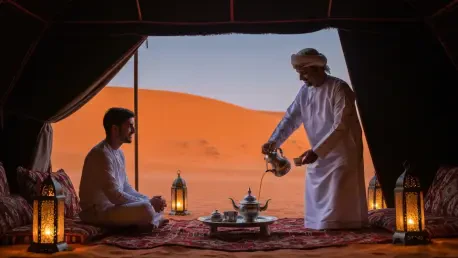
This ethos of authenticity permeates the cultural experiences as well. A stay in the Sharqiya Sands is not a simulation but an immersion into Bedouin heritage. Visitors can reside in eco-conscious, solar-powered camps that honor tradition while embracing sustainability. The activities are hands-on and genuine, from learning the intricate ritual of preparing traditional Omani coffee to embarking on camel treks guided by local experts. Workshops led by Bedouin women offer insights into heritage crafts, creating a direct economic benefit for the community and preserving a rich cultural legacy far removed from the global brands that dominate urban centers.
The Evidence on the Ground Why Oman’s Breakout is Happening Now
A pivotal logistical development is accelerating Oman’s ascent as a premier destination: the GCC Unified Tourist Visa. This new single-entry permit has revolutionized regional travel, allowing for seamless movement between Oman, the UAE, and other Gulf nations, much like Europe’s Schengen visa. This has a profound strategic advantage, as it makes combining a high-energy visit to Dubai with a longer, more contemplative exploration of Oman easier than ever before. The visa dismantles administrative barriers, inviting travelers to experience the full spectrum of the Arabian Peninsula in a single, cohesive journey.
Underpinning this new accessibility is a long-standing philosophy of respectful tourism that separates Oman from its peers. The approach at Ras Al Jinz, where research and preservation dictate visitor access, serves as a powerful testament to the Sultanate’s commitment to protecting its natural treasures. This is not a recent marketing initiative but a deeply ingrained principle. This ethos is palpable in the desert camps of the Sharqiya Sands, where sustainability and cultural preservation are not abstract concepts but a lived reality, woven into the fabric of daily operations and guest interactions.
Your Guide to Experiencing Oman’s Soul
Navigating Oman’s cultural landscape gracefully is key to a rewarding journey. The country’s charm lies in its traditional, welcoming society, which asks for respect in return. This is often expressed through modest attire, particularly when visiting local communities, markets, or religious sites. Covering shoulders and knees is a simple gesture that demonstrates cultural awareness and appreciation. Furthermore, understanding the art of hospitality is essential. When a host offers dates and coffee, it is a cherished tradition of welcome and a symbol of honor, not a commercial transaction. Accepting this offering with gratitude is to participate in one of the most fundamental aspects of Omani culture.
The introduction of the GCC Unified Tourist Visa provides a strategic framework for crafting the perfect dual-destination itinerary. Travelers can now seamlessly pair the urban dynamism of Dubai with the tranquil wilderness of Oman. A suggested flow begins with the vibrant energy and architectural marvels of the city, satisfying the desire for spectacle and modernity. Following this, the journey can transition across the border into Oman’s majestic mountains, vast deserts, and pristine coastline. This deliberate sequence allows for a powerful narrative arc—from the exhilarating pace of the future to a deep, restorative connection with an ancient and soulful land.
The journey through Oman provided a powerful testament to a shifting global mindset. It became clear that for many, the ultimate luxury was not found in opulence but in authenticity, space, and a genuine connection to both nature and culture. The stark beauty of the Hajar Mountains, the quiet wisdom of the Bedouin guides, and the humbling sight of turtles nesting on a moonlit beach offered an experience that resonated far more deeply than any manufactured attraction could. This was not a trip about consumption, but about discovery—of a place and, perhaps, of a part of oneself. Oman’s appeal was not in its effort to be new, but in its confidence to remain timeless.