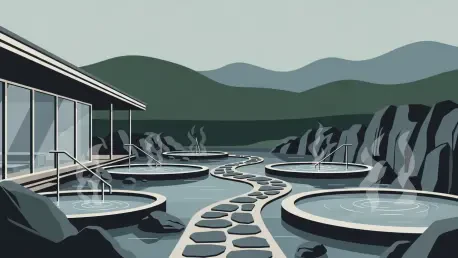

While the world has long associated Vietnam with its emerald coastlines and bustling urban centers, a quiet revolution is currently transforming the nation’s interior into a premier destination for geothermal wellness. Current figures indicate that the country is maintaining a trajectory toward hosting nearly 21.2 million international arrivals and 137 million domestic trips within the next several fiscal cycles. This momentum is supported by a 20.4 percent year-on-year increase in international arrivals, with total tourism revenue nearing the VND 1 quadrillion mark as of the current quarter. By moving beyond traditional sun-and-sand vacations, officials are effectively diversifying the economic landscape, ensuring that the benefits of high-end travel reach the mountainous and inland regions that possess unique mineral assets. This strategic pivot aims to capitalize on a tourism revenue stream that has become a cornerstone of the national development strategy for luxury ecotourism.
1. Regional Growth: Infrastructure and Mineral Hubs
The rapid evolution of this niche market has necessitated a massive overhaul of national infrastructure, ranging from expanded regional rail networks to new municipal airports and highway loops. By developing sophisticated transit corridors that connect major urban centers to remote mineral spring locations, planners have successfully shifted visitor density away from overcrowded coastal resorts toward tranquil inland sanctuaries. This focus on transit improvements ensures that wellness travelers can move seamlessly between high-tech city hubs and restorative mountain retreats without the delays typical of older road systems. Investment has been particularly concentrated in provinces that offer unique geological profiles, such as the hot springs of Binh Chau and the geothermal wilderness of the Bang region in Quang Binh. These infrastructure projects represent a fundamental change in how the nation manages its natural resources, providing the logistical backbone for a luxury ecotourism sector.
Specific investment hubs have already begun to show remarkable returns, with the Thanh Thuy region in Phu Tho province attracting over 2.2 million visitors and roughly VND 7 trillion in capital. These developments often center on the Ngoc Son mineral resource, where developers have created Japanese-inspired weekend retreats that offer a sophisticated alternative to traditional hotels. Similarly, in Quang Ninh, the Yoko Onsen Quang Hanh has set a high standard for the industry by maintaining strict daily guest limits to preserve the quality of the thermal water and the overall guest experience. This model of controlled growth is being replicated in areas like Kim Boi, where mineral springs are expertly combined with the local cultural heritage of the Muong people. By integrating luxury amenities with authentic local traditions, these destinations offer a multifaceted value proposition that appeals to affluent travelers looking for deep cultural immersion alongside physical restoration.
2. Global Market: Standards and Sustainable Practices
When evaluating Vietnam’s position against global giants like China, which leads the market with $18.32 billion, and Japan at $11.57 billion, the adoption of strict traveler protocols became essential. To ensure a smooth experience, visitors were encouraged to book sessions online to account for capacity limits. First, travelers had to schedule adequate buffer time; leaving at least a three-hour gap when heading from Hanoi’s international airport to regional resorts was necessary for ground logistics. Second, following spa and onsen protocols was required, such as washing thoroughly before entering communal pools. Third, checking the water temperature was vital to avoid burns from high-temperature natural springs. Fourth, monitoring soaking time was recommended, keeping the initial session to about 15 or 20 minutes to prevent dehydration. These guidelines helped the country compete with established wellness economies in Germany, Italy, Iceland, and South Korea while maintaining high safety standards.
The long-term success of the thermal sector was ultimately secured through a combination of environmental stewardship and community integration. Authorities established rigorous sewage controls and scientific monitoring systems to protect the mineral aquifers from pollution and overuse, ensuring that water quality remained pristine. These conservation efforts were coupled with policies that directed tourism spending toward accredited properties, which funded geological research and created hospitality careers for local groups like the Muong people. By prioritizing the ecological integrity of sites such as Kim Boi and Binh Chau, the industry proved that luxury development could support both economic growth and environmental preservation. This proactive approach provided a clear blueprint for future projects, emphasizing that sustainable management was the only viable path for large-scale ecotourism. The focus eventually shifted toward refining these models to maintain a global competitive edge in wellness.