
The sheer scale of the global aviation landscape is shifting as Manchester Airport positions itself as a dominant international gateway through an unprecedented infrastructure overhaul that touches every facet of the traveler experience. As Terminal 2 prepares to become the primary hub for flight operations, a critical question remains: how will eight million additional annual passengers navigate the journey to the gate? The proposed Metrolink extension represents a vital shift in infrastructure, moving beyond terminal upgrades to ensure the airport’s physical reach matches its growing global ambitions.
By the turn of the decade, the facility aims to support an immense volume of traffic, necessitating a rethink of arrival logistics. Integrating a high-capacity rail link directly into the heart of the newest terminal is no longer a luxury but a functional requirement. This expansion seeks to eliminate the friction points that often plague large-scale international hubs during periods of rapid growth.
The Catalyst for Change: A £1.3 Billion Redevelopment
The necessity for expanded transit links stems from a project designed to modernize Manchester’s aviation capacity. With the airport aiming to accommodate 40 million passengers by 2030, the existing infrastructure faces a looming bottleneck. This redevelopment isn’t just about luxury lounges; it is about centralizing operations and creating a streamlined experience that can handle a massive influx of domestic and international traffic.
Without an evolution in public transport, the benefits of an expanded terminal could be stifled by regional congestion. Efficiently moving thousands of people every hour requires a system that functions independently of the standard highway grid. Success depends heavily on the accessibility of the surrounding rail networks.
Mapping the Metrolink Extension and the Western Leg
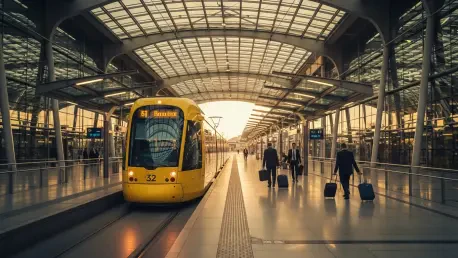
Transport for Greater Manchester is currently evaluating a “Western leg” extension that would fundamentally alter the airport’s connectivity. The proposal outlines a route where trams proceed past the current station, bridge the M56 motorway, and loop back to integrate with the existing line at Roundthorn. This loop design provides Terminal 2 with its own dedicated stop, ensuring seamless access to the refurbished facilities.
Such a configuration bypasses the need for shuttle transfers or long walks from the main station. By creating a continuous circuit, the Metrolink system could offer higher frequency and more reliable timing for those catching tight connections. The layout emphasizes a “passenger-first” geometry.
The Bee Network Strategy and Regional Economic Growth
Strategic planners emphasize that this extension is a cornerstone of the “Bee Network”—an ambitious, integrated transport vision. By aligning rail, tram, bus, and cycling routes, authorities aim to make the airport more accessible and affordable for both travelers and the thousands of staff members required to run the expanded hub.
According to the Greater Manchester Transport Strategy 2050, this project is essential for distributing the economic dividends of a thriving airport across the entire region. Linking the airport effectively to local neighborhoods ensures that international growth translates into local prosperity. Moreover, providing a sustainable alternative to car travel reduces the carbon footprint of every departing flight.
Operational Fluidity and the Future of Passenger Logistics
For the airport to maintain high levels of customer service during this period of growth, the transition to Terminal 2 must be supported by reliable logistical frameworks. The proposed tram extension serves as a practical solution to maintain operational fluidity, preventing terminal overcrowding and reducing reliance on private vehicle hire.
The conclusion of this ambitious planning phase signaled a shift toward long-term sustainability. Planners recognized that the true potential of the airport lay in its ability to function as a multimodal center. Future considerations involved the integration of automated ticketing and synchronized scheduling to accommodate shifting travel patterns. This foresight ensured the infrastructure remained adaptable for decades.