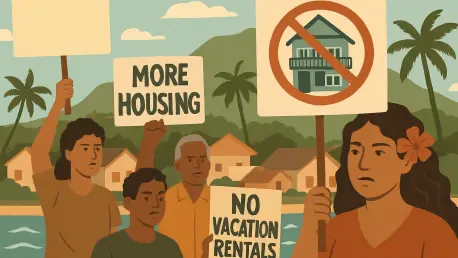

In a landmark decision that pits the urgent need for local housing against the powerful engine of tourism, Maui County has enacted a controversial new law designed to reclaim thousands of properties for its residents. The legislation, known as Bill 9, initiates a gradual but definitive phase-out of short-term vacation rentals located within apartment-zoned districts, a move that supporters hail as a critical step toward solving the island’s severe housing affordability crisis. This policy directly targets a long-standing arrangement that allowed numerous condominium units to operate as lucrative tourist accommodations, effectively removing them from the long-term housing market. By setting firm deadlines for this transition, county officials are making a bold statement about their priorities, aiming to rebalance an economy that many feel has catered to visitors at the expense of the local community. The bill’s passage, however, has ignited a fierce debate, with property owners and tourism industry advocates warning of dire economic consequences, setting the stage for a protracted struggle over the future landscape of housing and hospitality in one of the world’s most sought-after destinations.
The Legislative Mandate and Its Justification
A Scheduled End to an Era
The core of the new legislation is a structured, time-based elimination of short-term rentals in specific zones, effectively dismantling a system that has been in place for decades. For properties located in West Maui, the deadline to cease vacation rental operations is set for the end of 2028, while all other apartment districts throughout the county have until January 1, 2031, to complete the transition. This new law specifically nullifies a “grandfathered” status that had been granted to numerous condominium properties cataloged on what is known as the “Minatoya list” since 2001. This list provided a crucial exemption, permitting these units to function as short-term rentals even though they were situated in zones designated for apartment living. Bill 9 brings this era to a decisive close. The impact is substantial, as the approximately 7,000 units targeted by this phase-out represent about 13% of all legally permitted short-term rentals in Maui County. By revoking their ability to cater to tourists, the county intends to force these properties back into the long-term residential market, fundamentally altering the available housing stock for local residents.
Reclaiming Housing for the Community
The primary motivation behind this sweeping policy change is a direct response to Maui’s escalating housing crisis, a problem that proponents of the bill argue has been significantly exacerbated by the proliferation of vacation rentals. Supporters, including local residents and key officials, draw a straight line between the high return on investment offered by short-term tourist rentals and the soaring cost of housing that has become unsustainable for the local workforce and families. Resident Jordan Hocker articulated a common sentiment among proponents, suggesting that the lucrative nature of vacation rentals has driven property values and rental rates to levels that force local people to leave the island. This viewpoint is echoed by Councilwoman Nohelani U‘u-Hodgins, who championed the bill as a necessary intervention. The stated objective is not merely to add units to the housing pool but to stabilize the local community and economy by ensuring that those who work in Maui can also afford to live there. By converting tourist accommodations back to their originally intended purpose as residential housing, the council aims to alleviate pressure on the market and foster a more sustainable future for its constituents.
Economic Fallout and the Search for a Middle Ground
Concerns from the Tourism Sector
The passage of the bill has been met with significant alarm from property owners and the broader travel industry, who warn of severe economic repercussions. Opponents argue that the legislation is based on a flawed premise and will ultimately harm the very community it purports to help. Rental owner Jeff Gilbert, representing many in his position, contends that the financial model simply does not work; converting his property to a long-term rental would generate income insufficient to cover the mortgage, maintenance fees, and taxes. This would force many owners into a difficult financial position, potentially leading to sales or foreclosures rather than new housing opportunities for locals. Furthermore, he and others warn that this move will eliminate a crucial segment of affordable lodging options for tourists, potentially driving visitors to other destinations. This perspective is strongly reinforced by major industry players like the Expedia Group, which has publicly expressed deep concern that the phase-out will cause “significant economic harm to local residents and small businesses” whose livelihoods are intrinsically tied to the visitor economy, from housekeepers and maintenance workers to restaurant staff and tour operators.
A Compromise on the Horizon
Despite the bill’s successful passage with a 5-3 majority, the debate over its implementation is far from over, and a potential path to compromise is already emerging. In a move to mitigate the anticipated economic impact, Councilman Tom Cook, who voted against the original bill, has introduced a new resolution. This measure proposes the creation of new “hotel districts” that would be specifically applied to the properties currently on the Minatoya list. If passed, this would effectively create a legal pathway for these thousands of units to continue operating as vacation rentals beyond the established phase-out deadlines, preserving their role in the tourism sector. In a surprising signal of potential consensus, Councilwoman U‘u-Hodgins, one of the bill’s staunchest advocates, stated that if Cook’s resolution were to pass, she would then pursue the necessary zoning changes for approximately 4,500 of the units she deemed appropriate for continued use as tourist accommodations. This development indicated that the county’s leadership recognized the complex interplay between housing and tourism and was actively seeking a balanced solution that could address the housing crisis without completely dismantling a key part of the local economy.