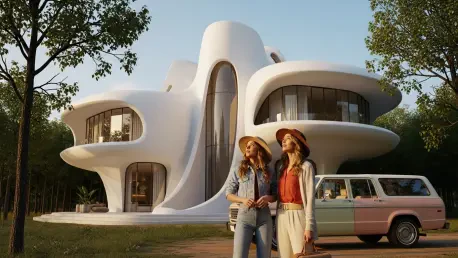

The landscape of modern travel entertainment underwent a seismic shift on March 2, 2026, when HGTV launched its highly anticipated series featuring the undeniable comedic synergy of Sherry Cola and D’Arcy Carden. While television audiences have long been accustomed to polished, high-budget travelogues, this new production, titled Wild Vacation Rentals, prioritizes raw curiosity and architectural whimsy over traditional luxury. The transition from scripted drama to unscripted exploration represents a significant professional evolution for both actresses, who previously captivated viewers in the acclaimed Netflix series Nobody Wants This. By leveraging their established on-screen rapport, the duo has managed to create a travel format that feels less like a documentary and more like an invitation into a private friendship. This project was not merely a career move but a manifested partnership that allowed both women to escape the constraints of a teleplay and interact with the American landscape in a truly authentic and uninhibited manner.
Professional Synergy: From Scripted Sets to Reality
The professional trajectory leading to this collaboration is rooted in the vibrant comedy circles of Los Angeles, where Sherry Cola and D’Arcy Carden spent years moving in similar social spheres without ever fully intersecting. Although they shared mutual friends and frequently performed at the same venues, it was not until they were cast as a dynamic duo in a major streaming hit that their personal chemistry truly ignited. Interestingly, the foundations for this friendship were laid years earlier by Carden’s husband, who frequently observed Cola’s work and insisted that the two women were destined to become inseparable. When they finally met on set, the connection was instantaneous, described by both as being “locked in” from the very first day of production. This deep-seated mutual respect and shared comedic timing became the primary engine behind their new HGTV venture, proving that the most engaging travel content is often built on a foundation of genuine human connection and shared professional history.
Beyond the initial spark of their friendship, the move into reality television was fueled by a shared sense of gratitude and a desire to explore the unconventional side of the hospitality industry. Both actresses have been vocal about their appreciation for the current momentum in their careers, emphasizing that they do not take these creative opportunities for granted. The decision to partner with HGTV offered a unique platform to showcase their personalities outside of a fictional narrative, allowing them to engage with local communities and bizarre architectural sites in a way that scripted television rarely permits. This transition highlights a broader industry trend where established actors are seeking more control over their public personas by leading unscripted projects that reflect their actual interests. By choosing to highlight “wild” rentals rather than standard five-star resorts, Cola and Carden have positioned themselves as relatable guides for a new generation of travelers seeking more than just a place to sleep at night.
Authentic Exploration: The Blind Arrival Strategy
At the heart of the series is a commitment to spontaneity that is rarely seen in modern lifestyle programming, specifically through the hosts’ refusal to research their destinations beforehand. To ensure that every gasp of surprise and moment of confusion was entirely genuine, Cola and Carden made a pact to avoid looking at photographs, reading reviews, or even searching for the rental properties on social media prior to their arrival. This “blind” approach to travel production creates a unique tension and excitement, as the audience experiences the initial reveal of a giant potato-shaped house or an underground cavern alongside the hosts. By stripping away the expectations that come with pre-trip planning, the series captures the raw essence of discovery, making the viewer feel like an active participant in an “epic girls’ trip.” This methodology transforms the show from a mere directory of unusual homes into a psychological study of how humans react to truly surreal environments.
Furthermore, this dedication to authenticity serves to bridge the gap between the celebrity hosts and the global audience, fostering an atmosphere of intimacy that is often lost in high-concept travel shows. The producers intentionally leaned into the “third member” dynamic, where the camera acts as a silent companion to the duo’s jokes, observations, and occasional travel mishaps. This immersive style is designed to inspire a sense of wonder in the viewer, encouraging them to imagine themselves navigating these strange spaces. Whether they are exploring a converted grain silo or a nest-like structure high in the trees, the focus remains on the immediate sensory experience rather than a curated or rehearsed presentation. This strategy not only differentiates the show from its competitors but also reinforces the idea that travel should be an adventure into the unknown. By prioritizing the element of surprise, the production successfully mirrors the unpredictability of a real road trip, complete with all its delightful and eccentric turns.
Architectural Diversity: Exploring the Unusual
The variety of accommodations featured in the inaugural season serves as a testament to the boundless creativity of American homeowners and amateur architects. From the rolling hills of the Midwest to the rugged terrain of the South, Cola and Carden navigated a collection of stays that defy traditional categorization, including a home shaped like a massive potato and a meticulously converted grain silo. Each episode highlights a different regional flavor, showcasing how local history and personal eccentricities can manifest in the built environment. One particularly striking location was an underground cave that offered a stark contrast to the airy, bird’s nest-style structures found in other regions. These properties are not just places to stay; they are functional pieces of art that challenge the guest’s perception of what a “home” can be. The sheer diversity of these rentals proves that the American landscape is dotted with hidden architectural gems that provide a profound sense of escapism.
Among the many standout locations, specific properties left a lasting impression on the hosts, prompting them to consider returning for personal vacations long after the cameras stopped rolling. D’Arcy Carden was particularly enchanted by “The Bloomhouse” in Austin, Texas, a fluid, organic structure that looks more like a living organism than a traditional building. Meanwhile, Sherry Cola found herself moved by a Moroccan-Turkish themed residence nestled in the heart of Alabama, a discovery that emphasized the ability of domestic travel to provide a deep sense of cultural immersion. These experiences highlight the show’s underlying message that travelers do not need to cross international borders or endure long-haul flights to find extraordinary environments. By focusing on these high-concept domestic rentals, the series serves as a visual love story to the ingenuity found within the United States. It encourages viewers to look beyond the standard hotel chains and seek out those rare spaces that offer a truly transformative and memorable overnight stay.
Travel Evolution: Redefining the Domestic Vacation
The series advocates for a fundamental shift in the way people approach their leisure time, suggesting that the most rewarding experiences are often found just a few hours from one’s own front door. By framing these “wild” rentals as accessible alternatives to traditional vacations, Cola and Carden aim to inspire a new philosophy of exploration that prioritizes curiosity over routine. The show suggests that the act of staying in a Western-themed outpost or a potato-shaped dwelling can break the monotony of daily life more effectively than a standard resort visit. This perspective encourages a spirit of playfulness, urging travelers to view their own regions with fresh eyes and a sense of adventure. The narrative emphasizes that an extraordinary escape is always within reach for those willing to ditch the predictable and embrace the bizarre. This approach to domestic travel not only supports local economies and unique small businesses but also fosters a deeper appreciation for the diverse cultural and architectural landscape of the country.
In the final analysis, the collaboration between these two stars served as a powerful catalyst for a broader conversation about the future of travel and lifestyle entertainment. The series successfully demonstrated that the most compelling content emerged when high-concept architecture was paired with the natural, unscripted comedic rapport of genuine friends. As viewers looked toward their own future travel plans, they were encouraged to seek out accommodations that offered more than just a bed, but a story to tell. Planning a “wild” stay became a recommended strategy for those looking to rediscover the joy of discovery without the logistical hurdles of international transit. Travelers were advised to utilize specialized booking platforms to find architectural anomalies within a three-hour radius of their homes, effectively turning every weekend into a potential episode of their own adventure. By the end of the first season, the show had provided a clear roadmap for replacing the mundane with the extraordinary, leaving audiences with a renewed sense of wanderlust and a list of unconventional destinations to explore.