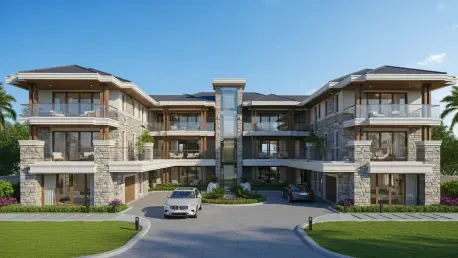

The sprawling coastal landscape of West Maui currently finds itself at a crossroads where the quietude of traditional residential life meets the aggressive expansion of luxury real estate development. At the heart of this tension stands a massive 7,344-square-foot structure located at 5385 Lower Honoapi‘ilani Road, a property that has transitioned from a mere construction project into a polarizing symbol of community defiance. Residents have long characterized the building as a “monster house,” a term that encapsulates the frustration felt by those who believe the scale and architectural intent of the residence violate the spirit of the Nāpili neighborhood. This conflict serves as a high-stakes case study for the entire Hawaiian island chain, illustrating the ongoing struggle to balance high-net-worth investment with the preservation of local culture and environmental integrity. As the property struggles to secure a single buyer at its $12.9 million asking price, the conversation has shifted toward the implications of its existence and the regulatory precedents it has already set.
The Evolution of the Property and its Controversy
From Private Residence to “Monster House”
The journey of the Nāpili property began under a veil of residential normalcy that quickly evaporated as the true scale of the project became apparent to the surrounding community. Developer Greg Brown, operating under Napili House LLC, initially secured permits for what was ostensibly a single-family home intended for personal use. However, as the structure began to rise above the coastal brush, its dimensions suggested a much more commercial objective. The inclusion of eight bedrooms, twelve and a half bathrooms, a rooftop swimming pool, and an elevator signaled a design better suited for a boutique hotel than a family dwelling. Internal communications eventually surfaced, revealing that the developer had considered the site’s proximity to hotel districts as a justification for potential vacation rental use. This perceived bait-and-switch sparked an immediate backlash from neighbors who feared that the quiet character of their street was being sacrificed for a high-density tourist hub disguised as a private home.
The sheer physical presence of the building further alienated the local population, as the 45-foot-tall silhouette began to dominate the skyline. In a region where most homes respect a modest profile to maintain ocean views and cooling tradewinds, this structure appeared as an architectural interloper. Community advocates argued that the design was intentionally maximized to exploit every available inch of the lot, pushing the boundaries of what a “residential” permit should allow. This friction led to intense public testimony and a collective realization that the existing zoning definitions were perhaps too broad to prevent such out-of-place developments. The “monster house” label stuck not just because of the building’s size, but because it represented a perceived lack of respect for the established aesthetic and social fabric of the Nāpili Bay area, turning a private construction project into a public grievance that would last for years.
Regulatory Challenges and Zoning Loopholes
The legal drama surrounding the property reached a fever pitch when county inspectors identified significant discrepancies between the approved plans and the actual construction. In 2021, a stop-work order was issued after it was determined that the house exceeded the 7,500-square-foot threshold required for a Special Management Area (SMA) exemption, a critical permit that bypasses more rigorous environmental and public reviews. Furthermore, the building’s height was found to be in violation of the Nāpili Bay Civic Improvement District standards. To move forward, the developer was forced to undergo the humiliating and costly process of removing completed floor space and equipment rooms to bring the structure back within the technical letter of the law. This period of enforcement highlighted the fragility of the county’s oversight mechanisms and the lengths to which a developer might go to capitalize on ambiguous language within the municipal code.
A primary reason this “monster house” was able to reach its controversial height in the first place was a significant loophole in the older Maui County zoning laws. Between 1971 and 2021, the code restricted residential buildings to “two stories” but failed to define a specific height limit in feet. By designing a structure with two very tall stories, the developer technically remained compliant with the antiquated phrasing, even as the building soared to 45 feet. This realization prompted the Maui County Council to take decisive action, eventually passing new legislation that established a firm 30-foot height limit for the area. While these changes were too late to prevent the current structure from existing in its modified form, they served as a legislative admission that the system had been gamed. The property stands today as a monument to that era of regulatory ambiguity, serving as a constant reminder to local officials that specific, modernized language is essential to protecting the island’s topographic character.
Navigating Legal Loopholes and New Ownership Models
The Shift Toward Fractional Co-Ownership
As the real estate market in 2026 continues to grapple with high interest rates and a diminishing pool of ultra-wealthy buyers looking for single-family estates, the Nāpili property has pivoted toward a fractional co-ownership strategy. This model, spearheaded by firms like Cohana Homes, seeks to divide the $12.9 million price tag into four manageable shares of approximately $3.55 million each. Under this arrangement, an LLC is formed to hold the title, and the co-owners are granted specific usage rights throughout the year. Proponents of this shift argue that it represents a modern evolution of the “second home” market, allowing affluent individuals to enjoy the benefits of a luxury Maui residence without the full financial burden of sole ownership. By marketing these shares to “long-term users” rather than transient vacationers, the developers hope to bypass the intense scrutiny and legal restrictions currently placed on traditional short-term rentals (STRs).
However, the introduction of the LLC co-ownership model has done little to soothe the concerns of the Nāpili community. Critics view this move as a clever rebranding of a timeshare, a type of property use that is strictly regulated and often prohibited in residential zones. While the marketing materials emphasize that these are “owners” who will return year after year, local advocates point out that if four different families use the home for separate three-month blocks, the property still functions as a high-turnover lodging facility. This creates a “gray area” in the law where the technicality of ownership clashes with the reality of usage. The Maui Planning Department has remained cautious, noting that while the sale of property interests is generally a private right, the actual operation of the home must not cross the line into prohibited transient activity. This tension underscores a new frontier in property law, where the definition of “residential use” is being tested by innovative corporate structures designed to maximize the utility of luxury assets.
The Conflict Between Ownership and Transient Usage
The core of the legal debate rests on how Maui County defines a “timeshare” versus a “co-owned residence.” Recent legislative updates have expanded the definition of a timeshare to include any property where multiple owners have rights to use the unit for periods of less than 180 days. This was a direct attempt to prevent companies from selling 1/8th or 1/4th interests in homes as a workaround for the island’s restrictive vacation rental policies. Cohana Homes attempts to navigate this by implementing a fixed five-year ownership term, after which the entire property must be sold. They argue that this lack of permanent “interval” rights distinguishes their model from traditional timeshares. Yet, for the neighbors living next to a house with twelve bathrooms and a rotating cast of “owners,” the distinction feels academic. The fundamental fear is that the home will become a revolving door of luxury travelers who have no long-term stake in the neighborhood’s social stability or quietude.
This conflict is further complicated by the broader economic pressures facing Maui. With the county moving to phase out thousands of short-term rentals in apartment districts, the pressure on luxury residential zones to accommodate high-end visitors has increased. If the co-ownership model at 5385 Lower Honoapi‘ilani Road is deemed successful and legally compliant, it could provide a blueprint for other “monster houses” across the island to operate as quasi-hotels. This possibility has mobilized community leaders like Council Member Tamara Paltin to push for even tighter definitions of what constitutes a “single-family” use. The debate is no longer just about one house in Nāpili; it is about whether the very concept of a “neighborhood” can survive in an era where global capital can fractionalize a home into a commercial product. The outcome of this specific sale will likely dictate the next wave of land-use litigation in Hawai’i, as regulators struggle to keep pace with the creativity of real estate developers.
Community Resistance and Future Implications
The Battle Over Neighborhood Integrity and Zoning
The sustained resistance from the Nāpili Bay Community Association highlights a deep-seated distrust of the current land-use administrative process. Led by advocates such as Chris Salem, the community has not only protested the physical presence of the “monster house” but has also engaged in protracted legal battles against the county government itself. These lawsuits allege that the administration was far too lenient in granting initial exemptions and failed to adequately represent the public interest during the permitting phases. For these residents, the house is a physical manifestation of a “pay-to-play” culture where wealthy developers can bypass the rules that govern ordinary citizens. The psychological impact on the neighborhood is profound, as residents feel that their coastal heritage is being sold off piece by piece to the highest bidder, with little regard for the infrastructure strain or the loss of local identity that follows.
This grassroots pressure has successfully forced a more reactive and protective posture from the Maui County Council. The passage of the 30-foot height limit and the tightening of the definition of “hotel use” in residential areas were direct results of the outcry over the Nāpili project. These legislative victories represent a shift in the political landscape, where the “monster house” has become a rallying cry for voters who want to see more aggressive management of the island’s limited land resources. However, the damage already done by the existing structure remains a sore point. Even with new laws in place, the 45-foot structure continues to loom over the coast, serving as a reminder of the permanent nature of development mistakes. The community’s focus has now shifted from prevention to mitigation, as they watch the co-ownership sale closely to ensure that the home does not become the very “mini-hotel” they fought so hard to stop.
Long-Term Considerations for Land-Use Policy
The resolution of the Nāpili house saga will offer critical insights into the viability of fractional ownership as a loophole for luxury development. If the county successfully restricts the usage of the home to a point where the co-ownership model becomes unattractive to investors, it may signal the end of the “monster house” era on Maui. Conversely, if the LLC structure holds up in court and the property thrives as a multi-owner luxury retreat, it could trigger a fundamental shift in how coastal land is valued and utilized. This situation demands a proactive approach from municipal planners, who must now look beyond simple square footage and height requirements to consider the legal structures behind property ownership. The challenge for 2026 and beyond is to create a regulatory environment that allows for property rights while ensuring that those rights do not infringe upon the collective well-being of the local community.
Moving forward, stakeholders must prioritize the establishment of clear, enforceable standards that define the boundaries of residential occupancy in a fractional ownership context. This could include requiring more transparent reporting of LLC members or setting minimum stay durations that align with the 180-day rule already in place for other sectors. For potential investors, the Nāpili house serves as a cautionary tale; despite the allure of a $12.9 million luxury asset, the “community tax” of constant scrutiny, potential litigation, and legislative pushback makes such properties a high-risk venture. The ultimate takeaway from this controversy is that on an island with finite space and a powerful sense of place, the social license to operate is just as important as a building permit. Future developments will need to emphasize harmony with the existing environment rather than maximum extraction of value if they hope to avoid the decade of conflict that has defined the future of the Nāpili coast.