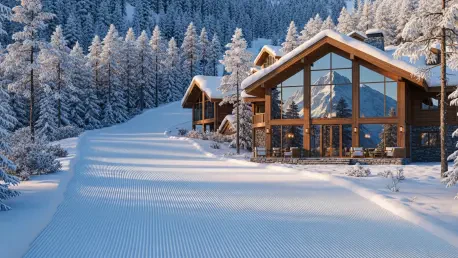

While the vast majority of the Indian subcontinent begins its descent into the sweltering heat of the pre-monsoon season by early March, a few high-altitude bastions in the Himalayas continue to defy the sun. This period creates a fascinating meteorological paradox where the lowlands are dressing for summer while the peaks remain locked in a deep, crystalline winter. For the discerning traveler, this “shoulder season” offers the most strategic window of the year: a time when the bone-chilling winds of January have softened, yet the snowpack remains dense and pristine for those willing to climb high enough.
The Ephemeral Charm of India’s Late-Season Snowscapes
The transition from winter to spring in the Himalayas is not a sudden shift but a slow, upward retreat of the frost line. In these high-altitude regions, the ground maintains a thermal inertia that resists the onset of spring, preserving the white mantle even as the first rhododendrons begin to bud in the valleys below. This overlap of seasons provides a rare aesthetic where one can witness frozen alpine lakes surrounded by the faint, green promise of the coming thaw, offering a visual duality that is absent during the peak of mid-winter.
For many adventurers, March represents the ideal balance between accessibility and atmosphere. The extreme road closures that define December and January often begin to clear, yet the high-altitude interior remains a snowy sanctuary. Navigating this landscape requires an understanding of geography over simple calendar dates; it is a search for the “permanent winter” that exists only above the 2,500-meter mark. From the manicured slopes of specialized ski resorts to the silent, wind-swept deserts of the high north, India’s late-season snow offers a diverse spectrum of experiences for every type of winter enthusiast.
Mapping the Peaks: Strategic Destinations for Late Winter Travelers
Gulmarg and the High-Altitude Sanctuary of Apharwat Peak
Gulmarg stands as the undisputed crown jewel of late-season snow, largely due to its sophisticated Gondola system. This engineering marvel allows travelers to bypass the warming base station at 2,650 meters and ascend directly to the Apharwat Peak, which sits at nearly 4,000 meters. At this elevation, the air remains thin and cold, ensuring that the snow quality—often referred to as “curry powder” by international skiers—remains remarkably consistent throughout the month of March.
The infrastructure here is designed for serious winter engagement, featuring some of the highest skiable terrain in Asia. While the lower meadows might start to show patches of earth by the end of the month, the upper bowl of the Pir Panjal range remains a frozen fortress. The contrast is striking; visitors can enjoy a relatively mild afternoon in the town before taking a short ride into a world of towering snow drifts and professional-grade slopes that rival the Alps in both scale and beauty.
The Frozen Frontier of Spiti Valley and North Sikkim
For those who prioritize raw wilderness over resort amenities, the “Cold Desert” of Spiti Valley remains a reliable destination. Because Spiti is a high-altitude rain-shadow region, its temperatures stay well below freezing long after the rest of Himachal Pradesh has warmed up. Entering through the Shimla-Kinnaur route is essential during this time, as the high passes from Manali remain buried under several feet of snow. The result is a landscape that feels like a different planet—monasteries perched on snowy cliffs and rivers that remain partially trapped in ice.
On the eastern side of the Himalayas, North Sikkim offers its own version of a guaranteed winter. Zero Point, or Yumesamdong, is situated at a staggering 4,600 meters, making it one of the highest accessible points for tourists in India. At such extreme altitudes, the question is not if there will be snow, but rather how much. The logistical challenge of reaching these areas is significant, involving winding mountain roads and unpredictable weather, but the reward is a level of snow density that is virtually unmatched anywhere else in the country during the spring transition.
Recreational Hubs: Balancing Accessibility with Winter Activities
Manali and the nearby Solang Valley serve as the primary gateway for those who want a blend of comfort and recreation. While the main town of Manali might be seeing the last of its slush by mid-March, Solang Valley acts as a natural refrigerator. This area is the hub for “soft” adventure, where families can engage in tubing, zorbing on snow, and snowmobiling. Its proximity to a major tourist town makes it the most accessible option for those who are not prepared for the rigors of high-altitude trekking or professional skiing.
In contrast, Auli in Uttarakhand provides a more focused, athletic environment. Known for its perfectly groomed slopes and spectacular views of the Nanda Devi massif, Auli is the preferred choice for those looking to learn skiing in a structured setting. The resort atmosphere here is distinct from the wilder northeastern passes; it is organized, scenic, and professionally managed. While the snow at the base might soften in the afternoon sun, the higher reaches of the Gorson Bugyal trek, accessible from Auli, offer deep drifts that persist well into the later weeks of the month.
The Science of Snow Retention and Climate Shifts
The ability of these regions to retain snow is dictated by a strict elevation threshold. Generally, the 2,500-meter line serves as the boundary for snow integrity in March; below this, the daily solar radiation is usually enough to trigger a rapid melt. However, regional patterns vary between the Western and Eastern Himalayas. The Western reaches, like Kashmir and Himachal, benefit from Western Disturbances that bring fresh moisture late in the season, while the Eastern sections rely on sheer altitude to keep their snowpacks frozen.
Recent years have shown an increasing variability in these traditional patterns. Climate shifts have made the “guaranteed” snow dates more volatile, often resulting in heavy, unexpected blizzards followed by rapid warming. Travelers can no longer rely solely on historical averages; instead, they must monitor real-time satellite data and local reports. This unpredictability has transformed the March snow chase into a more dynamic endeavor, where flexibility and timing are just as important as the destination itself.
Strategic Planning for a Successful March Snow Expedition
Successfully finding snow in late March requires a tactical shift in planning compared to a January trip. As the month progresses, the “snow line” moves higher up the mountainsides, meaning a destination that was white on March 1st might be green by March 20th. Travelers should prioritize locations with cable cars or high-altitude passes that allow them to reach elevations above 3,500 meters. Flexibility is the most important tool in a traveler’s kit; being able to shift a base of operations from a valley to a higher ridge can be the difference between seeing mud and seeing a winter wonderland.
Packing for this transitional period also requires a layered approach. The temperature fluctuations between a sun-drenched afternoon and a high-altitude night are extreme. Waterproof footwear is non-negotiable, as the snow in March is often “wet” and prone to melting underfoot. Additionally, travelers should verify the status of road permits and local transport, as late-season snow can sometimes trigger avalanches that temporarily close critical arteries like the Silk Route in Sikkim or the road to Spiti.
Preserving the Final Glimpse of the Himalayan Winter
The search for the final remnants of winter serves as a powerful reminder of the fragility of these high-altitude ecosystems. As the plains of India brace for the heat of the coming months, these snowy retreats offer a vital ecological and psychological refuge. Visiting these areas during the delicate transition of March highlights the necessity of sustainable tourism practices. Travelers are encouraged to minimize their carbon footprint by using local guides and respecting the waste management challenges that remote, snow-bound villages face during the thaw.
Looking forward, those planning future expeditions should consider the benefits of “slow travel” in the mountains. Rather than rushing through multiple sites, spending an extended period in a single high-altitude hub like Gulmarg or Auli allows for a deeper understanding of the seasonal shift. This approach not only provides a better chance of catching a late-season snowfall but also supports the local economies that depend on the extended winter season. Embracing the fleeting nature of March snow encourages a more mindful interaction with the Himalayas before they fully surrender to the heat of the summer sun.