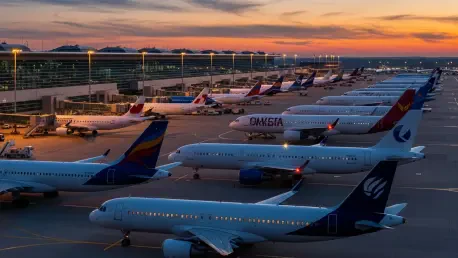

The abrupt paralysis of one of the most significant transit hubs in the Western Hemisphere serves as a sobering reminder that even the most sophisticated logistical networks remain vulnerable to systemic collapse. On April 6, 2026, Miami International Airport (MIA), a vital artery connecting the United States to Latin America and Europe, experienced a staggering operational breakdown. What began as a standard spring travel day quickly spiraled into a logistical nightmare, leaving thousands of passengers stranded and highlighting the fragility of the modern aviation network. With over 260 delays and multiple cancellations, the incident raised urgent questions about the resilience of major hubs during peak travel periods. This article explores the specific factors that contributed to this disruption and examines what these failures reveal about the current state of air travel.
The sheer volume of the disruption suggests that the aviation industry is operating with an increasingly narrow margin for error. As global travel demand continues to surge throughout 2026, the infrastructure supporting these movements is frequently pushed to its absolute limit. In Miami, the convergence of high seasonal volume and localized operational friction created a perfect storm that overwhelmed existing protocols. This event was not merely a series of isolated flight delays but a comprehensive failure of the airport’s ability to process a high density of arrivals and departures simultaneously.
The Strategic Importance and Historical Vulnerability of MIA
As one of the busiest airports in the world, Miami International has long served as a primary engine for both tourism and international commerce. Historically, its performance has been a barometer for the health of the U.S. aviation system, particularly regarding north-south transit. However, the airport’s role as a high-capacity hub also makes it susceptible to systemic shocks. Past developments in the industry—such as the transition to lean scheduling and the consolidation of major carriers—have reduced the available buffer time needed to recover from minor setbacks. Understanding these foundational shifts is essential to grasping why a single day of high volume can now lead to a widespread collapse in fluidity.
Throughout the early part of the decade, airlines prioritized efficiency over redundancy, leading to a landscape where every gate and every crew member is scheduled for maximum utility. While this model increases profitability during periods of smooth operation, it leaves the system without a safety net when disruptions occur. In the context of Miami, the historical reliance on tight turnarounds has turned the facility into a high-stakes environment where a delay in one sector can rapidly compromise the entire terminal’s functionality. This vulnerability is exacerbated by the airport’s unique geography, which necessitates a constant, delicate balance between domestic regional traffic and heavy international wide-body arrivals.
Examining the Mechanics of the April 6 Disruptions
Dissecting the Discrepancy: Air and Ground Performance
A critical aspect of the April 6 event was the disconnect between flight transit times and ground operations. While Federal Aviation Administration (FAA) data indicated that airborne delays remained relatively manageable, the situation on the tarmac was far more dire. The primary bottlenecks occurred at terminal gates and taxiways, where aircraft were unable to cycle through their arrivals and departures efficiently. This suggests that the crisis was not a failure of air traffic control in the skies, but rather a failure of ground-level administrative processes and infrastructure management. When gates are occupied by delayed aircraft, arriving planes are forced to wait on the taxiway, creating a gridlock effect that halts the entire ecosystem.
The technical breakdown on the ground points toward an inability of current staffing levels to keep pace with the physical movement of aircraft. Ground handlers, gate agents, and baggage crews represent the invisible backbone of airport operations, and when these teams are stretched too thin, the entire machine slows down. On this specific day, the discrepancy between sky-high efficiency and ground-level stagnation became the defining feature of the crisis. Without a synchronized effort to clear gates quickly, the airport effectively became a parking lot for multi-million dollar assets that were unable to generate revenue or transport their human cargo.
The Ripple Effect: Domestic and International Networks
The interconnected nature of modern aviation means that localized friction at a hub like Miami never stays local. Because carriers like American, United, and Frontier operate integrated networks, a delay in Miami triggers a cascade of disruptions across the country. A plane held at MIA for two hours results in a missed connection in Dallas, which in turn leads to a delayed departure in Los Angeles. This domino effect illustrates the systemic risk inherent in high-frequency scheduling. During this specific incident, the impact was felt globally, as international routes to London and the Caribbean were hampered by the inability of the hub to maintain its rhythm, proving that a single point of failure can destabilize a nationwide network.
Moreover, the financial implications of such a ripple effect are substantial for the carriers involved. Every minute an aircraft sits idle represents lost opportunity and mounting costs in terms of crew overtime and passenger rebooking fees. For international travelers, the disruption often meant missing rare connecting flights to remote destinations, turning a day-long journey into a multi-day ordeal. This interdependency highlights how the fragility of a single major hub can compromise the reliability of the entire global transit market, making the stabilization of MIA a priority for the wider industry.
Human and Psychological Costs: Operational Failure
The complexities of the disruption were most visible in the terminal, where the demographic of affected travelers ranged from spring break families to time-sensitive business professionals. Beyond the logistical hurdles of rebooking and navigating conflicting information, the psychological strain on passengers was significant. The transition from a predictable trip to an unpredictable ordeal highlights a growing concern in the industry: the erosion of consumer confidence. As travelers were forced to manage the transition from straightforward travel to survival mode, the incident underscored the need for better communication strategies and more robust passenger support systems during times of crisis.
Passenger fatigue and frustration often lead to a direct decline in brand loyalty, as travelers associate their negative experiences with the specific carriers involved. In an era where real-time social media updates can broadcast terminal chaos to millions, the reputational damage from a single day of gridlock can be long-lasting. The psychological impact is further magnified when travelers feel they lack agency, often finding themselves trapped between digital notifications that offer little clarity and physical staff who are equally overwhelmed. This human dimension of the failure serves as a reminder that aviation is as much a service industry as it is a logistical one.
Emerging Trends and the Future of Aviation Resilience
Looking ahead, the events at Miami International point toward a future where tightly dressed schedules may no longer be sustainable without significant technological intervention. There is a visible shift toward the integration of AI-driven predictive modeling to better manage ground crew staffing and gate assignments in real-time. Furthermore, regulatory bodies are likely to increase scrutiny on airline staffing levels, particularly for ground handlers and flight crews, to ensure that peak seasonal demand does not consistently lead to systemic failures. Expert predictions suggest that unless infrastructure investment keeps pace with travel demand, these gridlock events may become a regular feature of the travel landscape rather than an anomaly.
Technological advancements are expected to focus on automated gate management systems that can reroute incoming traffic before congestion becomes critical. By utilizing data from the 2026 travel season, developers are creating simulations that allow airport managers to test various stress scenarios and implement more agile responses. Additionally, there is a growing push for decentralized hub models that could offload some of the pressure from primary gateways like Miami. These shifts indicate that the industry is beginning to value resilience over pure efficiency, recognizing that a stable system is ultimately more profitable than one that periodically breaks under its own weight.
Navigating the Challenges of Modern Air Travel
The major takeaway from the Miami disruptions is that the margin for error in modern aviation is now razor-thin. For passengers, this reality necessitates a more proactive approach to travel, including the use of airline-specific mobile applications for real-time updates and an awareness of Department of Transportation (DOT) consumer protections. For the industry, the best practices moving forward must involve creating larger operational buffers and investing in smart terminal technology to prevent ground congestion. Applying these lessons in real-world scenarios will be the difference between a minor delay and a total operational collapse in the future.
Travelers who prioritize early-morning departures or select itineraries with generous connection times are finding themselves better equipped to handle the volatility of the current market. On the corporate side, the implementation of more flexible crew scheduling and the maintenance of standby aircraft at key hubs are being discussed as essential mitigation strategies. The focus is shifting toward transparency, where airlines that provide clear, honest updates during delays are able to retain customer trust even when the situation is out of their control. These practical adjustments represent a necessary evolution in how both providers and consumers approach the act of flight.
Strengthening the Foundations of Global Transit
The severe flight delays at Miami International Airport served as a potent reminder of the complexities inherent in our global transit systems. While the immediate crisis of April 6 passed, the underlying issues of staffing pressures, infrastructure capacity, and systemic sensitivity remained. This topic remained significant because it touched on the reliability of the infrastructure that supported our global economy and personal lives. Moving forward, the aviation industry found that it had to establish a sustainable balance between high-efficiency operations and the resilience required to handle the unpredictable nature of the skies.
Strategic investments in physical gate expansion and digital coordination protocols became the primary focus for airport authorities following the gridlock. The industry recognized that the status quo of near-capacity operations was no longer a viable long-term strategy during peak periods. By prioritizing the flow of ground traffic as much as the frequency of flights, the sector moved toward a more stable equilibrium. These efforts ultimately aimed to ensure that a single day of high demand would never again result in a total breakdown of the travel experience, protecting the future of international connectivity.