
The hospitality landscape is witnessing a seismic shift as Hyatt prepares to introduce The Standard to the Texas market, marking the brand’s first domestic expansion in over ten years. Leading this transition is Katarina Railko, a seasoned expert in hospitality and commercial real estate development who has spent her career analyzing the intersection of travel, entertainment, and urban design. In this discussion, we explore the strategic rebranding of the South Congress Hotel, the logistical intricacies of converting a boutique site into a social “campus,” and how the fusion of local heritage and international luxury creates a distinct identity in a crowded market.
The Standard is making its Texas debut after more than a decade without a new U.S. opening. How does this expansion fit into a broader lifestyle strategy, and what specific market qualities make Austin the ideal location for this brand’s long-awaited return to the domestic market?
Austin has evolved into a world-class cultural capital, making it the perfect stage for a brand that thrives on personality and social energy. This expansion is a cornerstone of Hyatt’s Lifestyle Group strategy, which gained significant momentum following the 2024 acquisition of Standard International and its affiliated brands. By choosing Austin for its first U.S. opening in more than ten years, the brand is tapping into a city that already resonates with its “cool factor” and creative spirit. The decision isn’t just about geography; it is about aligning with a market that has matured into a sophisticated hub where travelers seek more than just a room. The Standard thrives in environments where the local scene is as vibrant as the hotel itself, and Austin’s trajectory as a global destination provides the high-growth backdrop necessary for such a high-profile return.
Converting an established property like the South Congress Hotel involves a mix of local architects and international designers. How do you balance the neighborhood’s existing aesthetic with a new brand identity, and what role do local creative partners play in ensuring the property maintains its community sensibility?
The balance is achieved through a hyper-local collaborative approach that pairs international vision with deep community roots. We are seeing a powerhouse team come together, including local architect Michael Hsu and branding experts like James Moody, alongside the New York-based Goodrich Design team. This ensures the 83-room property doesn’t lose the soul that made the South Congress Hotel a neighborhood staple in the first place. Furthermore, the Bunkhouse team, which has operated in Austin for over a decade, provides the “connective tissue” needed to maintain continuity with the neighborhood’s distinctive design. It’s a delicate dance of honoring the property’s legacy while breathing the edgy, avant-garde life of The Standard into its walls to reflect the city’s modern status.
This project plans to transform the current 83-room site into a “lively campus” featuring social wellness experiences and multiple dining concepts. What are the logistical challenges of such a comprehensive renovation, and how will these social features redefine the guest experience compared to traditional boutique hotels?
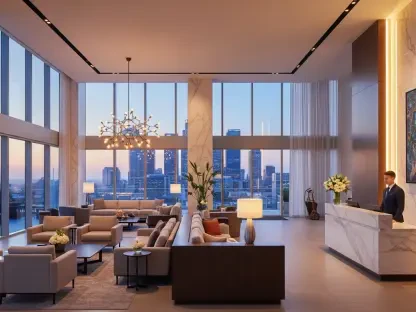
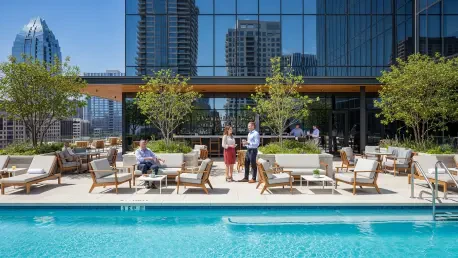
Transforming a boutique hotel into a “lively campus” requires a total rethink of how space is utilized, moving away from static lobbies to fluid environments that change from day to night. Logistically, this is a massive undertaking; the property is scheduled to close this summer, which involves significant shifts in operations and staffing to facilitate a complete overhaul. The goal is to allow guests to move seamlessly between cafés, rooftop pools, and outdoor gathering spaces, creating a 24-hour ecosystem of experiences. Unlike traditional hotels where the room is the destination, this model prioritizes social wellness and communal interaction as the primary draw. By integrating multiple dining concepts and social hubs, the property becomes a destination for locals and travelers alike, functioning more like a social club than a standard lodging facility.
With the integration of Bunkhouse and Standard International into a larger lifestyle division, brand identity can become complex. In a competitive landscape, how do you differentiate various lifestyle offerings like Andaz or Thompson from this new project, and what metrics determine if a property should undergo a brand conversion?
Differentiation comes down to the specific “vibe” and target demographic each brand serves within the Lifestyle Group. While Thompson might lean toward sophisticated urban luxury and Andaz focuses on local immersion, The Standard is defined by its irreverent, social-first philosophy and high-energy programming. The decision to convert a property like the South Congress Hotel often hinges on its potential to act as a cultural magnet and its physical layout’s ability to support diverse social spaces. Metrics for conversion include market demand for lifestyle-centric stays, the property’s historical performance, and its alignment with the brand’s global portfolio. For example, we saw a similar strategic shift when Hotel Genevieve in Louisville transitioned from Bunkhouse to the JdV brand, proving that brand selection is a calculated move to maximize the property’s unique strengths within the wider Hyatt ecosystem.
What is your forecast for the boutique hotel market in Austin?
I expect the Austin boutique market to become increasingly segmented as it reaches a new level of maturity following the spring 2027 opening of The Standard. We are moving past the era of generic “boutique” labels toward highly specialized lifestyle divisions where brand equity is built on community and curated experiences. With the Bunkhouse brand already operating seven of its nine hotels in Texas, including the recently opened Hotel Daphne in Houston, there is a clear trend of lifestyle brands doubling down on the Lone Star State. You can expect to see more conversions of mid-sized independent properties into branded lifestyle concepts as operators seek the global distribution power of giants like Hyatt. Ultimately, Austin will solidify its place as a primary testing ground for innovative hospitality concepts that blend work, play, and wellness in a single, high-design footprint.