
Katarina Railko is a distinguished hospitality expert whose career has been forged in the high-stakes environments of global travel, tourism, and large-scale event management. With her extensive background in refining the attendee experience at major expos and conferences, she offers a unique perspective on the intersection of technology and human connection. In this conversation, we delve into the implications of Interprefy joining the Cvent App Marketplace, a partnership designed to bring seamless multilingual support to a massive global audience. Our discussion covers the evolution of event accessibility, the strategic integration of remote interpretation, and the way AI is lowering the barriers for international participation across diverse event formats.
With English being the primary or secondary language for only 17 percent of the global population, how does the integration of specialized interpretation services fundamentally change the value proposition for the 30,000 customers currently using the Cvent platform?
The reality is that for a staggering 83 percent of the world, a purely English-speaking event is a barrier to entry rather than an invitation to connect. By bringing these tools directly to 30,000 customers, we are finally addressing the silent frustration of an attendee sitting in a hushed hall, unable to grasp the life-changing insights of a keynote speaker. This integration transforms accessibility from a premium luxury into a foundational standard for every global program managed on the platform. When an organizer can provide live captions and subtitles as a native part of the experience, the event ceases to be a localized gathering and becomes a truly international stage where every participant feels seen and understood.
The traditional method of sourcing separate vendors for language support often happens late in the planning cycle, so what does it mean for an organizer’s workflow to have these tools available as a simple “checkbox” within their existing ecosystem?
In the chaotic final weeks before a major conference, the last thing a planner needs is the logistical headache of vetting and onboarding a new external vendor. As Sue Yardley noted, this move makes interpretation a simple checkbox in the tools they already use, effectively eliminating the frantic search that typically occurs just fourteen days before the doors open. This streamlined approach allows a team to scale their language support effortlessly, whether they are managing a single intimate breakout session or a massive, multi-day global conference. By removing the friction of separate contracts and disconnected data, organizers can focus on the creative aspects of their program while ensuring that the multilingual infrastructure is robust and ready from day one.
How do you view the balance between using a network of 6,000 professional interpreters for Remote Simultaneous Interpretation and deploying AI-driven speech translation across more than 80 languages simultaneously?
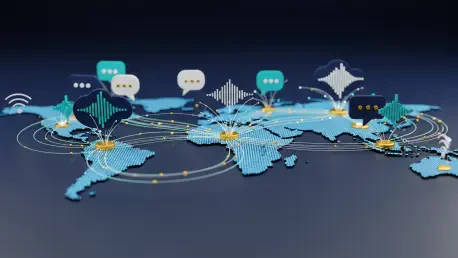
The choice between human and artificial intelligence depends entirely on the sensory and emotional requirements of the specific session. For high-stakes keynote addresses where accuracy and the subtle nuance of a speaker’s tone are critical, the network of over 6,000 professional interpreters provides that essential human touch that AI still struggles to replicate. However, the Interprefy AI offering is a game-changer for sheer scale, allowing an event to broadcast in more than 80 languages at once through live speech translation and captions. This dual-layered approach ensures that organizers have the flexibility to choose the right level of support for every room, ensuring no voice is lost in the hum of a busy convention center.
As hybrid and virtual formats continue to be a top trend for planners this year, how does creating a more connected event tech marketplace help avoid the disjointed experiences that often plague complex international programs?
Today’s event organizers are often juggling a dozen different software systems, and without a centralized marketplace, the result is almost always a fragmented experience for the attendee and a data nightmare for the marketer. Mike Tenholder’s vision for a more connected event tech ecosystem is about bridging those gaps so that interpretation, registration, and engagement data all flow through a single, reliable channel. When technology is fully integrated, the attendee doesn’t see the “seams” between different service providers; they only experience a smooth, professional journey from the moment they log in or walk through the venue doors. This connectivity is what will allow hybrid formats to thrive, as it ensures that the remote participant and the onsite guest are receiving the same high-quality, multilingual content in real-time.
What is your forecast for the future of multilingual event accessibility?
I believe we are moving toward a “multilingual by default” standard where the expectation of language inclusivity will mirror the current expectations for high-speed Wi-Fi or digital registration. As these technologies become more deeply embedded into the planning software we use every day, the cost and complexity of reaching a global audience will continue to drop. We will see a shift where even small-scale webinars and regional workshops utilize AI translation to attract a more diverse range of perspectives. Ultimately, the successful events of the future will be those that recognize that language is the ultimate bridge to global expansion, and those who embrace these integrated tools early will find themselves leading the most impactful and inclusive programs in the industry.