
New Business Class cabins on the Airbus A350 fleet are designed to address the specific logistical frictions faced by corporate travelers, and this focus on high-end passengers is a key reason why Emirates secured the top spot in the debut list of the World’s Best Airlines 2027, a joint initiative by TIME and Statista. The Dubai-based carrier has managed to outpace global competitors by demonstrating excellence across a wide range of categories, including being named the leader in both value and business travel. This recognition is more than a simple popularity contest; it represents a deep dive into the operational reliability and passenger satisfaction metrics that define modern aviation. By combining luxury with efficiency, the airline has created a model that resonates with global travelers who demand consistency. The achievement underscores a period of intense strategic growth, where the airline has not only recovered from global disruptions but has pushed boundaries to set new benchmarks for what a premier international flying experience should entail.
Evaluation Standards and Strategic Vision
The ranking stands out due to its dual-layered evaluation process, blending subjective passenger sentiment with objective operational data. Statista conducted an extensive quantitative study, surveying travelers across every continent to gather a diverse set of perspectives. The criteria for passenger satisfaction were exceptionally granular, requiring respondents to rate airlines based on cabin comfort, service quality, onboard entertainment, connectivity, food and beverage options, value for money, and family-friendliness. Crucially, these scores were not considered in isolation; they were synthesized with independent flight-performance data, including delay statistics and cancellations. This hybrid approach ensures that the rankings account for both the soft elements of hospitality and the hard metrics of reliability and punctuality. The result is a holistic view of airline excellence that prioritizes a consistent, high-quality experience across the entire customer journey, regardless of flight duration.
A central theme emerging from the airline’s success is the philosophy of continuous improvement championed by its leadership. Sir Tim Clark, President of Emirates Airline, emphasized that the company views its products and services through a lens of perpetual evolution rather than fixed goals. Despite global economic and logistical challenges, the airline has maintained a steadfast commitment to investing in every passenger touchpoint, ensuring that the brand remains relevant in a fast-paced market. Clark’s perspective highlights a “no finish line” mentality, suggesting that the top ranking is a byproduct of a culture that values the fundamentals of aviation while striving for future innovations. This leadership approach also grants significant credit to the airline’s workforce, noting that the professionalism of ground and air crews is the primary vehicle through which the Emirates brand is realized and maintained across a global network that spans six different continents and connects diverse cultures.
Fleet Transformation and Interior Modernization
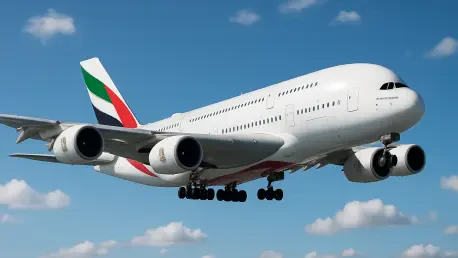
One of the most tangible drivers of the airline’s top-tier ranking is its massive US$7 billion cabin retrofit program, which represents one of the largest capital expenditures of its kind in aviation history. To date, 108 aircraft have undergone extensive interior overhauls, ensuring a uniform and modern aesthetic across a fleet that includes both the Boeing 777 and the Airbus A380. This investment was strategically planned to synchronize with the delivery of new airframes, creating a seamless transition between older and newer models. By focusing on interior hardware, the airline has effectively extended the lifecycle of its existing fleet while upgrading the passenger experience to match contemporary luxury standards. The refurbishment process involves replacing every element from carpets and wall panels to seats and lighting systems, resulting in a product that feels brand new regardless of the aircraft’s age. This level of dedication to physical quality is a rarity in the highly competitive international industry.
A cornerstone of this modernization is the rapid expansion of the Premium Economy cabin, a middle-tier offering that has redefined value for long-haul travelers. By the end of 2026, this product is expected to be available on routes to nearly 100 destinations, filling a critical gap between traditional Economy and Business Class. The introduction of industry-first features, such as electrically powered Premium Economy seats equipped with privacy dividers and the innovative “U-Dream” headrests in Economy Class, demonstrates a trend toward enhancing comfort even in non-premium cabins. These hardware improvements are complemented by upgraded soft products, including sustainable blankets and amenity kits made from recycled materials. By investing in the comfort of all passengers, the airline has successfully elevated its overall brand perception, proving that high-end service can be scaled across a massive global operation without losing the personal touch that travelers have come to expect.
Digital Integration and Service Excellence
In an era where digital access is a non-negotiable requirement for travelers, the airline has distinguished itself through its strategic partnership with Starlink. Currently equipped on 74 aircraft, this ultra-fast Wi-Fi service allows passengers in all cabin classes to engage in high-bandwidth activities—such as streaming, gaming, and making calls—across multiple devices simultaneously and free of charge. This shift toward total connectivity addresses the evolving needs of the modern traveler, who no longer views flying as a time to disconnect but as an opportunity to remain productive or entertained. The integration of low-earth orbit satellite technology ensures that speeds remain consistent even while flying over oceans or remote regions where traditional satellite signals often falter. This technological leap has significantly boosted the airline’s scores in the connectivity category, as it removes one of the most common pain points associated with long-haul international flights.
The strategic decision to integrate neurodiverse support and high-speed connectivity proved to be the final differentiator in securing the top global ranking. Observers noted that the most effective next steps for travelers involved using mobile applications to pre-configure entertainment and meal preferences, which successfully minimized onboard stress. Corporate travel managers determined that prioritizing carriers with integrated chauffeur services and dedicated lounge networks significantly increased employee productivity and reduced transit-related fatigue. The airline demonstrated that the future of aviation required a shift from simple transportation to a holistic lifestyle service, which set a new benchmark for competitors to follow. As the industry moved toward the next calendar year, the emphasis remained on maintaining these high standards through constant feedback loops and technological updates. These initiatives established a clear path forward for the sector, proving that consistent investment was the only reliable method for loyalty.