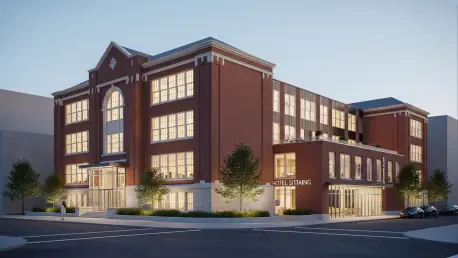

Standing at the intersection of 19th and Grant Street, the imposing brick edifice of Cathedral High School serves as a haunting yet hopeful reminder that architectural neglect does not always lead to permanent loss. This century-old structure, which originally opened its doors in 1921, has weathered a century of societal shifts, transitioning from a rigid parochial school to a compassionate crisis center during the height of the AIDS epidemic and eventually a haven for local artists. Today, the building is entering a transformative chapter as the Inspire Investment Group prepares to breathe new life into its halls, converting the site into a luxury boutique hotel and high-end dining destination. This redevelopment is not merely a commercial venture but a critical preservation effort aimed at rescuing a building that has become synonymous with urban decay in the heart of Denver. By stabilizing the masonry and honoring the building’s complex social history, the project ensures that its legacy as a cultural anchor remains intact for a new generation of travelers.
The Urban Explorer Crisis: Overcoming the Cycle of Deterioration
The physical state of the former high school reached a breaking point in recent years as the rise of the “urban explorer” social media trend turned the derelict property into a magnet for trespassers. These individuals frequently breached the perimeter to film content for digital platforms, leading to rampant graffiti that marred the historic brickwork and the systematic theft of original interior fixtures that defined the building’s 1921 aesthetic. This cycle of unauthorized entry and subsequent vandalism created a significant liability for the neighborhood, as the lack of security allowed the structure to descend into a state of severe urban blight. As of 2026, the transition toward a secured construction site marks a definitive end to this period of lawlessness. Developers have prioritized a comprehensive security overhaul to prevent further degradation while crews begin the arduous task of removing layers of spray paint and debris that have accumulated over years of vacancy.
Beyond the immediate concerns of vandalism, the building has suffered from extensive environmental damage that threatens its structural integrity. Years of exposure to the elements due to broken windows and a failing roof system resulted in significant water infiltration, which weakened floor joists and damaged original plasterwork. The restoration team is now focused on a rigorous stabilization process that addresses these hidden issues before the more visible cosmetic renovations can begin. This approach is essential because the architectural value of the site lies in its authentic materials, many of which are no longer produced today. By treating the building as a fragile artifact rather than just a construction site, the development team is working to reverse the effects of a decade of neglect. This meticulous phase of the project is the most critical hurdle in transforming a site of community concern into a polished hospitality venue that can once again contribute to the local economy.
Economic Sustainability: Leveraging Capital for Historic Preservation
Revitalizing a landmark of this scale is a massive financial undertaking, with the total budget for the Cathedral High School renovation estimated at approximately $30$ million. To bridge the gap between traditional real estate development and the high costs associated with historic preservation, the Inspire Investment Group is utilizing a sophisticated mix of funding sources. This includes critical support from the Denver Urban Renewal Authority (DURA), which provides tax increment financing to offset the expenses of remediating environmental hazards like lead and asbestos. Furthermore, the project has successfully tapped into clean energy funds designed to modernize the building’s utility systems without compromising its historic character. These financial tools are indispensable for modern developers who wish to avoid the high-density demolition-and-rebuild model that often replaces unique neighborhood history with generic structures. This fiscal strategy ensures the project remains viable.
The long-term economic health of the hotel depends on its ability to offer an experience that differs significantly from standardized lodging chains. Modern travelers increasingly seek out properties that tell a story, and the deep historical layers of 1840 Grant Street provide a unique narrative that cannot be replicated in new construction. By integrating high-end dining and event spaces that cater to both locals and visitors, the project aims to create a self-sustaining ecosystem that generates revenue through multiple channels. Preservation advocacy groups, such as Historic Denver, have voiced their support for this model, recognizing that adaptive reuse is the most effective way to protect the city’s architectural heritage. The ultimate goal is to achieve a listing on both state and national registers of historic places, which would provide additional tax credits and ensure that the building remains a protected storyteller for the city as it evolves through 2027 and into 2028.
Adaptive Reuse Strategies: Implementing a Model for Urban Growth
Project leaders prioritized the stabilization of the original masonry while ensuring that modern electrical and plumbing systems integrated seamlessly into the existing floor plans. They recognized that the success of the Cathedral High School project depended on a long-term commitment to community engagement and transparent communication with local stakeholders. The team implemented a rigorous monitoring schedule to prevent further unauthorized entry, effectively ending the era of site exploitation by social media influencers. By securing these foundational elements, the project established a scalable model for other urban centers grappling with derelict historic assets. Stakeholders coordinated with city planners to ensure the surrounding neighborhood infrastructure supported the influx of new hotel guests and restaurant patrons. This proactive approach mitigated potential traffic and parking concerns before they became operational hurdles during the early phases.
The development team successfully utilized specialized restoration techniques to preserve the 1921 facade while reinforcing the interior for modern safety standards. They sought out specialized artisans who could replicate missing decorative elements, ensuring that the transition between the old and the new felt intentional rather than jarring. This dedication to craftsmanship provided a clear path for future developers to follow when tackling similar high-risk projects. By proving that a building once considered a liability could be turned into a premium destination, the project encouraged more investment in the surrounding blocks of the Grant Street corridor. City officials and preservationists viewed the completion of these initial milestones as a turning point for Denver’s urban core. The lessons learned during this process highlighted the importance of early intervention and the necessity of diverse funding streams in the successful execution of historic adaptive reuse.