
The turquoise horizons of the Caribbean are currently witnessing a profound architectural shift as luxury family travel moves away from cookie-cutter amenities toward a more bespoke and culturally integrated guest experience. This evolution is spearheaded by the recent $150 million debut of Treasure Beach at Beaches Turks & Caicos, a project that signals the definitive end of the traditional all-inclusive model. By introducing the “Beaches 2.0” concept, the brand is betting that sophisticated design and effortless luxury are the keys to capturing the loyalty of modern travelers. This expansion is not merely about increasing room counts; it is a calculated effort to provide families with high-end hospitality that balances kid-friendly excitement with refined aesthetics.
The decision to invest such a significant sum into a single village within an existing property demonstrates a commitment to quality over quantity. This move addresses a growing demand for “effortless luxury,” where the logistics of family travel are simplified through intuitive layouts and superior service. By moving away from a one-size-fits-all approach, the resort has created a space where parents do not have to compromise on style to accommodate their children’s needs. The success of this prototype suggests that the future of family vacations lies in environments that feel purposeful, open, and deeply connected to their natural surroundings.
Beyond the Buffet: A New Era of Caribbean Family Luxury
The launch of Treasure Beach marks a pivotal transition for a brand that has been a staple of the Caribbean for nearly three decades. While the traditional all-inclusive model focused heavily on abundance and constant activity, the new era prioritizes a more curated and serene experience. This shift recognizes that the modern luxury traveler seeks more than just a buffet; they desire spaces that reflect the beauty of the destination. By investing $150 million into this new village, the resort has established a benchmark that moves the entire industry toward a more sophisticated standard of family-oriented hospitality.
This transformation is particularly timely given the changing dynamics of the travel market, where families are increasingly looking for meaningful ways to connect with one another. The “Beaches 2.0” philosophy ensures that every element of the resort, from the lobby to the beachfront, is designed to facilitate these connections without the friction of crowded or cluttered spaces. This approach allows the resort to maintain a sense of calm and exclusivity, even during peak occupancy periods. Ultimately, the goal is to create a vacation environment that feels as intuitive and comfortable as a high-end private residence, but with all the amenities of a world-class resort.
Setting the Stage for a $1 Billion Regional Transformation
The introduction of Treasure Beach serves as the blueprint for a massive $1 billion investment strategy designed to double the brand’s presence across the Caribbean. This ambitious plan is a direct response to the evolving trends in multi-generational travel, particularly the rise of “gramping,” where grandparents travel with their grandchildren. To accommodate these diverse groups, the expansion focuses on creating multi-room suites and communal areas that offer both shared gathering spots and private retreats. This ensures that every generation has a space tailored to their specific interests and needs.
This regional transformation is not just a financial commitment; it is a strategic repositioning of the brand to bridge the gap between legacy infrastructure and the expectations of a new generation. As the hospitality landscape becomes more competitive, the need for a cohesive and high-quality brand identity across all islands is paramount. The $1 billion investment will allow the company to modernize its current portfolio while expanding into new markets, ensuring that the “Beaches 2.0” standard is maintained throughout the region. This strategy positions the brand as a leader in the multi-generational segment, offering a level of consistency and luxury that is rarely found in the family travel market.
The Architecture of Beaches 2.0 and the Treasure Beach Blueprint
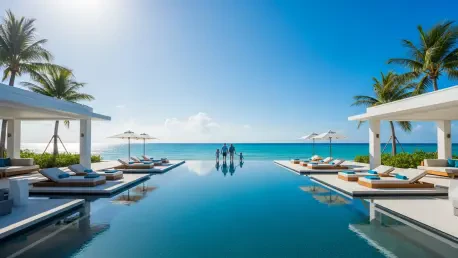
The architecture of this new phase is defined by a commitment to flow, flexibility, and destination-specific aesthetics. At Treasure Beach, the design team utilized a color palette inspired by the vibrant hues of the Turks & Caicos shoreline, integrating local conch-shell motifs to create a strong sense of place. This intentionality ensures that the resort does not feel like a generic corporate development, but rather a natural extension of the island itself. The layout was carefully planned to ensure that guest movement feels natural and unhurried, promoting an atmosphere of relaxation from the moment of arrival.
In terms of amenities, the expansion has introduced several brand-first features that cater to diverse tastes and age groups. These include the first-ever dedicated movie theater and a lagoon-style pool equipped with a swim-up snow-cone bar, adding a touch of whimsy to the luxury environment. Culinary options have also been elevated through “cross-pollination” with the adult-only Sandals brand, bringing the high-end “Butch’s Island Chop House” to the family-friendly Beaches property. Furthermore, a commitment to spending $350,000 per room to upgrade existing accommodations ensures that the entire property meets the new 2.0 standard, eliminating any quality gap between new and old units.
Leadership Vision and the Commitment to Authentic Local Integration
Executive Chairman Adam Stewart has emphasized that the success of this expansion relies on a deep connection to the local environment rather than a “copy-and-paste” model. To achieve this authenticity, the resort collaborated with local artists for major installations, such as a conch-themed centerpiece in the lobby. This focus on local integration extends to the operational side as well, with leadership utilizing feedback loops from travel advisors and long-term employees to refine the guest experience. These insights helped the development team move away from unnecessary “clutter” and toward “purposeful space” that enhances the overall guest journey.
This vision prioritizes quality and discipline in design, ensuring that every new feature serves a specific purpose. By listening to those on the front lines of hospitality, the brand was able to identify exactly what modern families value most: space, ease of movement, and authentic cultural touches. This approach has fostered a stronger bond between the resort and its host community, creating a sustainable model for growth that benefits both the brand and the island. The leadership’s focus on local integration ensures that as the brand grows, it remains grounded in the unique characteristics of each destination it inhabits.
Mapping the Future: The 2030 Caribbean Expansion Roadmap
The roadmap for the next several years outlines a clear path for expanding the Beaches footprint to several new islands, with each development tailored to its host nation’s geography. Following the initial success of the Turks & Caicos expansion, the focus moved toward bringing the 2.0 concept to Beaches Exuma in The Bahamas. This was followed by the announcement of Beaches Barbados, a 600-room development situated on the prestigious Gold Coast, which was designed to offer an unprecedented level of luxury for the island. Each of these projects reflects a commitment to maintaining the core values of the brand while adapting to the unique culture of each location.
By 2029, the expansion strategy successfully reached Jamaica’s North Coast with the launch of Beaches Runaway Bay, focusing on an intuitive layout that prioritized guest comfort. The final phase of this decade-long vision targeted Saint Vincent and the Grenadines, where a new property was designed to complement the existing luxury hotel landscape while offering a fresh take on family-centric design. This $1 billion initiative effectively redefined the standards for Caribbean hospitality, ensuring that the brand remained at the forefront of the industry. The leadership established a sustainable framework for growth that prioritized long-term quality over immediate returns, providing a clear path for future developments to follow.