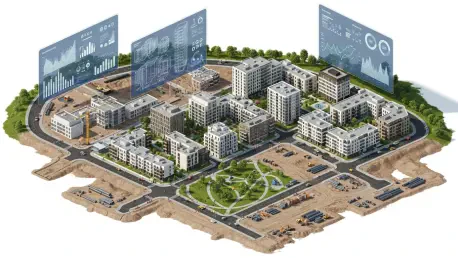

The persistent disconnect between surging residential development and the requisite state-level investment has reached a critical juncture for the Camden local government area as population figures continue to skyrocket far beyond original projections. While the state government has mandated aggressive housing targets to combat the ongoing affordability crisis, local officials contend that the financial allocations provided in the latest budget fall significantly short of what is necessary to maintain a livable environment. The sheer volume of new residents entering the region on a weekly basis requires more than just dwellings; it demands a robust network of transport, health, and education facilities that currently exist only on paper. This gap between policy and reality creates a scenario where the local council is forced to manage the consequences of growth without the necessary tools or funding. This budgetary oversight suggests a failure to recognize the unique pressures faced by one of the fastest-growing regions in the country today.
Infrastructure Pressures: The Burden of Road and Transport Shortfalls
Central to the council’s grievances is the inadequate funding for arterial road upgrades and public transport connections that are vital for a functional urban landscape. Commuters in the area currently face increasing delays as existing thoroughfares, designed for a semi-rural capacity, struggle to accommodate the influx of thousands of additional vehicles daily. The state budget’s omission of major funding for key intersections and lane expansions means that traffic congestion will likely deteriorate further over the next several fiscal cycles. Without a firm commitment to high-frequency transit options, the region remains heavily dependent on private car ownership, which contradicts the broader environmental and sustainability goals outlined by the state planners. This lack of strategic foresight effectively traps residents in a cycle of long commutes and poor connectivity, undermining the economic productivity of the workforce residing in the newer suburbs. Furthermore, the slow pace of road development complicates emergency service response times at all hours.
Beyond the asphalt and concrete of the transport network, the council has identified a severe shortfall in the provision of essential social services, particularly in health and education. New primary and secondary schools are frequently announced but rarely delivered at a pace that matches the speed of residential occupancy, leading to overcrowding in existing facilities. Similarly, the local hospital infrastructure is operating under immense pressure as the population demographic shifts toward young families with high healthcare needs. The absence of specific line items in the budget for new community centers or library expansions further illustrates the neglect of the social fabric required for a cohesive community. When the state focuses almost exclusively on housing numbers without equal consideration for the quality of life, the burden of providing localized services shifts unfairly onto the municipal government. This imbalance suggests that the current funding model is fundamentally flawed, as it fails to account for the holistic requirements of an expanding community.
Strategic Solutions: Bridging the Gap Between Policy and Reality
The tension between state mandates and local implementation reveals a deeper systemic issue regarding how growth is managed within the New South Wales planning framework. Local authorities are often sidelined during the high-level decision-making process, resulting in budget allocations that do not reflect the ground-level realities of suburban expansion. By prioritizing housing completion rates as the primary metric of success, the state risks creating vast residential zones that lack the necessary commercial and industrial anchors to support local employment. This trend forces a significant portion of the new population to commute long distances, further straining the already underfunded transport corridors and reducing the overall resilience of the local economy. Moreover, the failure to provide adequate open spaces and recreational parks within the budget framework limits the opportunities for healthy outdoor activities. This short-term focus on volume over value essentially creates a debt that future generations will have to pay, either through significantly higher taxes or reduced services.
In response to these budgetary challenges, the council advocated for a more integrated approach that aligned infrastructure delivery with the actual timing of residential development. The primary recommendation involved the establishment of a dedicated growth fund that would automatically trigger investment based on population milestones rather than political cycles. Local leaders also sought more transparent communication regarding the timeline for promised state projects, ensuring that expectations remained realistic for prospective homeowners. It was determined that a shift toward a developer-contribution model, which prioritized community amenities over raw density, provided a potential pathway for sustainable growth. Ultimately, the local government emphasized that without a fundamental recalibration of state priorities, the region risked becoming a cautionary tale of unplanned urbanization. By the conclusion of the fiscal review, it became clear that the path forward required a genuine partnership between all levels of government to ensure that the expansion remained an asset for everyone involved.