
Strengthening Baltic Aviation Infrastructure: A Strategic Investment Perspective
The global aviation sector is witnessing a decisive shift toward vertical integration as companies prioritize technical independence to navigate the increasingly volatile supply chains and operational demands of the modern aerospace market. GetJet Group has responded to these challenges by announcing a significant €35 million investment through its subsidiary, Airhub Aviation, to expand its Maintenance, Repair, and Overhaul (MRO) footprint in Lithuania. This initiative involves a multi-phase infrastructure development at Vilnius International Airport (VNO) designed to establish a localized technical center of excellence. By securing long-term leases and developing state-of-the-art facilities, the group is setting a new benchmark for technical autonomy in the Baltic region.
This investment serves as a cornerstone for the group’s long-term strategy to internalize complex maintenance processes and ensure fleet reliability. As the aviation industry recovers from global logistical hurdles, the ability to control maintenance schedules becomes a critical differentiator. The project aims to provide comprehensive support for the group’s own Airbus and Boeing fleet while also offering high-tier technical services to international partners. This article explores the strategic depths of this expansion, analyzing its financial structure, the operational necessity of technical independence, and the broader socio-economic benefits for the regional labor market and national infrastructure.
The Evolution: Why Technical Independence Defines Modern Aerospace Strategy
To understand the rationale behind such a capital-intensive project, it is necessary to examine the historical inefficiencies inherent in the traditional outsourced maintenance model. For years, mid-sized aviation entities relied heavily on third-party MRO providers, which frequently led to scheduling conflicts, fluctuating costs, and a loss of operational priority during peak seasons. These external dependencies often created bottlenecks that hindered growth and limited the ability of airlines to respond to sudden market opportunities. GetJet Group’s transition toward a vertically integrated model is a calculated response to these systemic vulnerabilities, aimed at securing its future through ownership of the “technical stack.”
The foundation for this expansion was built upon the success of the group’s existing operations at Šiauliai International Airport. Over the past two years, the Šiauliai facility transformed into a leading MRO destination in Northern and Eastern Europe, proving that localized control over technical services yields superior operational results. Leveraging this momentum, the Vilnius International Airport project represents the next phase of maturity. By moving beyond a reliance on external vendors, the group is not just expanding its physical footprint but is also insulating its business model against the unpredictability of global logistics and parts shortages that have recently plagued the industry.
A Multidimensional Analysis of MRO Infrastructure Growth
Operational Agility: The Vital Importance of Technical Autonomy in ACMI
A critical driver for this €35 million investment is the need for extreme operational agility within the Aircraft, Crew, Maintenance, and Insurance (ACMI) sector. Organizations that position themselves as a “Task Force of Aviation” must possess the capability to mobilize aircraft within 1.5 hours of receiving a request. Achieving this level of responsiveness is functionally impossible when maintenance schedules are dictated by third-party providers. By internalizing MRO services, GetJet Group ensures that its fleet remains in a state of constant airworthiness, allowing for over 500 ad-hoc operations annually without the risk of external delays.
Furthermore, owning the maintenance infrastructure allows for more sophisticated asset management. Specialized technicians can perform deep-level repairs and routine inspections on a schedule that maximizes aircraft utilization rates. This level of control directly translates to higher reliability for global clients who depend on the group for emergency capacity and seasonal fleet support. In a market where time is the primary currency, technical independence provides a competitive edge that traditional outsourced models cannot replicate, fostering a more resilient and responsive service delivery framework.
Financial Milestones: Scaling Capability Through Multi-Phase Capital Injection
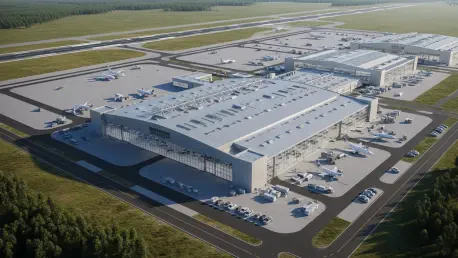
The investment is structured as a two-stage financial commitment that emphasizes long-term scalability and infrastructure stability. The first phase involves a €25 million injection for a primary MRO hangar on an 11,200-square-meter plot at Vilnius International Airport, secured under a 40-year land lease. This facility is engineered to accommodate modern narrow-body aircraft, providing the specialized environment required for avionics upgrades, engine maintenance, and structural repairs. This primary site serves as the nerve center for the group’s internalized technical operations.
Looking ahead, the second phase of the development will see an additional €10 million allocated toward a secondary 4,700-square-meter site between now and 2029. This additional hangar will provide the group with the capacity to handle third-party contracts alongside its internal fleet, creating a new revenue stream and further diversifying its business portfolio. These multi-million-euro commitments underscore the group’s confidence in the Lithuanian aviation landscape. By locking in infrastructure for four decades, the group is demonstrating a commitment to regional stability and technical growth that extends far beyond immediate operational needs.
Socio-Economic Impact: Workforce Development and Strategic Security Alignment
Beyond the technical and financial metrics, the project has profound implications for the Lithuanian labor market and national interest. The expansion is projected to create 200 high-skill positions, including aircraft engineers, avionics specialists, and quality assurance professionals. To secure this talent, GetJet Group has utilized innovative branding, such as partnering with professional motorsport champions to highlight the parallels between high-precision racing and aviation maintenance. This approach seeks to attract top-tier engineering talent from diverse backgrounds, ensuring a steady pipeline of expertise for the new facilities.
Additionally, the project has successfully navigated the complex regulatory landscape associated with national security. Given the strategic nature of airport land, the investment underwent rigorous evaluation by the Commission for Coordination of Protection of Objects of Importance to Ensuring National Security. In early 2025, the commission confirmed that the group met all safety and reliability standards, providing the legal foundation for its long-term presence at Vilnius International Airport. This alignment with national safety interests ensures that the project contributes to the country’s strategic aviation goals while maintaining the highest levels of institutional trust and oversight.
Industry Projections: Transforming the Baltics into a Tech-Centric Aviation Hub
The expansion of GetJet’s MRO capabilities is expected to catalyze a broader transformation within the regional aerospace ecosystem. Organizations like Invest Lithuania anticipate a “multiplier effect” where the presence of a large-scale maintenance hub attracts secondary service providers, including component suppliers and logistics firms. This clustering of expertise often leads to increased innovation in fields such as research and development and specialized engineering education. As the MRO sector matures, it strengthens the country’s reputation as a high-value-added service hub, moving the economy toward more complex industrial activities.
Future trends suggest that the integration of digital twin technology and advanced diagnostic tools will become the standard in these new facilities. By leveraging data-driven maintenance, the group can predict component failures before they occur, further reducing downtime and enhancing safety. As global aviation shifts toward more sustainable and technologically complex fleet management, having a modernized hub in the Baltics will be essential. This investment ensures that Lithuania remains a central player in the European aviation market, transitioning from a transit point into a primary center for technical and engineering excellence.
Management Insights: Leveraging Integration for Global Competitiveness
For stakeholders within the global aviation market, the GetJet expansion offers several strategic takeaways regarding risk mitigation and business model design. First, vertical integration is emerging as a vital strategy for airlines seeking to protect themselves from the vulnerabilities of a globalized supply chain. By owning the maintenance infrastructure, an organization gains a level of resilience that is impossible to achieve through outsourcing alone. This model provides certainty in cost management and scheduling, which are the two most volatile components of airline operations.
Second, the project highlights the importance of strategic public-private cooperation. The successful negotiation of long-term leases and national security clearances demonstrates how alignment between corporate goals and national infrastructure objectives can facilitate large-scale capital investments. Finally, the use of creative recruitment strategies serves as a best-practice example for industries facing specialized labor shortages. By connecting aviation maintenance to high-performance motorsport, the group successfully rebranded a technical field as a prestigious and exciting career path, ensuring the human capital necessary to support its physical infrastructure.
Final Reflection: Strategic Impacts of the Vilnius Infrastructure Project
The strategic expansion of GetJet Group’s MRO footprint at Vilnius International Airport redefined the regional aviation landscape by establishing a precedent for vertical integration. The financial commitment of €35 million provided the necessary stability for long-term technical growth while addressing critical labor shortages through innovative outreach programs. Stakeholders recognized the project as a catalyst for high-tech job creation and a significant enhancement to the national aviation infrastructure. This development confirmed Lithuania’s position as a center for high-tech engineering excellence and offered a successful blueprint for other organizations seeking to mitigate global supply chain risks.
The project successfully bridged the gap between operational needs and national security interests, securing the group’s place in the Baltic market for decades to come. By internalizing its maintenance capabilities, GetJet Group demonstrated how strategic autonomy can drive operational excellence and financial stability in an unpredictable industry. Ultimately, the investment solidified the group’s resilience and ensured that the local aerospace sector was prepared for future challenges. The completion of these facilities marked the beginning of a new era for Lithuanian aviation, characterized by technical self-sufficiency and regional leadership.