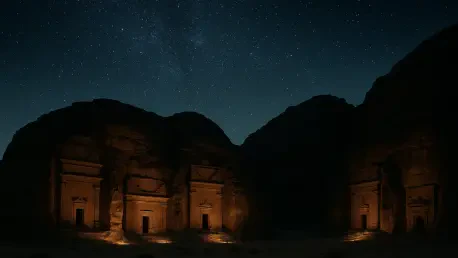

Official emergency protocols now advise those in alert zones to remain indoors and strictly avoid documenting military activity or strike sites for their own safety. This directive comes at a time when the Kingdom of Saudi Arabia is navigating a complex transition from a period of unprecedented tourism growth to a state of heightened regional caution. The sophistication of drone technology has fundamentally altered the risk assessment for many international travelers who previously viewed the region as a bastion of stability within the Middle East. While the allure of the Neom project and the ancient wonders of Hegra continue to draw significant interest, the reality of cross-border tensions cannot be ignored by those planning a visit. The integration of advanced defense systems like the Patriot missile batteries alongside local civil defense initiatives has become a common sight in the periphery of major cities. This duality defines the current travel experience, where high-tech luxury and historic exploration exist in the shadow of regional volatility.
Regional Disparities and Operational Risks
Assessing Geographic Safety Zones
Security in the Kingdom is currently a tale of two distinct geographies, separated by hundreds of miles of desert and differing tactical priorities. In the northern and western hubs, such as the sprawling metropolis of Riyadh and the coastal gateway of Jeddah, the atmosphere remains remarkably composed and professional. Foreign professionals and tourists continue to frequent the high-end districts of Diriyah, where the restoration of historic mud-brick architecture proceeds without interruption. However, the southern reaches of the country, specifically the provinces of Asir and Jazan, present a radically different profile. These areas have become the focus of frequent aerial incursions, leading to a state of constant readiness for both residents and visitors. The distinction between a leisurely vacation and a high-risk journey depends almost entirely on the traveler’s proximity to the Yemeni border, where the buffer zone of safety has narrowed considerably since the resurgence of regional hostilities earlier this year.
Beyond the immediate physical danger, the operational integrity of southern transportation hubs has been compromised by intermittent closures and damage to ground infrastructure. King Abdullah bin Aziz International Airport in Jazan, once a key link for local commerce, has seen several interruptions to its schedule following the deployment of explosive-laden drones. These incidents often trigger a cascade of delays that can affect domestic connections throughout the entire Kingdom for several days. While the Royal Saudi Air Force maintains a high interception rate, the debris from such engagements poses a secondary threat to civilian areas that travelers must consider. For this reason, many international logistics firms and tour operators have suspended their activities in the south, focusing instead on the “Safe Corridor” that connects the Red Sea projects to the capital. Navigating this landscape requires a deep understanding of which regions are supported by robust anti-missile umbrellas and which remain vulnerable.
Disruption of Major Events and Tourism
The grand ambitions of Vision 2030, which aimed to position the Kingdom as a global tourism powerhouse, are facing a critical stress test as major cultural events face unprecedented logistical hurdles. The Red Sea International Film Festival, a centerpiece of the nation’s cultural rebirth, serves as a prime example of this shifting reality. Originally slated for late 2026, the event has been rescheduled for late 2027 to ensure that the security protocols for international celebrities and global media can be fully guaranteed. This decision was not made lightly, as it signals a temporary retreat from the rapid pace of opening that defined the early decade. The government continues to invest heavily in the infrastructure of the tourism sector, but the focus has shifted toward reinforcing the safety of these venues against potential aerial threats. This cautious approach ensures that when events do occur, they are protected by the most advanced security measures available.
Similarly, the massive Soundstorm music festival in Riyadh faced a sudden cancellation for its December dates, a move that sent ripples through the international entertainment industry. The decision followed a series of drone interceptions near the capital that highlighted the vulnerability of large, open-air gatherings to sudden airspace closures. Organizers emphasized that the safety of the hundreds of thousands of attendees could not be compromised, leading to a strategic pause in large-scale productions. This trend suggests a new era of “micro-tourism” where smaller, more controlled groups are prioritized over massive public spectacles. While the majestic sites of AlUla remain open, the shift toward highly managed and secure tours has become the norm. Travelers are now seeing a hybrid model of tourism where high-security details and advanced surveillance are integrated into the luxury experience, ensuring that the country’s cultural treasures remain accessible despite the regional geopolitical climate.
Global Perspectives and Official Travel Advisories
Varying Stances: Western Governments
The international community remains divided on the appropriate level of caution to exercise when visiting the Kingdom, leading to a fragmented landscape of travel advice. The United Kingdom’s Foreign, Commonwealth & Development Office maintains a tiered advisory system that distinguishes between the volatile border zones and the relatively secure urban centers. They currently advise against all travel within a specific radius of the Yemen border but allow for business and leisure travel to Riyadh and Jeddah, provided that visitors stay informed through local media and embassy updates. This stance reflects a belief that the Kingdom’s defense infrastructure is capable of shielding major cities from the worst effects of the conflict. However, the emphasis on vigilance near oil and military sites remains a critical component of their guidance, reminding travelers that even in the most developed cities, the proximity to strategic targets can elevate the personal risk profile during active engagements.
In contrast, the United States Department of State has adopted a more stringent posture, placing Saudi Arabia at a Level 3: Reconsider Travel status. This classification is driven by an assessment of the unpredictable nature of drone and missile technology, which can bypass traditional defense perimeters on occasion. The American advisory highlights not only the kinetic risks but also the legal complexities that foreign nationals may face in a country undergoing rapid internal transformation amidst a regional war. The State Department warns that the security situation can deteriorate with almost no prior notice, making it difficult for the embassy to provide emergency services to citizens in remote areas. This cautious approach has led many American corporate entities to restrict non-essential travel for their employees, opting instead for virtual engagements. For the individual traveler, this means that while entry is permitted, the safety net provided by their home government is more limited than in previous years.
Strict Warnings: Australia and Canada
Australian authorities, through their Smartraveller portal, have issued some of the most sobering assessments of the current security environment in the Kingdom. They currently advise their citizens to reconsider the need to travel entirely, citing the potential for sudden and widespread disruptions to civil aviation. The Australian government points to the frequent activation of defense systems as a primary concern, as these events often lead to the immediate grounding of all flights and the closure of national airspace. Such closures can leave travelers stranded for days, often with limited access to reliable information from local carriers. This level of uncertainty is deemed unacceptable for casual tourism, leading to a significant decrease in the number of Australian visitors since the escalation in October. The advisory emphasizes that the risk of being caught in a crossfire or experiencing a total logistical breakdown is a realistic possibility that must be accounted for.
Canada’s Global Affairs department mirrors this restrictive outlook, explicitly advising against non-essential travel to many parts of the country. Their analysis focuses heavily on the volatility of the regional conflict and the potential for the Houthi rebel group to expand their target list to include commercial maritime routes and port facilities. This expansion could theoretically impact the supply of essential goods and services, further complicating the experience for foreign visitors. Canadian officials have also raised concerns regarding the speed at which local security laws can be modified during a national emergency, potentially affecting the rights and movements of foreign nationals. By maintaining a high advisory level, the Canadian government seeks to minimize the number of citizens residing in the Kingdom during this period of high tension. For those who must travel, the recommendation is to maintain a high state of operational readiness, including having multiple exit strategies.
Practical Safety and Logistical Preparedness
Essential Steps: On-Ground Security
Maintaining a secure presence within the Kingdom in late 2026 requires a proactive and tech-savvy approach to personal safety. The traditional reliance on automated flight updates and third-party tracking applications has proven insufficient, as local digital infrastructure often faces cyber-disruptions or intentional outages during security incidents. Travelers are instead encouraged to establish direct lines of communication with their airlines’ ground staff and to monitor the official social media channels of the General Authority of Civil Aviation. These sources provide the most accurate real-time data regarding terminal operations and airspace status. Furthermore, understanding the nuances of local emergency protocols is vital; when sirens or mobile alerts are triggered, the standard procedure involves moving to the interior of a reinforced building. These drills have become a routine part of life in many Saudi cities, and cooperation with local security forces is a practical necessity.
A critical and often overlooked aspect of on-ground security involves the strict prohibition against documenting military installations or the aftermath of interception events. Local authorities have intensified their surveillance of social media and public spaces to prevent the dissemination of information that could be used for tactical advantage by hostile actors. Foreigners found photographing strike sites or moving military convoys may face severe legal consequences, including detention and immediate deportation. This policy is strictly enforced to protect the integrity of the nation’s defense systems and to prevent panic among the civilian population. Consequently, travelers must exercise extreme discretion with their mobile devices, especially in the vicinity of government buildings, airports, and energy infrastructure. By adhering to these local regulations and maintaining a low profile, visitors can significantly reduce their exposure to both the physical risks of the conflict and the potential for legal complications.
Managing Logistical Uncertainties
In the current climate, the purchase of comprehensive travel insurance has transitioned from a recommended precaution to an absolute logistical necessity. Modern policies must specifically cover acts of war and terrorism, as well as prolonged travel delays caused by the closure of national airspace. Without such coverage, a traveler could face exorbitant costs for last-minute hotel stays or rebooked international flights, which often surge in price during periods of regional instability. It is equally important to confirm that the insurance provider has a robust local network capable of providing medical evacuation or emergency assistance within the Kingdom’s specific regulatory framework. This financial safety net allows travelers to navigate the inherent unpredictability of the region without the constant fear of catastrophic financial loss. Having a pre-vetted list of emergency contacts, including local hospitals and embassy numbers, is a fundamental step for any itinerary.
Flexibility is the most valuable asset for any international visitor navigating the Saudi landscape in 2026. A successful itinerary is no longer a rigid schedule but a fluid plan that incorporates multiple alternate scenarios for exiting the country or relocating to a safer province. For example, if flight operations in Riyadh are suspended, savvy travelers should be aware of land routes to neighboring countries like Bahrain or the United Arab Emirates, assuming border crossings remain open. Maintaining a reserve of local currency and ensuring that digital payment methods have high limits is also essential for dealing with sudden changes in plans. Furthermore, keeping a small bag with essential documents, medications, and power banks can facilitate a quick transition if a security situation necessitates a change in accommodation. By planning for various outcomes while hoping for a smooth journey, a visitor can maintain a sense of agency and calm, even when the broader geopolitical situation becomes increasingly difficult to predict.
Strategic Recommendations for Future Travel
The security challenges of late 2026 transformed the Kingdom of Saudi Arabia from a burgeoning tourism hotspot into a zone requiring deep strategic planning. Prospective visitors found that the key to a successful journey lay in the careful selection of their destinations, prioritizing the northern industrial and cultural hubs over the embattled southern borderlands. It became clear that the integration of military-grade security into the civilian experience was a permanent fixture of the regional landscape, necessitating a shift in traveler behavior toward high-tech vigilance. Those who managed to explore the ancient Nabataean sites or the modern skylines of Jeddah did so by embracing a model of informed and flexible travel. Moving forward, travelers were encouraged to register with their respective embassies and maintain active subscriptions to regional security alerts. The lesson of this period remained the importance of geopolitical literacy; staying safe meant staying informed, staying adaptable, and respecting the complex realities of a nation in transition.