
Standing at the geographic and metaphorical meeting point of two continents, Istanbul continues to redefine its identity while remaining anchored in its deep imperial foundations. The city operates as a sprawling, living museum where the monumental legacies of the Byzantine and Ottoman Empires do not merely exist as ruins but serve as the very bedrock of a modern, pulsating metropolis. This evolution is currently being explored through a significant cultural exchange at the Victoria and Albert Museum in London, where the exhibition titled “Constantinople to Istanbul: One City, Two Empires” remains open until May 2027. By showcasing artifacts spanning 1,600 years, from 4th-century Byzantine relics to 19th-century Ottoman textiles, the exhibition illustrates a continuous thread of design and craftsmanship that has survived multiple regime changes and societal shifts. This historical layering has allowed the city to flourish as a global hub where ancient skills and modern trade intersect seamlessly.
Social Etiquette and Historical Collaboration
The social fabric of this Turkish metropolis is held together by subtle linguistic cues and gestures that reflect a profound respect for human effort and creative labor. One of the most significant examples of this is the ubiquitous phrase “kolay gelsin,” which translates to “may your work come easy to you,” a greeting used by everyone from high-end gallery owners to street vendors. This expression serves as a vital social equalizer, bridging the gap between different social classes, religious backgrounds, and nationalities within a crowded urban environment. Jewelry designers like Begüm Tiryaki Uyulur emphasize that such interactions are not merely polite formalities but are foundational to the city’s identity, fostering a culture of mutual recognition and collective support. In a world increasingly dominated by impersonal digital transactions, these traditional forms of etiquette ensure that the human element of craftsmanship remains central to the city’s daily operations and social stability.
Historically, Istanbul’s economic and creative vitality has relied upon the active collaboration of a diverse population, including Armenians, Greeks, Albanians, and Persians. This multi-ethnic cooperation established a precedent for a city that thrives on pluralism rather than isolation, allowing various artisanal traditions to cross-pollinate over several centuries. This spirit of collaboration is more than just a historical footnote; it is a living practice that enables modern Turkish brands to maintain a distinct competitive edge in the global luxury market. By valuing the contributions of diverse residents, the city has created a resilient cultural ecosystem that absorbs new influences without discarding its core values. This ability to integrate disparate cultural elements into a cohesive whole is what prevents Istanbul from becoming a sterile museum piece. Instead, it remains a vibrant, evolving project where the past is viewed as a toolkit for future innovation, ensuring its heritage is preserved through active use.
Artisanal Mastery in the Grand Bazaar
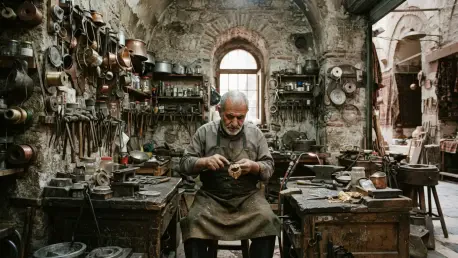
Founded in 1455 by Sultan Mehmed II shortly after the conquest of the city, the Grand Bazaar persists as the functional nerve center of high-end artisanal production in the region. While it is often celebrated as a premier tourist destination attracting hundreds of thousands of visitors daily, its primary significance lies in its role as a vital pipeline for master craftsmen and designers. The 61 covered streets of the bazaar house a complex network of workshops where ancient techniques are still practiced with rigorous precision and dedication. Master goldsmiths like Robert Eskici, who brings half a century of experience to his craft, represent the living link between historical methods and contemporary demands. This historic marketplace is not a relic of a bygone era of trade but a thriving ecosystem where the pulse of the city’s creative spirit is most authentic. The persistence of these workshops provides the necessary infrastructure for a localized economy that values quality over mass production.
The survival of traditional skills like intricate gold work and mother-of-pearl inlay depends heavily on a symbiotic relationship between veteran masters and a new generation of designers. Contemporary jewelry brands, such as Boulo, frequently turn to these ancient workshops to create pieces that industrial manufacturing methods simply cannot replicate due to the level of detail required. This reliance on the bazaar’s ecosystem ensures that centuries-old skills are passed down through a hands-on apprenticeship model, even as modern technology changes how these products are marketed. There is, however, a growing concern regarding the declining number of young apprentices entering these trades, making the commitment of contemporary artists even more crucial for cultural preservation. By integrating traditional craftsmanship into modern luxury collections, these designers are providing a sustainable path forward for the masters of the bazaar. This collaboration ensures that the artistic legacy of the Byzantine and Ottoman eras continues to breathe.
Architectural Revitalization and Hospitality
The revitalization of the Bosphorus waterfront through the ambitious Galataport development project marks a major turning point in the city’s urban landscape and its approach to heritage. At the heart of this regeneration is The Peninsula Istanbul, a luxury hotel complex that occupies four distinct buildings, three of which are carefully restored historical properties in the Karaköy district. This project represents a strategic effort to re-energize the waterfront while honoring the architectural integrity of the surrounding neighborhood and its maritime history. The hotel serves as a gateway for international travelers to experience a refined version of Turkish hospitality, situated in a location that has served as a center for trade and travel for generations. By transforming underutilized heritage sites into modern cultural landmarks, the city is demonstrating how to manage urban growth without sacrificing its soul. The project integrates an underground cruise terminal with public spaces, successfully blending functional infrastructure with high-end architecture.
Interior design at the new waterfront properties focuses on the concept of “Eser-i-Istanbul,” a term that translates to the “Masterpiece of Istanbul,” aimed at reinterpreting motifs for a modern audience. Led by designer Zeynep Fadıllıoğlu, the aesthetic choices within these spaces reflect a deep appreciation for the materials and techniques that defined the Byzantine and Ottoman eras. Extensive use of Marmara marble, kilim-inspired carpets, and intricate wood-and-mother-of-pearl inlays creates a visual dialogue between the city’s past and its current status as a design capital. This dedication to historical accuracy extends even to the staff uniforms, which utilize vegan silk and decorative elements crafted within the Grand Bazaar itself. Such attention to detail ensures that the hotel is not just a place to stay but a gallery of local artistry that supports the regional economy. By highlighting the work of contemporary glass artists and painters alongside traditional motifs, these spaces celebrate the city’s ongoing creative evolution and its enduring elegance.
Sensory Experiences and Cultural Continuity
Istanbul’s sensory landscape is perhaps most vividly experienced through its evolving culinary scene, where traditional ingredients are reimagined using the latest contemporary techniques and presentations. High-end rooftop dining venues like Gallada offer menus focused on “Silk Road-sourced” ingredients, directly mirroring the city’s historical role as the primary bridge between the East and the West. These culinary experiences combine traditional flavors like Adana kebab with refined global influences, creating a fusion that feels both familiar and groundbreaking to the palate. The physical environment surrounding these dining spaces is equally important, often featuring gardens filled with rosemary, lavender, and pomegranate trees that recall the lush imperial gardens of the city’s past. This holistic approach to gastronomy ensures that every meal is an immersion into the historical narrative of the region. By connecting modern guests to the flavors and scents of antiquity, the city maintains its reputation as a sensory capital where history is both seen and tasted.
The ultimate endurance of the city as a major cultural capital lies in its innate ability to balance deep-seated heritage with forward-thinking modernity without losing its unique character. This equilibrium is maintained through significant infrastructure investments and the preservation of small-scale artisan workshops that form the backbone of the city’s creative economy. Moving forward, the focus must shift toward creating more formal educational pipelines to ensure that the mastery of the Grand Bazaar is not lost to time as older generations retire. Supporting digital platforms that connect local craftsmen with global markets could provide the necessary economic incentive for a new wave of apprentices to enter these traditional fields. Additionally, the success of the Galataport project provides a model for future urban renewal that prioritizes the restoration of historic sites over total demolition. By valuing its geographic position and its continuity of skill, the city is poised to remain a hub of innovation where beauty and history exist in perfect harmony.
Strategic Frameworks for Cultural Sustainability
The transition of Istanbul into a modern powerhouse required a delicate reconciliation of its diverse imperial histories with the fast-paced demands of global commerce and luxury tourism. Urban planners and designers successfully prioritized the preservation of the city’s “living breath” by integrating ancient artisanal workshops into the supply chains of high-end contemporary brands. This strategy moved beyond simple conservation and turned historical craftsmanship into a viable economic asset that differentiated the local market from its international competitors. The establishment of formal educational pipelines ensured that the mastery of the Grand Bazaar was not lost to time as older generations of craftsmen began to retire from their trades. Digital platforms were strategically deployed to connect local masters with global markets, providing the necessary economic incentive for a new wave of apprentices to enter traditional fields. These steps ensured that the city’s cultural crossroad remained open for the long term.
The city’s ability to absorb influences from various empires while maintaining a distinct local identity remained its greatest strength as it moved through the current decade. Investors and municipal authorities realized that the value of the Bosphorus waterfront lay not in its potential for generic development, but in its ability to tell a story of historical longevity. This realization led to the implementation of zoning laws that favored the adaptive reuse of heritage buildings, ensuring that historical narratives were woven into the functional needs of a growing population. By treating the city as a living entity rather than a static relic, leaders maintained the social cohesion necessary for a diverse, multi-ethnic population to thrive. The result was a metropolis that felt both ancient and cutting-edge, proving that progress did not require the erasure of the past. These efforts provided a clear roadmap for other global cities aiming to modernize without losing their cultural soul.