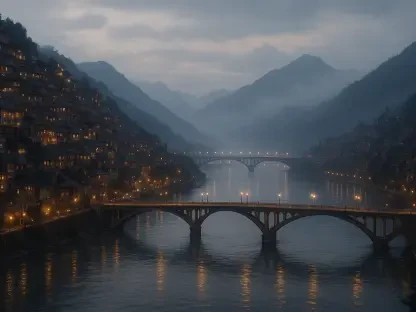

Vitebsk stands as a city of profound contrasts where centuries of artistic heritage collide with the harsh, modern realities of Eastern European political tensions and shifting borders. As the administrative center of the Vitebsk Region, the city has long served as a bridge between diverse cultures, but today, that bridge is narrow and subject to the winds of shifting international alliances. Visitors arriving in this corner of Eastern Europe find themselves in a landscape where the aesthetic beauty of the Western Dvina River is often juxtaposed against the stern presence of a state that prioritizes internal security above all else. Understanding the current risk profile requires moving beyond simple travel advisories to grasp the nuanced reality of a city that is simultaneously peaceful and precarious. The immediate sensation of walking through the historic center can be deceiving, as the lack of visible street crime masks a more complex layer of systemic risk that defines the contemporary experience for any foreign national crossing into Belarusian territory.
The Legal and Political Security Environment
Systemic Risks and State Monitoring
The most pressing concern for anyone visiting Vitebsk is the state’s zero-tolerance policy regarding political expression and public assembly, which remains a cornerstone of the regional security apparatus. Authorities maintain an incredibly rigorous surveillance network that utilizes both traditional physical patrolling and modern technological oversight to ensure that any sign of dissent is identified instantly. Foreign nationals are by no means exempt from the scrutiny applied to the local population, and even the appearance of being involved in a gathering can lead to serious legal consequences. There is little room for misunderstanding in this environment; participation in any unscheduled or unauthorized public meeting can lead to immediate detention, regardless of whether the individual intended to participate in a protest or was simply a curious bystander navigating the city center during a period of activity.
Arbitrary detention remains a genuine threat that travelers must account for, particularly if they fail to strictly adhere to local norms regarding sensitive documentation and movement. Security forces are notoriously sensitive to the documentation of government buildings, police stations, and critical infrastructure such as bridges or major railway hubs. Using a smartphone or a high-end camera in the vicinity of these sites can result in immediate questioning, the confiscation of equipment, or more severe legal challenges, as the line between tourism and perceived intelligence gathering is frequently blurred by local officials. It is essential to understand that in a high-security state, the burden of proof often rests on the individual to demonstrate their innocence rather than the state to prove a crime, making conservative behavior the only viable strategy for personal safety.
Regulatory Compliance and Information Security
There is a general consensus among international security analysts that digital communications and social media activities are monitored with a high degree of sophistication by regional state agencies. Travelers are strongly advised to refrain from engaging in political debates, whether they are taking place in public forums or through private messaging applications, as even casual remarks can be flagged. Maintaining a strictly apolitical profile is the most effective way to mitigate the high legal risks associated with a visit to the region, as the interpretation of “subversive activity” can be broad and unpredictable. This monitoring extends to the hardware level, where customs officials may occasionally request access to digital devices to verify that no prohibited content is being transported or shared within the country’s borders.
Beyond the digital realm, the physical requirement for registration and documentation is a critical logistical hurdle that carries significant legal weight. Every foreign visitor must ensure that their immigration registration is handled promptly by their accommodation provider or through the local department of internal affairs within the specified timeframes. Failing to do so can result in heavy fines, deportation, or being barred from future entry into the country, which adds an administrative layer to the overall security profile. While these regulations might seem like minor bureaucratic inconveniences, they are enforced with a rigidity that reflects the state’s desire for total oversight of foreign movement. Travelers must prioritize these administrative duties immediately upon arrival to ensure their legal standing remains unquestioned throughout their stay.
Localized Crime and Daily Stability
Urban Safety and Crime Statistics
Compared to many major Western European or North American urban centers, Vitebsk reports remarkably low levels of traditional street crime such as muggings or violent assaults. Professional pickpocketing rings and the sophisticated tourist scams that plague many world capitals are nearly non-existent here, largely because the city does not see high volumes of international mass tourism. This creates an environment where the streets feel exceptionally safe for walking during the day and even in the early evening hours within the central districts. The heavy police presence, while primarily focused on political stability, acts as a powerful deterrent against opportunistic criminals, ensuring that the public square remains orderly and relatively free from the petty thefts that often target foreigners in more open societies.
While basic vigilance is still recommended at the main railway station and during large-scale public events like the Slavianski Bazaar, the risk of falling victim to a crime of opportunity is statistically very low. Violent crime and muggings are infrequent occurrences, particularly in the central districts where street lighting is consistent and patrols are most frequent. The risk of encountering physical aggression increases slightly in peripheral residential areas or industrial zones late at night, but these locations are rarely on the itinerary for most travelers. For women traveling solo, the city is generally respectful and safe, though the same political and legal vulnerabilities apply to them as to any other visitor, necessitating a balanced approach to exploration that prioritizes well-lit, central paths over isolated side streets.
The Social Environment for Solo Travelers
The general sense of public order in Vitebsk is a product of both deep-seated cultural norms and an pervasive security framework that shapes every interaction. This environment creates a paradox where the city feels “safe” in a traditional sense, yet that safety is maintained by an authoritarian framework that poses its own unique set of risks to the traveler. Consequently, the absence of visible street crime should not be mistaken for the total absence of danger, as the primary threats to a visitor’s well-being are often state-driven rather than criminal in nature. This requires a shift in mindset where one worries less about a stolen wallet and more about an accidental violation of a local ordinance or a misunderstanding with a uniformed official in a public space.
Socially, the people of Vitebsk are often reserved but polite to foreigners, provided that the interactions remain focused on cultural or logistical topics rather than sensitive regional issues. There is a perceptible caution in how locals interact with outsiders, driven by a desire to avoid any activities that could be perceived as suspicious by the authorities. Solo travelers may find it difficult to form deep connections quickly, but they will likely find the population helpful when it comes to navigating the city or finding local landmarks. This social atmosphere contributes to the city’s quiet stability, but it also reinforces the importance of self-reliance, as the social safety net for a foreigner is often thin and mediated by the constraints of the current political environment.
Logistical Hurdles and Regional Borders
Environmental and Infrastructure Challenges
Navigating the physical infrastructure of Vitebsk is generally a straightforward affair, with reliable public buses and a functional train network connecting the city to the rest of the nation. However, the physical environment itself poses significant seasonal challenges, particularly during the harsh continental winters that define the region for several months of the year. Icy sidewalks and hazardous road conditions are frequent causes of injury, and travelers should be prepared for temperatures that often drop well below freezing, requiring specialized gear to prevent frostbite or exposure. The local municipality is generally efficient at clearing major thoroughfares, but secondary streets and pedestrian pathways can remain treacherous for days after a significant snowfall, making mobility a primary safety concern for the unprepared.
In addition to weather-related risks, the Western Dvina River, which adds so much to the city’s visual charm, can present logistical issues during the spring thaw. Seasonal flooding can occasionally affect low-lying areas near the riverbanks, leading to temporary closures of certain parks or riverside paths that are popular with tourists. While the tap water in the city is treated and generally considered safe for basic hygiene, the aging plumbing in some of the older historic districts can occasionally affect the quality and taste of the water. To avoid minor gastrointestinal health issues that could disrupt a trip, many visitors prefer to use bottled or filtered water for drinking and brushing their teeth, though the public health infrastructure is generally capable of handling routine medical needs.
The Border Paradox: Travel Constraints
A major logistical trap for foreign nationals visiting this region is Vitebsk’s extreme proximity to the Russian border, which is just a short drive to the east. Under the “Union State” agreement, the border between Belarus and Russia often appears open or invisible on digital maps, but it remains strictly legally restricted for third-country nationals. Attempting to cross into Russia via a land route—whether by train, bus, or private vehicle—without passing through an international checkpoint authorized for foreigners can result in severe legal penalties. Travelers have been detained, fined, and deported for inadvertently crossing a border that they believed was open, making it critical to verify all travel routes with official sources before leaving the city limits.
This border complexity is compounded by the fact that transit through Belarus often requires specific types of visas that are not always intuitive for Western travelers. The existence of visa-free zones in other parts of the country does not necessarily apply to the Vitebsk region, and a traveler arriving from a neighboring country must ensure they have the correct documentation for their specific entry point. These legal nuances are enforced with a high degree of technicality, and any deviation from the prescribed path can lead to being stranded at a checkpoint or facing interrogation. Successful navigation of these borders requires a meticulous attention to detail and a refusal to rely on casual advice or outdated travel blogs that may not reflect the current 2026 security posture.
Cultural Landmarks and Strategic Planning
Designated Safe Zones and Cultural Exploration
Vitebsk offers several zones that are considered safe and welcoming for exploration, provided that visitors remain mindful of local behavioral expectations and avoid political discussions. The historic center, with its restored churches and pedestrian-only streets, is ideal for solo sightseeing, offering high visibility and a peaceful atmosphere that stands in contrast to the region’s broader tensions. Cultural havens like the Marc Chagall Museum and the associated art centers are generally exempt from the more intense security atmospheres found near government installations, allowing visitors to engage with the city’s rich artistic legacy. These areas represent the best of what the city has to offer, providing a glimpse into the creative spirit that once made Vitebsk a global center of the avant-garde.
Victory Square and the central riverfront are also popular areas for both locals and visitors to gather, offering scenic views and a sense of community that is unique to the city. While these areas are safe for general leisure, they are also the primary locations for state-sponsored events and potential public gatherings that could draw a heavy security presence. If a crowd begins to form for any reason that is not clearly a scheduled cultural festival, travelers are strongly advised to leave the area immediately to avoid being caught in any subsequent security operations. The key to safely enjoying these public spaces is a constant awareness of one’s surroundings and a willingness to adapt one’s plans if the atmosphere in the square begins to shift or if police presence suddenly increases.
Financial Management and Administrative Duty
Managing finances in the current year requires careful planning due to ongoing international sanctions that significantly limit the utility of many foreign banking services within the country. While some larger establishments in Vitebsk may still claim to accept international credit cards, there is a very high probability of technical failure, service outages, or the refusal of transactions by Western banks. Travelers should carry sufficient cash in Belarusian rubles for their entire stay, ensuring they have access to local currency for all daily expenses, from dining to transportation. Relying on digital payment systems is a high-risk strategy that can leave a traveler without resources in a city where financial alternatives for foreigners are extremely limited.
Furthermore, the administrative requirement to maintain a clean legal record is tied directly to the registration process at the place of lodging. Hotels are mandated by law to register their guests with the local authorities, but those staying in private rentals or through home-sharing platforms must take personal responsibility for this step. Documentation of this registration is often checked at the border upon departure, and the absence of the correct stamps or digital records can lead to significant delays and questioning. Travelers must also keep their original passport and valid medical insurance policy with them at all times, as spot checks by police are a common occurrence and failing to produce original documents can lead to a trip to the local station for identification.
Geopolitical Realities and Consular Limitations
The Erosion of Diplomatic Protections
One of the most critical factors for any visitor to consider is the significant reduction in the diplomatic safety net available to Western travelers in the region. Many foreign governments have drastically scaled back their consular presence in the country, meaning that if a traveler is arrested, faces a medical emergency, or loses their travel documents in Vitebsk, their embassy may have a very limited ability to provide timely assistance. This lack of a formal safety net is a primary driver of the city’s high-risk classification, as a situation that would be a minor inconvenience in another country can quickly escalate into a major legal or personal crisis when diplomatic intervention is unavailable.
Because of this diplomatic isolation, travelers must be prepared to handle emergencies with a high degree of self-sufficiency and pre-planned strategies. This includes having digital and physical copies of all important documents, maintaining an emergency fund in a separate location, and having a list of local legal resources that may be willing to assist foreigners. The reality of 2026 is that a traveler is largely on their own when navigating the complexities of the local legal system, making the avoidance of any potential trouble the only logical course of action. This environment requires a level of maturity and risk assessment that goes beyond the requirements of typical international tourism, as the stakes for a mistake are substantially higher than they were in previous years.
Strategic Preparedness and Future Resilience
The experience of visiting Vitebsk necessitated a profound understanding of the intersection between personal conduct and regional stability. It became clear that the city’s aesthetic charm could not be divorced from the strict regulatory environment that governed every aspect of public life. Successful travelers were those who maintained a low profile, respected local laws without exception, and carried sufficient cash to bypass the unreliable electronic banking systems. The necessity of these measures reflected a landscape where the beauty of the city was inseparable from the complexities of its governance. Those who prepared for the worst while hoping for the best found that the city’s cultural riches were still accessible, though they required a more calculated approach than in the past.
Actionable steps for the future include the establishment of multiple exit routes and the constant monitoring of regional news through independent, international sources. Travelers should ensure their medical insurance specifically covers the region and includes provisions for medical evacuation to neighboring countries if necessary. It was observed that maintaining communication with contacts outside the country on a regular schedule provided an essential layer of security. Ultimately, the resilience of a traveler in this environment depended on their ability to remain flexible and informed. By prioritizing administrative compliance and political neutrality, it remained possible to witness the historic spirit of Vitebsk while minimizing the very real risks posed by the current geopolitical climate.