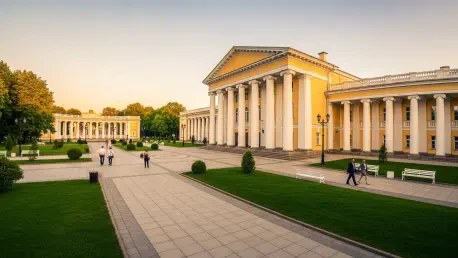

Standing at the confluence of the Sozh River, the city of Gomel presents a striking facade of neoclassical grandeur and manicured green spaces that belie its precarious position on the edge of a shifting geopolitical landscape. As the second-largest urban center in Belarus, it serves as a critical administrative and industrial heartland, yet its proximity to the southern and eastern frontiers has fundamentally altered the experience for any foreign national entering its limits. In the current climate of 2026, the city remains a study in contrasts, where the outward appearance of stability and the quiet rhythm of daily life are increasingly at odds with the complex security protocols mandated by the state. Travelers arriving in Gomel often find themselves navigating a dual reality: one of aesthetic beauty and historical depth, and another defined by the invisible but rigid boundaries of national security and regional tension. Understanding this environment requires more than a simple checklist; it demands a nuanced appreciation of how local order and international risk coexist in a city that sits at a major continental crossroads.
While the physical infrastructure of the city, from its sprawling parks to its restored architectural landmarks, remains intact and well-maintained, the atmosphere is heavy with the implications of broader regional conflicts. The local government has prioritized the maintenance of public order, resulting in streets that appear safer and more organized than those in many major Western metropolises. However, this surface-level serenity does not translate to a lack of risk for international visitors, who are subject to a different set of expectations and scrutiny than the local population. The safety of a traveler in Gomel is less about avoiding street crime and more about navigating a highly regulated legal system and avoiding areas of military sensitivity. As the city continues to function as a vital hub, the primary challenge for any visitor is to reconcile the welcoming nature of the local culture with the stringent, and often unpredictable, requirements of the administrative authorities who oversee the region’s security.
Assessing the Core Security Risks
The Contradiction: Local Safety vs. National Danger
One of the most perplexing aspects for a visitor to Gomel is the profound sense of physical safety encountered while walking through the city’s residential and commercial districts. Violent crime, such as assault or armed robbery, remains statistically rare, and the city’s well-lit streets and consistent police patrols contribute to an environment where petty theft is much less common than in other European hubs. This low-crime environment can easily lull a traveler into a false sense of security, as the traditional indicators of urban danger are almost entirely absent. For the average individual, the experience of navigating the city center during the day or evening feels remarkably predictable and calm, with a visible emphasis on cleanliness and public decorum that suggests a society in complete control of its internal stability.
Despite these tranquil appearances, international travel advisories maintain a high level of caution for the region, primarily due to the risk of arbitrary state action rather than common criminal activity. The primary threat to a foreign national in Gomel is not a pickpocket but the potential for detention or interrogation by local authorities under broadly defined security laws. These detentions can occur without the immediate legal protections or consular access that travelers might expect in other jurisdictions. Consequently, the safety profile of the city is bifurcated: while the streets are safe from the perspective of common crime, the political and legal environment poses a significant and unpredictable risk. Visitors must understand that their safety is contingent upon their ability to remain inconspicuous and strictly adhere to local regulations that may not be clearly communicated to outsiders.
Legal and Political Constraints: Navigating Strict Regulations
The legal landscape in Gomel is characterized by an exceptionally low threshold for what constitutes a violation of public order or state security. Activities that are considered fundamental rights in many parts of the world, such as participating in a public debate or documenting a peaceful gathering, are viewed with extreme suspicion and can lead to immediate legal repercussions. The state maintains a robust surveillance apparatus, and individuals are expected to exhibit a high degree of self-censorship in both public and digital spaces. This environment necessitates a cautious approach to communication, as even private conversations in public venues like cafes or restaurants can be monitored. For the international traveler, the safest course of action is to avoid all topics related to the government, regional conflicts, or social policies.
Foreign nationals are subject to heightened scrutiny, particularly during periods of increased regional tension or local administrative shifts. The authorities have the power to detain individuals for questioning based on minimal suspicion, and the burden of proof often lies with the detained to demonstrate their lack of ill intent. This scrutiny extends to one’s digital footprint, including social media history and personal messaging apps, which can be examined at any point during a stay. It is essential for visitors to realize that the definitions of “opposition activity” or “threat to the state” are highly fluid and can be applied to a wide range of behaviors. Therefore, the most effective way to manage legal risk in Gomel is to maintain a strictly apolitical profile and to refrain from any activity that could be interpreted as an interest in the country’s internal affairs or security arrangements.
Navigating the Urban and Frontier Landscape
Recommended Areas: High-Visibility Safety and Culture
The cultural and historical heart of Gomel centers around the Rumyantsev-Paskevich Palace and the extensive parklands that surround it. This area is widely considered the safest and most hospitable zone for international travelers, as it is a focal point for local families and is subject to the highest levels of professional monitoring. The palace itself is a masterpiece of neoclassical design, and its grounds offer a serene environment for exploration that is largely insulated from the more industrial or administrative tensions of the city. Because this area is a primary destination for both domestic and international tourism, the staff and local security are accustomed to interacting with visitors, making it a predictable environment where the rules of conduct are clearly understood and consistently applied.
Beyond the palace grounds, the primary commercial thoroughfares of Lenin Avenue and Sovetskaya Street provide a secure corridor for those looking to experience the city’s modern life. These streets are the lifeblood of Gomel, housing the majority of the city’s theaters, shops, and high-end dining establishments. The high volume of foot traffic and the significant presence of local law enforcement ensure that these areas remain free from the types of social disorder often found in less central locations. While traveling along these avenues, visitors can engage with the city’s commercial pulse with a reasonable degree of confidence. However, even in these well-traveled areas, it is important to remain aware of one’s surroundings and to avoid any behavior that might draw unnecessary attention from the numerous security personnel stationed at key intersections and public buildings.
High-Risk Zones: Restricted Areas and Strategic Sites
The geographic reality of Gomel’s location creates a specific set of risks that are not present in cities further from the national borders. Being situated so close to the frontier with Ukraine, the entire southern periphery of the Gomel region is treated as a high-security military zone. For an international traveler, attempting to visit rural areas or smaller towns near the border is fraught with extreme danger, as these regions are under constant surveillance and restricted access. Accidental entry into a military buffer zone can lead to charges of espionage or unauthorized entry, both of which carry severe penalties. The heightened military presence in the countryside means that any movement outside the city limits should be done with official authorization and a clear, verifiable purpose, though it is generally recommended to avoid these areas entirely.
Within the city itself, certain types of infrastructure are classified as sensitive and are strictly off-limits for casual observation or photography. This includes railway junctions, bridges, telecommunications towers, and large-scale industrial complexes that are vital to the national economy. To a tourist, a historic bridge or a bustling train station might seem like an ideal subject for a photograph, but to a local security official, such an act could be interpreted as the gathering of intelligence. The response to such activities is often swift and uncompromising, involving the confiscation of equipment and the detention of the individual for questioning. To mitigate these risks, travelers must adopt a policy of total avoidance when it comes to strategic sites and should always seek clarification if they are unsure about the status of a particular building or facility.
Operational Security and Daily Logistics
Essential Protocols: Personal Conduct and Communication
The management of one’s personal and digital presence is a non-negotiable aspect of staying safe in Gomel. In an era where digital devices carry a wealth of personal information, the risk of a state-mandated search of a phone or laptop is a reality that every traveler must prepare for before crossing the border. It is advisable to clean all devices of any content that could be considered sensitive, including political commentary, news articles from banned sources, or photos from regions experiencing conflict. This digital hygiene should extend to cloud storage and social media accounts, as authorities may require access to these during an inspection. Maintaining a neutral digital profile is not merely a suggestion; it is a fundamental requirement for minimizing the risk of prolonged interrogation or denial of entry and exit.
Logistical safety also requires a meticulous approach to documentation and identification. In Belarus, the law requires that all individuals, including foreign nationals, carry their original passport and registration documents at all times. Police or internal security forces frequently conduct random document checks on the streets, in public transport, and at commercial venues. The inability to produce the required paperwork on demand is grounds for immediate detention and transport to a local precinct for identity verification. Furthermore, travelers must ensure that their visa and registration status is always current, as even a minor administrative oversight can result in significant legal complications and deportation. Keeping these documents in a secure, waterproof, and easily accessible pocket or bag is a daily necessity for anyone moving through the urban landscape of Gomel.
Managing Logistics: Finances and Demographic Considerations
The economic environment in Belarus is heavily influenced by international sanctions, which has created a challenging landscape for travelers accustomed to the seamless use of global banking networks. Most Western credit and debit cards are non-functional at local ATMs and point-of-sale terminals, making the possession of physical cash an absolute requirement for survival. Travelers must bring sufficient quantities of clean, unmarred banknotes in major currencies like the US dollar or the Euro to exchange at official bank branches. Relying on digital payments or international transfers is not a viable strategy, and a traveler who runs out of cash may find themselves in a vulnerable position with no way to pay for housing or transport. This cash-heavy approach requires an extra layer of personal security, such as using hotel safes and carrying only what is needed for the day.
For specific traveler demographics, such as solo women or younger visitors, Gomel offers a relatively secure environment in terms of social interaction. The cultural norms generally emphasize respect and a lack of harassment in public spaces, making the city more comfortable in this regard than many other regional destinations. However, the same political risks that apply to all foreigners remain the primary concern. When it comes to transportation, the use of official, app-based ride-sharing services is highly recommended over hailing independent taxis on the street. These platforms provide a digital record of the route and the driver, which offers a layer of accountability and protects the passenger from potential disputes over fares or destinations. By using these established services, a traveler can navigate the city with a higher degree of transparency and personal safety.
Strategic Planning for Future Regional Engagement
The security landscape in Gomel during the mid-2020s was defined by a rigorous adherence to state-mandated order, which required travelers to adopt a highly disciplined approach to their personal conduct and logistics. Those who successfully navigated the city did so by recognizing that the absence of street crime did not equate to an absence of risk, and they prioritized the maintenance of a low profile over traditional tourist exploration. The experience emphasized the necessity of thorough pre-travel preparation, particularly regarding digital privacy and financial independence in a sanctioned economy. These visitors managed to witness the city’s cultural heritage by staying within the well-monitored central districts and avoiding any interaction with the militarized frontier zones or sensitive infrastructure.
Moving forward, any engagement with regions like Gomel must be predicated on a continuous assessment of the geopolitical climate and a willingness to adapt to rapidly changing legal requirements. Future travelers should prioritize the use of secure communication channels and remain informed through official government advisories rather than relying solely on anecdotal evidence from the ground. Establishing a clear emergency plan that includes contact information for the nearest embassy or consulate is a critical step that should be completed before arrival. By treating travel to the region as a strategic operation rather than a casual excursion, individuals can mitigate the inherent risks of the environment while still fulfilling their professional or personal objectives in this complex and historic city.