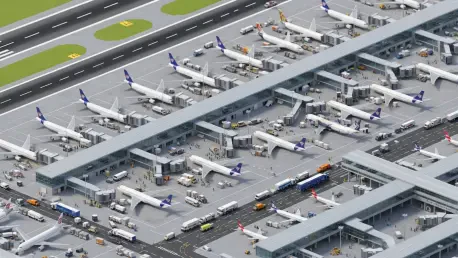

The Department of Transportation’s March 2026 performance report paints a stark picture of an industry where the sheer volume of passengers has finally begun to outpace the structural integrity of the nation’s most vital transportation corridors. This comprehensive diagnostic tool reveals that while demand for air travel has surged to record levels, the quality of service provided by major domestic carriers has entered a period of volatile decline. Travelers today are no longer just booking flights; they are entering into a high-stakes gamble with a network that frequently succumbs to delays, baggage meltdowns, and systemic service failures. The government data serves as more than just a collection of statistics; it acts as a transparent window into the operational health of an industry that remains essential for economic stability but increasingly fragile in its execution. As the domestic travel network grapples with these logistical vulnerabilities, the figures highlight a growing discrepancy between the lofty marketing promises made by airlines and the grueling reality of the terminal floor. This tension suggests that without a significant overhaul of both infrastructure and internal airline protocols, the current model of American aviation may be reaching a point of diminishing returns for the consumer.
Identifying the Roots of Operational Instability
Connectivity Crises: The Surge in Passenger Demand
A significant disconnect has emerged between the aggressive expansion of flight schedules and the actual physical capacity of the domestic air traffic system to manage these movements safely and efficiently. The analysis points to a deepening connectivity crisis where airline service reliability is failing most prominently during peak travel periods, such as holiday weekends and summer vacations. This breakdown is evidenced by a quantifiable decline in on-time performance and a rising number of synchronized logistical bottlenecks across major hubs like Atlanta, Chicago, and Dallas. While airlines have successfully filled their planes, they have struggled to scale their ground operations and air traffic coordination to match this density. The result is a network that lacks the necessary elasticity to absorb minor disruptions, leading to widespread delays that affect thousands of passengers simultaneously. This fragility is a direct consequence of a system running at near-maximum capacity with no margin for error, turning minor weather events into national travel crises that take days to resolve.
Regulators are increasingly using this performance data to force a level of transparency that was previously absent from the industry, hoping that public accountability will push airlines to fix these fundamental scaling problems. The current data shows a direct link between high passenger volume and a precipitous decrease in service quality, suggesting that current operational models are hitting a hard limit. As travelers become more aware of these trends, there is a growing demand for airlines to prioritize reliability over the sheer volume of flights offered. The historical approach of packing more flights into already congested time slots has led to a situation where the infrastructure is perpetually on the brink of failure. To address this, the industry must look toward a more balanced approach that respects the physical constraints of airport gates and runway throughput. Until then, the disconnect between consumer expectations and the reality of flight schedules will likely continue to generate significant frustration and operational instability across the entire country.
Industry Trends: The Impact of Technical and Staffing Gaps
While inclement weather has historically served as the primary scapegoat for airline delays, internal technical debt and staffing shortages are now surfacing as more pervasive threats to operational stability. Many carriers are still relying on legacy computer systems for crew scheduling and passenger management that were not designed to handle the complexity of the modern, high-volume travel environment. These technical glitches often result in terminal gridlock, where planes are ready to depart but the digital infrastructure required to authorize the flight or assign a crew has stalled. This internal failure is particularly damaging because it is entirely within the control of the airlines, yet it continues to plague operations at a high frequency. The lack of investment in robust, resilient software solutions has created a landscape where a single server error can ground a fleet for hours, leaving passengers stranded without clear communication or immediate solutions to their travel dilemmas.
Staffing levels also remain a critical concern, as the industry struggles to maintain a workforce that is both large enough and sufficiently trained to handle the demands of record-level passenger traffic. From pilots and flight attendants to ground crews and maintenance technicians, the shortage of skilled labor has led to a situation where there is no backup plan when someone calls in sick or a shift goes unfilled. This thin staffing model means that even a minor disruption can trigger a wave of cancellations because there are no reserve crews available to step in. Furthermore, the high turnover rate in ground handling positions has led to a decrease in the overall efficiency of baggage loading and aircraft servicing, further contributing to delays. As airlines compete for a limited pool of talent, the cost of labor is rising, but the benefits in terms of service reliability have yet to materialize for the average traveler. The industry is currently caught in a cycle where it must spend more just to maintain a baseline of service that is still frequently falling short of consumer standards.
Evaluating the Breakdown of Core Services
Schedule Reliability: Managing Hub Congestion and Cascading Delays
Schedule reliability has become a primary concern for the traveling public, as airlines frequently book more flights than the physical infrastructure of airports can manage. This over-scheduling leads to cascading failures, where a single delay in a major hub city can trigger a wave of cancellations across the entire domestic network. When a flight from a busy East Coast hub is delayed due to congestion, it often means the aircraft and crew are unavailable for their next three or four scheduled legs, creating a ripple effect that strands travelers thousands of miles away from the original problem. This interconnectedness, while efficient for maximizing aircraft use, has turned the American aviation system into a house of cards. Passengers are finding that their direct flights are cancelled not because of weather in their own city, but because of a mechanical issue or crew timeout in a different time zone. The lack of buffer time between flights means that recovery from these incidents is slow and agonizing for those caught in the middle.
The resulting disruptions often force travelers into grueling situations, such as unplanned overnight stays in airport hotels or the desperate search for alternative transportation. When flights fail to stay on schedule, the impact on the consumer is immediate and often expensive, as missed connections lead to lost hotel reservations, car rentals, and professional opportunities. The data suggests that certain hubs are more prone to these failures than others, yet airlines continue to push the limits of what these facilities can handle. There is an urgent need for a more realistic assessment of what constitutes a viable schedule in an environment where air traffic control is also struggling with its own capacity issues. Without a reduction in flight density or a massive increase in gate availability, the cycle of over-scheduling and subsequent failure is likely to persist. For now, the burden of these operational gambles falls squarely on the shoulders of the passenger, who must navigate a landscape of uncertainty every time they head to the gate.
Ground Logistics: Addressing the Baggage Handling Crisis
Ground operations are currently facing a struggle that is significantly damaging consumer confidence in the industry, particularly regarding the high rates of mishandled baggage. Despite the availability of modern tracking software and digital bag tags, ground crews are still being overwhelmed during busy travel windows, resulting in thousands of ruined travel experiences every month. The physical labor of moving thousands of pieces of luggage in a short window is a logistical hurdle that many airlines have failed to clear consistently. When bags are not loaded onto the correct aircraft or are left behind due to short connection times, the cost to the airline is high, but the cost to the traveler in terms of stress and inconvenience is even higher. Frequent baggage mishaps have become a primary reason for the erosion of trust between the public and major carriers, forcing many travelers to adopt the carry-on-only strategy to ensure their belongings actually arrive at their destination.
This failure in ground logistics is not just a matter of convenience; it is a sign of a deeper operational malaise where the physical aspects of travel are being neglected in favor of digital optimization. While an app might tell a passenger that their bag was scanned at the gate, it provides little comfort when that bag remains on the tarmac while the plane takes off. The disconnect between the data provided to the passenger and the actual physical reality of the bag’s location is a recurring theme in consumer complaints. To fix this, airlines need to invest more heavily in ground support equipment and provide better incentives for the personnel who perform these essential tasks. The current system relies too heavily on a workforce that is often underpaid and overworked, leading to mistakes that could be avoided with better oversight and more realistic timing between connecting flights. Until ground operations are treated with the same level of importance as flight operations, the baggage handling crisis will remain a significant pain point for the American traveler.
Standards for Quality and Accessibility
Mobility Device Safety: Protecting Passenger Independence
One of the most alarming findings in recent performance reports involves the frequent damage and loss of mobility devices like wheelchairs and power scooters. For many passengers, these devices are not just pieces of luggage; they are essential extensions of their own bodies that provide the independence and dignity required to navigate the world. When an airline mishandles a specialized wheelchair, the result is often a total loss of mobility for the traveler, sometimes leaving them stranded in a strange city without the ability to move freely. This is not just a logistical error but a direct hit to the fundamental rights of disabled passengers, signaling an urgent need for specialized training and better handling protocols across the industry. The report highlights that the current “one-size-fits-all” approach to baggage handling is completely inadequate for the care and precision required to transport complex mobility equipment safely.
This specific area of service failure has drawn significant attention from advocacy groups who view these incidents as a non-negotiable responsibility that airlines must address with high priority. The data shows that the rate of damage to mobility devices has not seen the same improvements as other areas of baggage handling, suggesting a lack of focus on this vulnerable segment of the traveling public. To rectify this, some carriers have begun to implement dedicated handling teams and more robust storage solutions within the aircraft cargo holds. However, these improvements are not yet universal, and the risk of damage remains high for those who rely on these devices. There is a clear call for more stringent regulations and higher penalties for airlines that fail to protect mobility equipment, as the current system often leaves passengers fighting for months to get repairs or replacements funded. Ensuring that every passenger can travel with their dignity and mobility intact is a critical metric for a truly successful and inclusive aviation industry.
Industry Metrics: Utilizing Data for Public Accountability
The Department of Transportation currently monitors five key metrics—punctuality, baggage efficiency, mobility device safety, total cancellations, and consumer complaints—to assess the overall health of the aviation industry. Taken together, these figures provide a holistic view of the travel environment and help define the scope of what many are calling the era of “travel chaos.” These metrics serve as a vital barometer for public frustration and help the government judge the effectiveness of airline customer service and compensation policies. By making this data publicly available and easily accessible, the government is empowering consumers to make choices based on actual performance rather than brand perception or price alone. This level of scrutiny forces airlines to confront their failures in a public forum, which often acts as a more powerful incentive for change than internal corporate goals. The transparency provided by these reports is essential for maintaining a semblance of balance in a market where consumers often feel they have very few alternatives.
Beyond just identifying problems, these metrics are increasingly being used to justify new regulations and enforcement actions against carriers that consistently underperform. For example, persistent failures in punctuality or baggage handling can now lead to direct investigations into an airline’s scheduling practices or maintenance protocols. This data-driven approach to regulation ensures that government interventions are targeted at the most significant pain points for the traveler. It also provides a clear framework for airlines to understand where they are falling behind their competitors and what they must do to avoid regulatory scrutiny. As the industry continues to evolve, the importance of these metrics will only grow, providing a continuous feedback loop that should, in theory, lead to a more resilient and passenger-focused system. However, the current data suggests that simply measuring the problem is not enough; the findings must be met with decisive action from both the airlines and the government to ensure that service standards are not just monitored, but actually met.
The Future of the American Traveler
Commuter Realities: Navigating an Unpredictable Environment
For today’s commuters, the data confirms that flying has become an exercise in crisis management where volatility is the only constant. While travelers have more information than ever to make informed choices, they are often left feeling exhausted by a system that seems to be operating at its absolute limit. The narrative is one of empowerment through information, but it is also one of deep frustration with an industry in a state of analytical meltdown. To navigate this landscape, travelers are adopting defensive strategies like using historical performance data to pick more reliable carriers and knowing their legal rights regarding compensation. By prioritizing direct routes and avoiding checked luggage, passengers can lower their risk of getting caught in the cascading disruptions that define modern air travel. For the foreseeable future, travelers must remain vigilant and prepare for an environment that remains highly unpredictable and prone to sudden collapse.
To mitigate the inherent risks of modern travel, passengers have increasingly turned toward data-driven decision-making, leveraging real-time performance metrics and historical reliability scores to select their carriers. The evolution of the American aviation landscape necessitated a paradigm shift in how passengers interacted with the industry. It became clear that relying solely on airline brand loyalty was no longer a viable strategy for ensuring a smooth journey. Instead, travelers adopted more rigorous methods of vetting carriers based on hard performance data rather than marketing slogans. The government responded by tightening the requirements for passenger compensation, ensuring that airlines bore the financial brunt of their own operational failures. These changes established a new baseline for what travelers expected, forcing the industry to prioritize reliability over sheer volume. The path forward involved a deep integration of real-time monitoring and a renewed focus on the human elements of service, particularly for those with specialized mobility needs. By the end of this period, the focus moved toward creating a more resilient and passenger-centric aviation network.
Strategic Navigation: Strengthening Passenger Rights and Solutions
The landscape of domestic aviation underwent a significant transformation as both technology and policy caught up with the demands of the modern traveler. Airlines were forced to implement more robust backup systems and invest in the long-term stability of their workforces to avoid the heavy fines associated with systemic cancellations. This shift was largely driven by a more informed consumer base that utilized digital tools to hold carriers accountable in real-time. The result was an environment where transparency became a competitive advantage, and airlines that prioritized operational integrity saw a marked increase in customer retention. The adoption of new air traffic management technologies also played a crucial role in reducing the frequency of hub congestion, though the physical limitations of many older airports remained a persistent challenge. Travelers eventually found that the best way to ensure a successful trip was to engage directly with the performance data provided by federal regulators.
The industry moved toward a model where service quality was no longer an optional add-on but a fundamental requirement for maintaining an operating license. The lessons learned during the peak of the operational crisis served as a blueprint for a more stable future, where growth was managed with a greater respect for the systems that supported it. Passengers were granted more comprehensive rights to refunds and rebooking, which placed the financial risk of delays back onto the corporations. This alignment of incentives was the primary driver of the improvements seen across the five core metrics of airline health. While the system was never fully immune to the unpredictability of the world, the introduction of these safeguards provided a level of protection that had been missing for years. The focus ultimately remained on ensuring that the American traveler could move through the nation’s skies with confidence, supported by a network that was as resilient as it was ambitious. This era of aviation proved that while technology could improve the experience, the human commitment to service and accountability remained the true foundation of a successful industry.