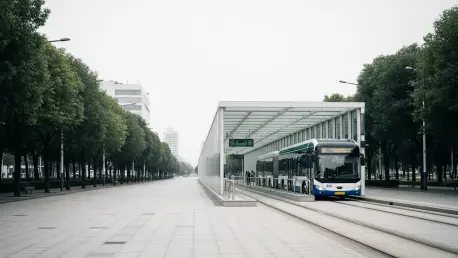

The rhythmic hum of rubber on asphalt and the persistent haze of exhaust fumes have long defined the modern metropolitan experience, yet cities across the globe are preparing to challenge this status quo on Tuesday, September 22. This global initiative serves as a practical demonstration of how urban spaces can be transformed into cleaner, quieter, and more sustainable environments by encouraging millions of people to relinquish their private vehicles for a full twenty-four hours. Far from being a simple break from the daily commute, the movement represents a strategic response to the pressing threats of climate change, urban congestion, and the steady deterioration of public health in densely populated areas. By momentarily removing the dominance of the automobile, city planners and residents alike are granted a rare opportunity to visualize a future where streets are designed for people rather than machines. This day-long experiment provides the necessary data and social momentum to advocate for permanent shifts in how modern societies approach mobility and infrastructure.
Historical Roots: The Expansion of a Global Movement
The origins of the car-free movement can be traced back to the early 1990s when a dedicated group of urban planners and environmentalists began to vocalize the negative externalities of rapid motorization. These early dialogues eventually culminated in the official designation of September 22 as World Car-Free Day at the turn of the millennium, establishing a fixed point on the global calendar for environmental advocacy. Over the subsequent decades, what began as a niche activist concept has successfully transitioned into a mainstream phenomenon involving hundreds of major cities across every continent. This expansion highlights a growing international consensus that modernizing infrastructure must involve a significant reduction in carbon footprints to meet global sustainability targets. In the current landscape of 2026, the event is no longer viewed as an alternative lifestyle choice but as a critical component of mainstream urban management and climate resilience strategies that aim to reshape the very fabric of our cities.
Building upon this historical foundation, the movement has evolved from symbolic protests into highly organized municipal events that align with comprehensive transit policies. City governments now utilize this day to launch new initiatives, ranging from the expansion of zero-emission zones to the introduction of sophisticated bike-sharing systems. The steady growth of participation from 2026 to 2030 is expected to solidify these temporary changes into permanent fixtures of the urban environment. This shift is particularly evident in regions that were previously characterized by extreme car dependency, where local authorities are now leveraging public enthusiasm for car-free spaces to justify larger investments in multi-modal transport networks. By moving away from the car-centric models of the late twentieth century, modern cities are demonstrating an ability to adapt to the ecological and social demands of the current era. The movement’s success is a testament to the power of collective action when paired with clear, data-driven objectives for urban improvement.
Environmental Transformation: The Science of Car-Free Spaces
The immediate removal of a significant number of internal combustion engine vehicles from city streets results in a measurable and nearly instantaneous improvement in local air quality. Scientific monitoring during these events consistently shows a sharp decline in levels of carbon dioxide, nitrogen dioxide, and particulate matter, which are the primary contributors to urban smog. This reduction in pollutants directly enhances the respiratory health of city dwellers, particularly vulnerable populations such as children and the elderly who are most affected by poor air conditions. Furthermore, the absence of heavy traffic significantly lowers noise pollution, creating a more serene and peaceful atmosphere that contributes to lower stress levels among residents. These environmental gains serve as a powerful reminder of the hidden costs associated with traditional commuting habits and provide a compelling argument for the acceleration of the transition toward electric vehicles and more efficient forms of mass public transportation.
Beyond the immediate health and environmental perks, the event functions as a massive living laboratory for urban planners to observe the functionality of cities without chronic gridlock. When major thoroughfares are restricted to pedestrians and cyclists, local governments can evaluate the long-term potential for permanent pedestrian zones and the expansion of green infrastructure like pocket parks and rain gardens. Observing how traffic flows redistribute when private cars are absent allows engineers to identify bottlenecks and optimize public transit routes for better efficiency. These observations are crucial for developing the next generation of urban design layouts that prioritize accessibility and safety over high-speed vehicle throughput. By showcasing the inherent efficiency of well-designed bike lanes and transit corridors, the initiative proves that dense urban centers can thrive and remain economically vibrant without the overwhelming presence of the private automobile, paving the way for more resilient cities.
Practical Strategies: Transitioning to Human-Centric Urbanism
Active participation in this global movement is designed to be highly inclusive, offering various accessible ways for citizens to contribute to the overall success of the initiative. Individuals can participate by choosing alternative commuting methods such as walking, cycling, or utilizing expanded public bus and train networks that often run at higher frequencies during the event. Other practical contributions include embracing carpooling for essential trips or utilizing digital tools to work from home, thereby eliminating the need for a commute entirely. Many neighborhoods also host street fairs, advocacy workshops, and community events that celebrate the newfound space, fostering a sense of social cohesion that is often lost in car-heavy environments. These actions, while simple on an individual level, aggregate into a massive reduction in energy consumption and provide a tangible sense of agency to residents who wish to see a change in their local environment.
The success of the 2026 event acted as a vital catalyst for permanent policy changes that prioritized the movement of people over the storage and transit of private vehicles. Governments worldwide increasingly viewed this day as a foundational starting point for long-term investments in high-capacity electric transit systems and safer, more intuitive pedestrian crossings. Planners recognized that the temporary enthusiasm for car-free streets could be harnessed to support the implementation of fifteen-minute city models, where essential services are located within a short walk or bike ride from any residence. To maintain this momentum, city leaders should focus on the permanent removal of minimum parking requirements and the repurposing of street space for wider sidewalks and protected cycling paths. By integrating these lessons into the urban planning cycles from 2026 to 2028, metropolitan areas took decisive steps toward becoming safer, healthier, and more resilient communities that were better equipped to face the challenges of the late twenty-first century.